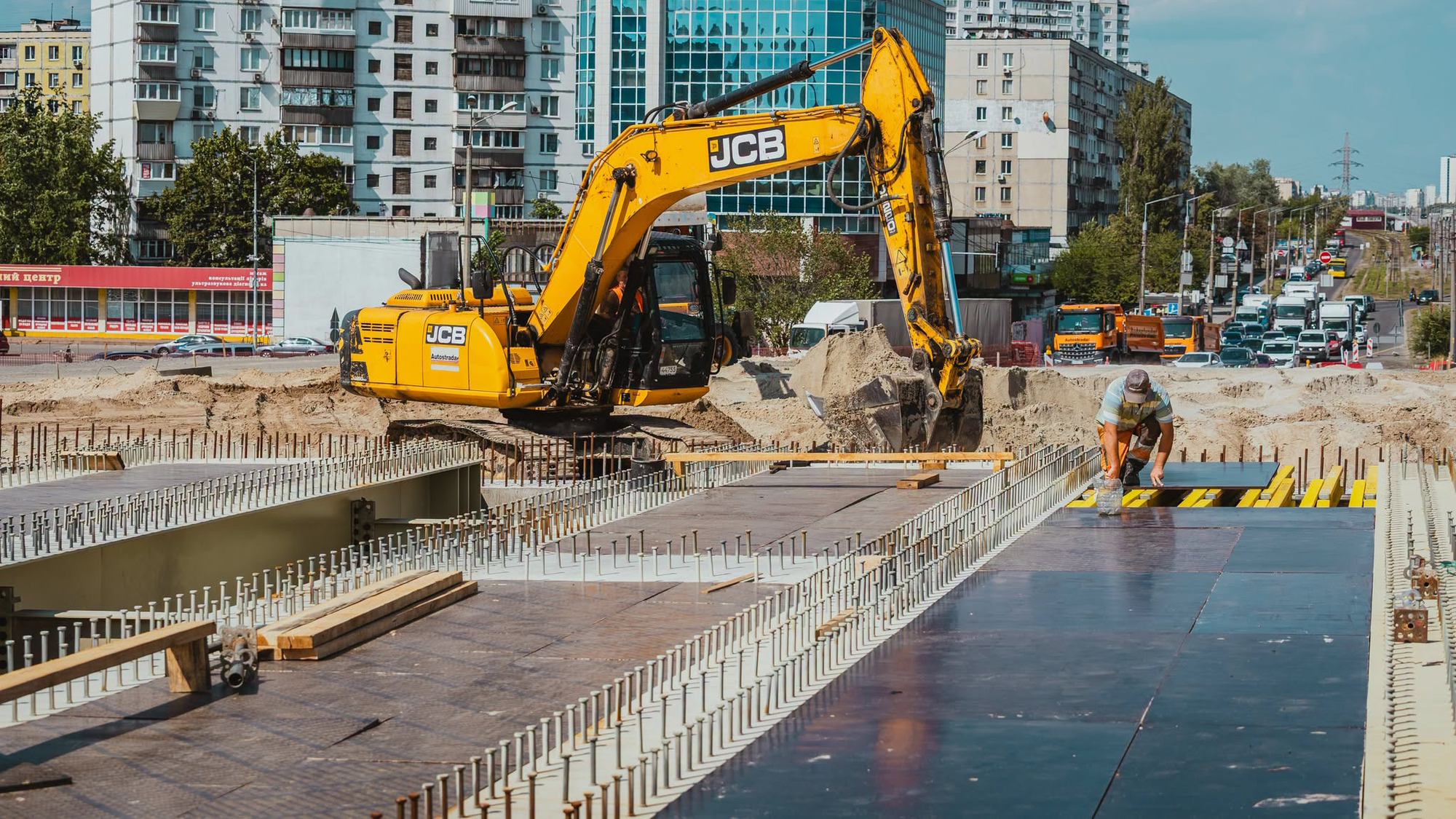
Near the Chernihivska metro station in Kyiv, construction crews have begun pouring concrete for the span structure of a new overpass. The technology is simple enough to understand even without an engineering background: the structure is not filled all at once, but in separate sections of 18 meters each, starting from the center and moving toward the edges. This ensures uniform load distribution on the metal beams, preventing deformation of the structure as the concrete hardens.
For Kyiv residents who have spent years detouring around this interchange due to potholes and restrictions, there is one practical point of interest: traffic and trams are promised to resume on the overpass in November, and Brovarsky Prospekt is expected to reopen. Concrete pouring for the entire span structure should be completed by the end of September – this is the most critical phase, after which asphalt can be laid and tram tracks installed.
985 Million Without Competition
A less obvious but far more intriguing aspect concerns who won this contract and how. In November 2025, the tender for capital repair of the overpass was won by the Avtostrada group of companies belonging to Maksym Shkil. Without any competition. The cost of work is 985 million hryvnias.
This is not the first similar case in Kyiv: previously, the same company rebuilt the overpass near the neighboring Darnytsia metro station from scratch. The similarity in approaches and absence of competitors in tenders creates a certain pattern: one company is methodically securing infrastructure contracts along a single metro line.
The absence of competition in a tender worth nearly a billion hryvnias is not automatically corruption, but it certainly warrants investigation into whether the market truly lacks other contractors of this caliber, or whether tender conditions were designed to exclude competitors from the start.
What the City Will Get for This Money
The new structure will feature eight lanes of vehicle traffic, two tram tracks, sidewalks, and bike paths – a substantial expansion compared to what existed before. However, the capital repair timeline extends until 2027, meaning traffic will partially resume this fall, with full completion of work taking another two years.
Key questions for the coming months: whether the company will meet the promised November deadline for reopening traffic, and whether a detailed cost estimate for the 985 million hryvnias will be publicly available so anyone interested can compare the work's cost with similar projects in other cities.