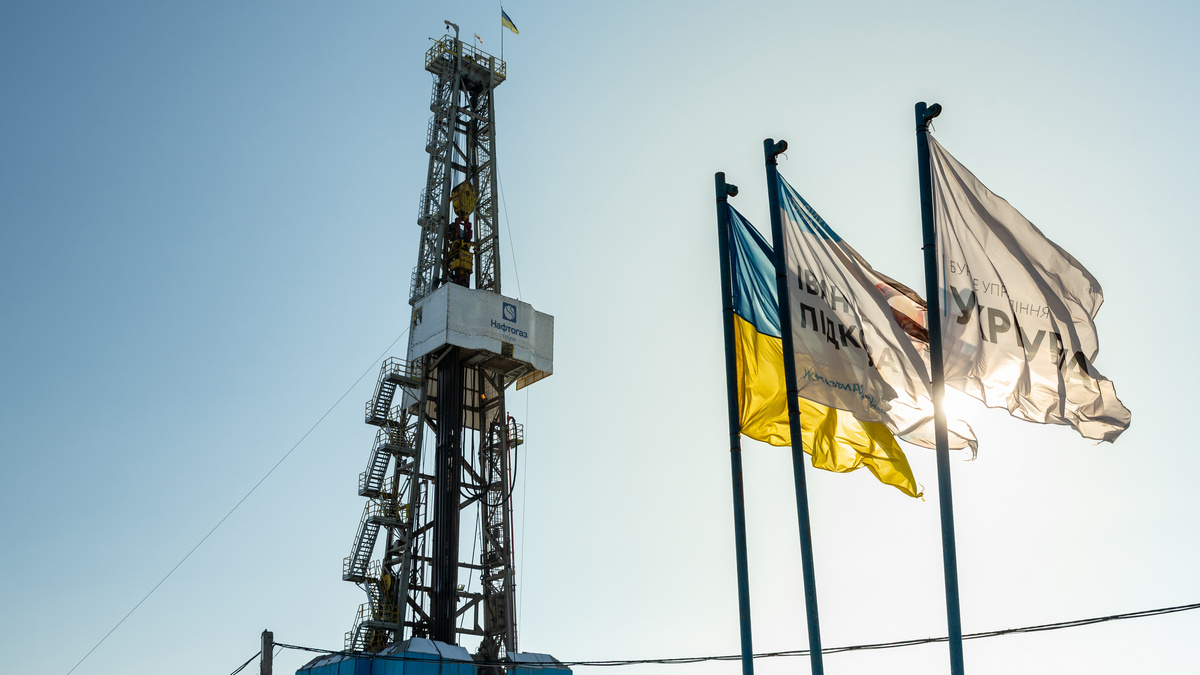
Imagine a well in the Poltava region that had been producing gas for years. After a massive strike in the winter of 2024–2025 — it has gone silent. Multiply that by dozens of sites across the country, and you get the figure announced in May 2025 by Prime Minister Denys Shmyhal: 16.97 billion cubic meters — the lowest production figure in many years.
By comparison: in 2024 Ukraine produced over 19 billion cubic meters. The drop is more than 10% in a single year.
Missiles as a tool of energy degradation
Shmyhal explained the mechanics back in April 2025: during the winter, Russian strikes on gas production infrastructure destroyed capacities that provided almost 50% of total production. This is not a metaphor — these are concrete compressor stations, pipelines, and above-ground well infrastructure. They cannot be restored quickly: some facilities are located in areas at risk of repeated strikes.
That is why even a result described as “better than forecast” comes with a caveat. Yes, the official forecast had anticipated even less — Shmyhal said the outcome was 2.4 billion cubic meters higher than expected. But the comparison base was an already revised, lowered plan, not the pre-war potential of the sector.
Private firms rise — Ukrgazvydobuvannya declines
There is a split within the industry. Private companies increased output by 14%: they are more mobile, can reassign drilling crews faster, and are less dependent on centralized infrastructure that became a target. In contrast, the state-owned Ukrgazvydobuvannya, which accounts for the lion’s share of the overall figure, suffered the largest losses precisely because of the scale and geography of its assets.
This asymmetry matters: it means that recovery of production will depend not only on the security situation, but also on how ready the state is to give private capital — including foreign investors — real access to fields, and not just declarative invitations at conferences.
What this means for the energy balance
Ukraine consumes roughly as much gas as it produces — or imports the difference. With production below 17 billion cubic meters and consumption remaining at current levels, dependence on imports increases. In 2025 this is happening against the backdrop of the absence of Russian gas transit through the Ukrainian gas transmission system (GTS) — the agreement between Naftogaz and Gazprom was not renewed from 1 January 2025.
In other words, Ukraine has simultaneously lost transit revenue and part of its own production — and is forced to balance using underground storage and reverse flows from Europe.
Rebuilding under fire
The industry is trying to adapt: some companies are moving above-ground infrastructure underground or camouflaging it, investing in redundancy. But this costs money and time — two resources chronically in short supply in a wartime economy.
The open question remains: if the intensity of strikes on the energy sector does not decrease in 2025–2026, can a 14% increase in private production compensate for further losses in the state sector — or will we see another record low next year?







