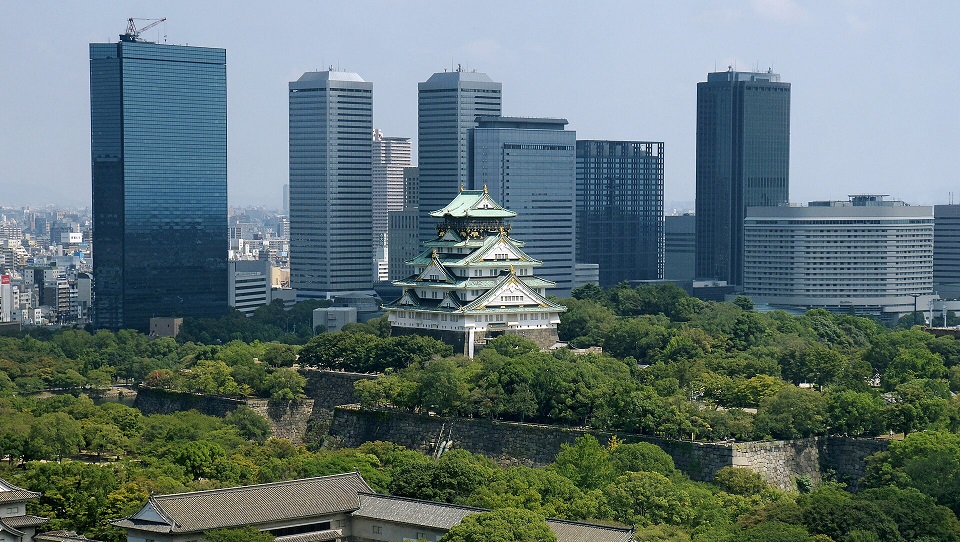
On July 24, the Japanese Parliament passed a law on a second capital — a backup government control center in case of major natural disaster or terrorist attack in Tokyo. The law provides for the transfer of government functions, opening of government offices, and tax incentives for businesses that relocate. However, no specific city is named in the document.
Coalition agreement as a starting gun
The idea of a backup capital is not new and not purely technocratic. According to Japan Times, Nippon Ishin no Kai party leader Hirofumi Yoshimura named the recognition of Osaka as the second capital as a mandatory condition for joining a coalition with the ruling LDP as early as autumn 2025. When Sanae Takaichi took over the LDP and became the first female prime minister, the agreement was enshrined in the coalition accord.
In other words, the law is backed by a specific deal: Ishin provides parliamentary votes — the LDP pushes forward the project that Osaka has been lobbying for for decades.
Why Osaka — and why it's not obvious
Osaka is not Japan's second-largest city by population. That title belongs to Yokohama, located right next to Tokyo. But according to the Centre on Constitutional Change analysis, Osaka "through its political movement would become the typical beneficiary of any second capital plan."
The city already hosted Expo 2025, and its regional government has coordinated policy with the prefecture for years as part of a "virtual merger" — despite a restructuring plan into special wards being rejected twice in referendums. Osaka is building a university, establishing joint urban planning bodies, and unified industrial strategies. The law on a second capital is the next step in the same logic of decentralization.
The risk the law doesn't address
Opposition in parliament criticized the bill precisely for this: it is written for a specific party, not for a specific threat. The law does not designate a city, does not establish timelines, and does not prescribe the financing mechanism for relocating government structures.
"The legislation faced harsh criticism from the opposition, which argued that it was tailored exclusively for Osaka and the Ishin party."
Japan Today, July 24, 2025
At the same time, the seismic argument is entirely real. Tokyo sits at the intersection of four tectonic plates. The Nankai Trough is a potential source of a mega-earthquake with a magnitude of 9+, which could strike the entire Pacific coast of Japan, including Osaka. Thus, "backup capital" and "seismically safe capital" are not the same thing.
Maglev and $2 trillion in the background
In parallel, Japan has revived a frozen maglev line project between Tokyo and Osaka — a "megaregion" worth $2.04 trillion. If both projects are realized, Osaka will get both status and a transport artery. If not, the law will remain a framework document without substance.
The law has been passed. But a real second capital will only emerge when the government names a city, allocates a budget, and begins physically relocating institutions — none of these steps have been taken yet. The question is not whether Osaka will become the second capital, but whether the next coalition will have the political will to move from a framework law to specific addresses and budgets — especially if Ishin is no longer part of it.







