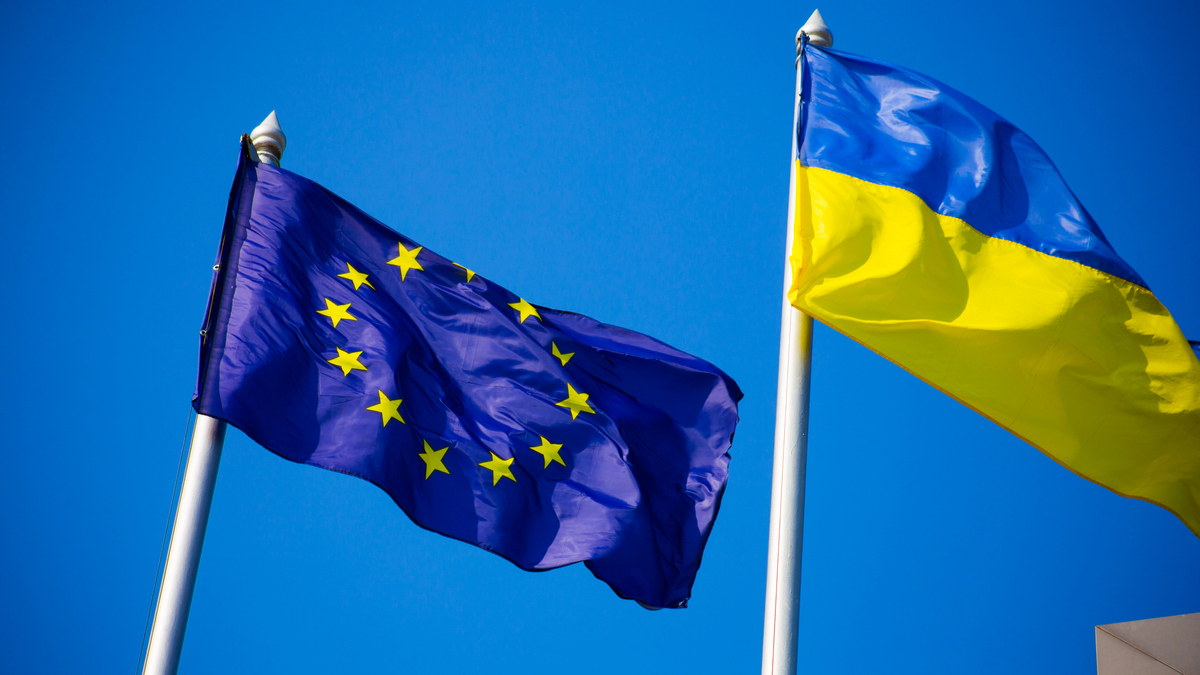
On Thursday, June 26, on the sidelines of the URC2026 conference in Gdańsk, Poland, five European state banks signed agreements to participate in the European Flagship Fund for the Reconstruction of Ukraine. The initial capital is approximately 265 million euros. The goal is to attract up to 7 billion euros in private investment in the reconstruction of a country still at war.
Who Raised the First Billion in Commitments
The agreements were signed by the EIB (European Investment Bank), Germany's KfW, Italy's Cassa Depositi e Prestiti, Poland's Bank Gospodarstwa Krajowego, and France's Proparco — all as limited partners of the fund. The assets will be managed by a consortium of Britain's Amber Infrastructure and Ukraine's Dragon Capital, which emerged as finalists and winners from an open competition among 12 candidates.
In parallel, Amber and Dragon announced the first closing of a related fund — the Amber Dragon Ukraine Infrastructure Fund I (ADUIF) — with commitments of approximately 200 million euros from the EBRD, EIB, IFC (International Finance Corporation), Swedfund, and Impact Fund Denmark. Part of the IFC contribution will be covered by guarantees from the European Commission and the French government.
«In any case, all investors will change their approach and become more aggressive in their investments if there is no risk of rocket and drone strikes»
Tomash Fiala, founder and CEO of Dragon Capital
According to previously disclosed information, Fiala personally committed Dragon Capital to invest its own 40 million euros — just as the company risked its own money in previous funds. This is Dragon's standard model: you need to feel the risk firsthand alongside your partners to convince them.
What Stands Behind the 265 Million Figure
Public money here performs a specific function: it covers the first loss. That is, if an investment fails, the state banks will lose first — and this is precisely what should provide private investors with the psychological and financial protection needed to enter a country with active warfare.
KfW, even during the 2025 announcement, formulated the task clearly: public funds of 220 million (that was the figure mentioned at the time) — the foundation on which the fund should attract 800 million euros by the end of 2026, and if the security situation improves — exceed a billion by 2027–2028. The actual amount launched turned out to be slightly higher — 265 million euros.
- Investment sectors: renewable energy, transport, digital infrastructure
- Instrument: equity capital, not loans — filling a niche that barely exists in Ukraine
- Horizon: long-term projects, including greenfield
Gdańsk — A Day of Broader Announcements
The fund's launch took place on a day when European Commission President Ursula von der Leyen announced the transfer of the first tranche of the Ukraine Support Loan to Ukraine in the amount of 3.2 billion euros from a total package of 90 billion euros. According to Prime Minister Yuliia Svyrydenko, the funds have already been received by the state budget and will be directed toward defense and social resilience.
Separately, a package of EU agreements worth 2.3 billion euros with international and bilateral financial institutions as part of the Ukraine Investment Framework: 1.8 billion euros in guarantees and 580 million euros in grants, which are expected to mobilize up to 10 billion euros in investment.
Where Risk Remains Open
The entire Flagship Fund structure is built on the bet that private capital will follow public capital if the first loss is protected. However, this mechanism will work only under one condition — if the security situation does not deteriorate to the point of making investment insurance simply unrealistic. Amber Infrastructure already has approximately 1 billion euros in investments in Central and Eastern Europe, Dragon — deep knowledge of the local market. Yet neither of them controls the variable on which everything else depends.
If by the end of 2026 the fund attracts the stated 800 million from private investors — this will become the first real test of the "public capital as catalyst" model in wartime Ukraine. If not — the question will return: is 265 million in state money enough to convince private business to take risks in a place where rockets are still flying.