The Same Font — Again
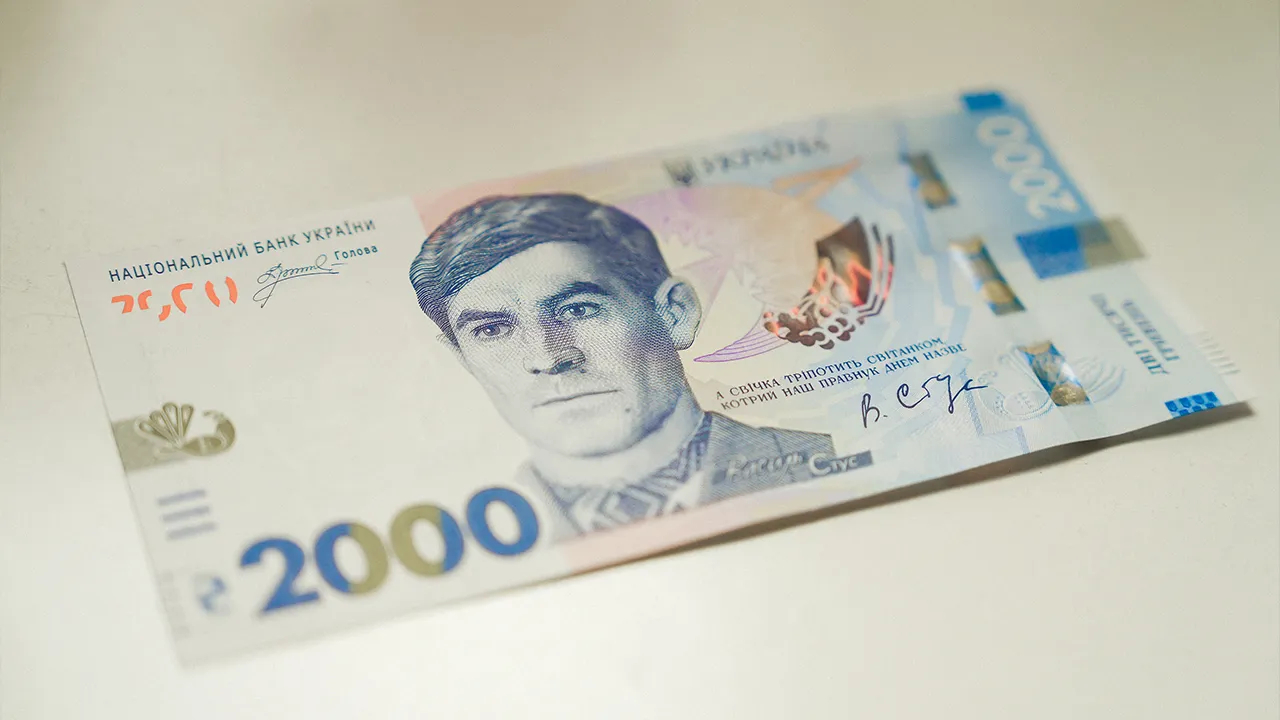
On July 10, 2026, the National Bank presented a new banknote with a denomination of 2,000 hryvnias featuring a portrait of Vasyl Stus. On the same day, font designer and serviceman Bohdan Hdal wrote on Facebook that the banknote again used a pirated Cyrillic version of the Bickham Script font. "The National Bank made official excuses due to the outcry and promised to hold a design competition to prevent such cases — and there it is again, the same pirated Bickham Script," he noted, recalling that he first raised this issue after the presentation of the thousand-hryvnia note in 2019.
The problem's scheme is simple: American designer Richard Lipton created Bickham Script in 1997, and Adobe licensed it. Adobe's official Cyrillic version appeared only in 2016. However, back in 2005, Russian Alexandra Hofmann — known in font circles as the author of illegal copies of famous typefaces — created her own unlicensed Cyrillic adaptation. According to Hdal, it was her glyphs that ended up on the banknote.
"No Legal Violations, But..."
On July 15, NBU Governor Andriy Pyshny responded publicly — and his argumentation was telling: the NBU did not deny the discussion, but immediately chose a different line of defense.
"Vasyl Stus is the conscience of the nation and a moral absolute. A banknote with his portrait must be flawless in every line. When the inscription on a banknote with Stus is associated with the work of a citizen of the aggressor country — the very fact of such an association is enough. No Russian shadows on a banknote with a poet killed by Russia."
Andriy Pyshny, NBU Governor, Facebook, July 15, 2026
In other words, the regulator did not acknowledge piracy, but did acknowledge the unacceptability of the association. The new inscription "Two Thousand Hryvnias" will be executed in full compliance with Adobe's official Cyrillic version of the font — without the authorial variations that appeared in Hofmann's adaptation. Since the banknote has not yet been launched into production, the design change will not affect the circulation date — September 4, 2026, which the NBU chose symbolically: on the day of Stus's memory.
What Stands Behind the New Denomination
The font scandal distracted attention from the broader context. The share of thousand-hryvnia banknotes in circulation reached 55%, the average salary in Ukraine rose to nearly 31,000 hryvnias, and the total volume of cash in circulation over seven years increased more than twofold — from 390 billion to over 970 billion hryvnias. These figures are what the NBU cites as the main justification for the new denomination.
Financial analyst Andriy Shevchyshyn explains the logic directly: "Of course, the banknote itself doesn't affect inflation, but its introduction is a reflection of real inflation in the country." According to him, the appearance of a larger denomination is not the cause of price increases, but rather a consequence of what has already happened to the hryvnia's purchasing power.
Systemic Problem or Single Failure?
The issue is not just about a specific font. Hdal reached out to Bickham Script developer Richard Lipton, who directed him to Adobe font designer Frank Griesshammer — meaning the original author himself considered the situation worth attention. After 2019, the NBU promised not to allow similar incidents, but in 2026 — when preparing the most prestigious banknote in the series, featuring the image of a poet killed in Soviet camps — the control procedure failed again.
- 2005 — Alexandra Hofmann creates an unlicensed Cyrillic version of Bickham Script
- 2016 — Adobe releases an official Cyrillic version
- 2019 — Hdal identifies the problematic font on the 1,000 hryvnia banknote; NBU promises a designer competition
- July 10, 2026 — presentation of the 2,000 hryvnia banknote; the same objection is raised again
- July 15, 2026 — NBU announces the inscription change
The correction is technically cost-free for taxpayers — the banknote has not yet been printed. But if the scandal had erupted after September 4, the cost of restarting the circulation would have been measured in millions of hryvnias: according to estimates, the NBU's expenditures on the production of banknotes and coins in 2025 amounted to approximately 3 billion hryvnias.
If the NBU does not change its internal font verification procedure, the next scandal of the same type is only a matter of time: will it occur after the print run has already begun?