Imagine a mortgage that gets more expensive every year not because you took out a new loan, but because the bank stopped trusting you. That's roughly what the situation with US national debt looks like now, which exceeded $40.05 trillion for the first time on August 18.
The figure itself says little — debt grows all the time. What's more interesting is this: 30-year bonds at an auction on August 13 went for the highest rate in 25 years. This means that even the world's most reliable borrower is forced to pay increasingly more to convince someone to lend to it for the long term.
Speed matters more than size
Ten years ago, debt stood at $19.4 trillion; 4.5 years ago — $30 trillion. Over the past year, it has grown by $3 trillion — the fastest growth outside the pandemic period. The July deficit reached $432.3 billion, the highest monthly figure since March 2021.
At the same time, Treasury bond yields soared to 2008 levels — the same time when the Fed had to cut rates nearly to zero to save the system. Now the rate isn't zero, and the debt is much larger, so the room for maneuver is narrower.
Who really pays for tariffs
There is also a practical nuance that usually gets lost in macroeconomic figures. The Kiel Institute for the World Economy calculated: foreign exporters absorbed only about 4% of the tariff burden from Trump's tariffs. The remaining 96% fell on American importers and, ultimately, on consumers in stores.
In other words, a policy designed as pressure on others has in practice become an additional tax on one's own citizens — precisely when the budget is already short on money.
What the Treasury is doing
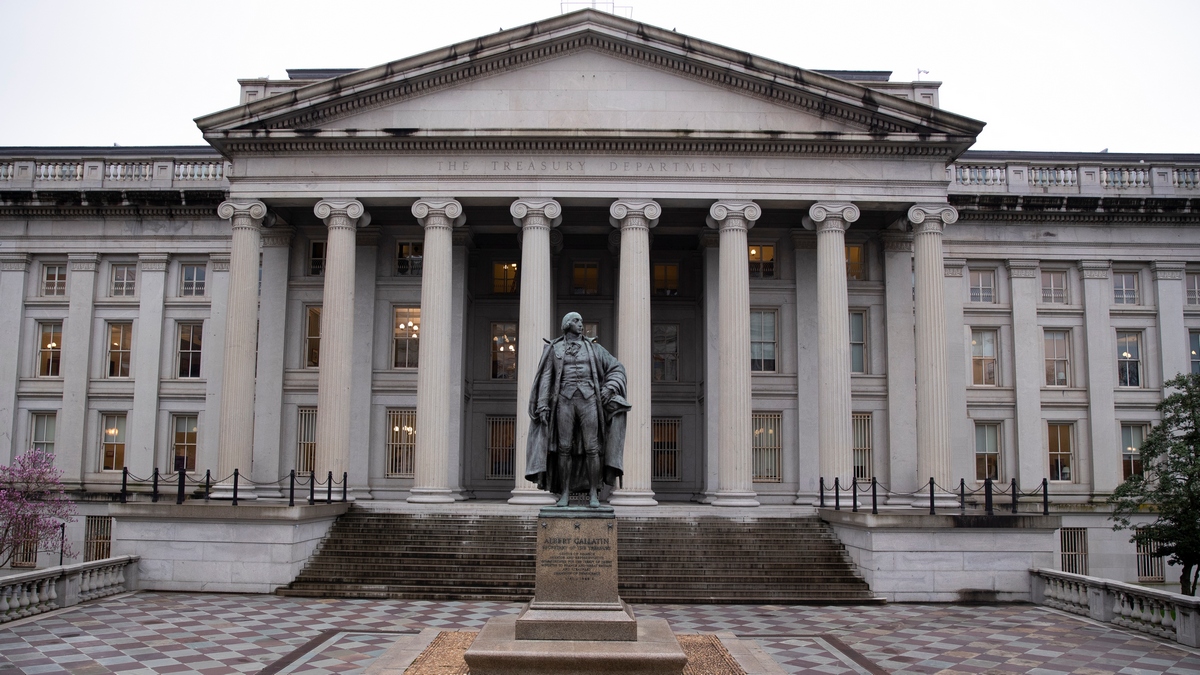
On August 19, even before the release of debt data, the US Treasury announced it would double the volume of long-term bond buybacks — an attempt to stop the sell-off on the market. This is a tactical move that buys time but doesn't solve the underlying cause: expenses are growing faster than revenues.
Treasuries are the basic asset of the entire global financial system. If investors systematically demand a higher premium for American debt, this will raise the cost of capital not only in the US but around the world.
Political backdrop
On August 8, the Senate passed a temporary budget resolution to avoid a shutdown before the midterm elections. Memories are fresh: the previous shutdown lasted 43 days at the end of 2025-2026 and left hundreds of thousands of federal employees without paychecks for several weeks. The new one came just 11 weeks after the previous one ended.
The question is not whether the American financial system will withstand another debt record — it has weathered bigger shocks. The question is whether investors will continue to finance this debt at an acceptable price when rates are already at the crisis levels of 2008, and there is no political will to cut the deficit before elections.