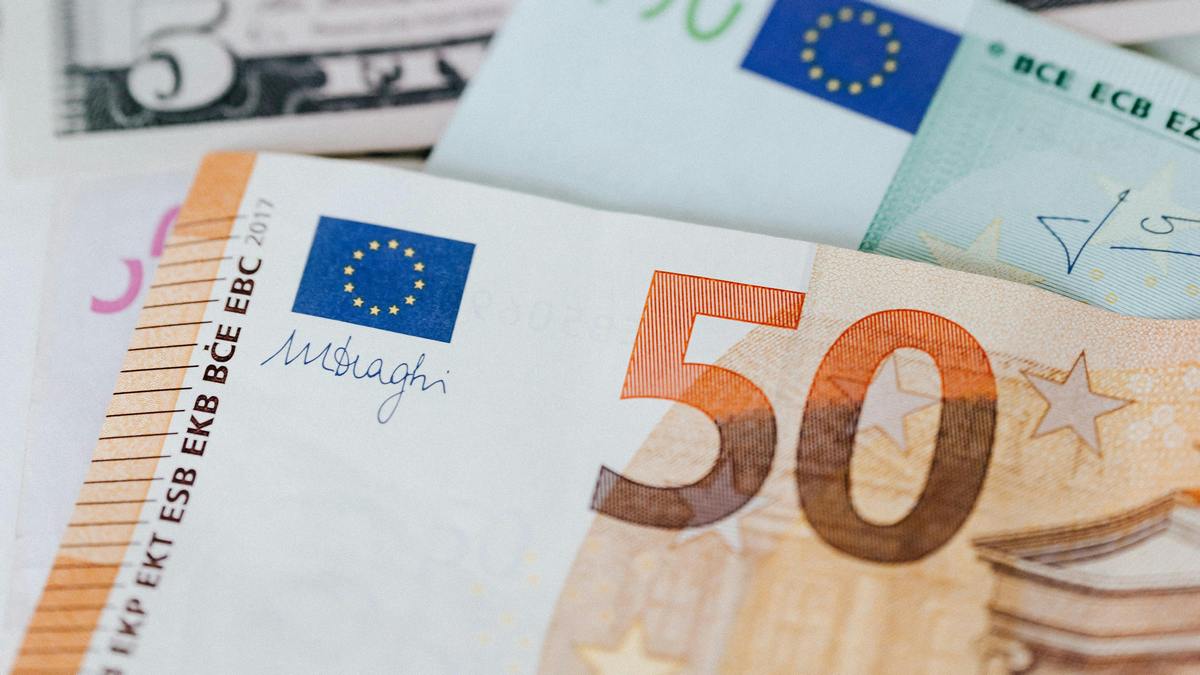
On August 21, the National Bank set the official exchange rate of the hryvnia to the euro at 52.1301 hrn — a new all-time high. Compared to the previous day, the euro increased by 26 kopiykas, and the currency first crossed the 52 hrn mark back on June 16. The dollar rate, meanwhile, remains much more stable — 44.6144 hrn, even below its June 11 peak of 44.9790 hrn.
At first glance, this looks like an attack on the euro. In reality, it's more complicated: the hryvnia is officially "pegged" to the dollar through the NBU's managed devaluation, and the rate to the euro is derived from how the dollar performs on the global market relative to the European currency.
The dollar weakens globally — the hryvnia simply reflects this
When the dollar depreciates globally relative to the euro, the Ukrainian hryvnia, which is pegged to the dollar, automatically "pulls" the euro rate along with it — even if the NBU itself has never once intervened in trading specifically for the European currency. This has happened earlier this year.
- Due to the devaluation of the dollar, to which the hryvnia is pegged, the euro rate in Ukraine exceeded 51 hrn in January.
If you compare the annual dynamics, the picture becomes even clearer. A year ago, the euro rate was set at 48.32 hrn, and the value of 1 dollar in Ukraine was 41.35 hrn. This means that over the year, the euro appreciated by approximately 7.9%, and the dollar — by virtually the same amount. This means that the record of 52.13 hrn — is not a story about sudden weakness specifically of the euro, but a continuation of the smooth managed devaluation of the hryvnia, which is further amplified by the global behavior of the dollar.
Who is already paying the price for this difference
For most Ukrainians, the dollar rate is a psychological reference point, but real costs are often tied precisely to the euro. The European Union is Ukraine's main trading partner, so a more expensive euro directly raises the cost of imported cars, equipment, medicines, and components from Europe before it even affects the dollar rate.
These same processes work in two directions:
- Businesses importing from the EU face higher production costs — and sooner or later pass this on to consumers.
- Exporters selling goods in euros while incurring costs in hryvnia, conversely — benefit from the exchange rate difference.
- Ukrainians who work, study, or receive payments in euros from abroad convert a sum that has become "heavier" in hryvnia equivalent.
Politics against the backdrop of numbers
The exchange rate dynamics are not unfolding in a vacuum. The National Bank raised its key rate to 15.5% due to increased inflation risks, and the decision was made to preserve the attractiveness of hryvnia savings, the stability of the foreign exchange market, and control over inflation expectations. This is intended to help bring inflation back to the 5% target. In other words, the NBU acknowledges: managed devaluation is a compromise between exchange rate stability and price restraint, not a sign of loss of control.
The question is not whether the euro will "break through" another mark — given current global dollar weakness, this is almost inevitable. The question is different: will the National Bank manage to keep inflation under control with a 15.5% rate, while import prices from the eurozone continue to slowly but relentlessly rise for Ukrainian businesses and consumers.