On April 22, 2026, the gaming industry regulator PlayCity annulled the license of LLC "Spaciex," operating under the Cosmolot brand. The Press Service of the Ministry of Digital Transformation announced this. The same day, the court suspended the execution of the decision following the company's lawsuit — meaning the casino formally loses its license, but continues operating in practice.
What exactly the regulator found
PlayCity identified two violations of financial settlement rules. The first — use of p2p payments: instead of crediting funds through payment systems by requisites, the casino accepted ordinary card-to-card transfers. The second — the ability to top up a gaming account from a third party's bank card not linked to the player's account.
Both practices are prohibited by Ukrainian legislation. The first makes it impossible to track transactions in the State Online Monitoring System (DSUS). The second is a classic money laundering indicator: a third party transfers money to someone else's gaming account, bypassing identification.
"Instead of transparent payment by requisites, the online casino accepted ordinary card-to-card transfers and allowed gaming accounts to be topped up from third parties' cards"
— Acting Minister of Digital Transformation Oleksandr Bornyakov
PlayCity applied two separate fines for these violations:
- 8.6 million UAH — for use of p2p payments
- 4.3 million UAH — for accepting funds from third parties' cards
Together — 12.9 million UAH. For a company with annual revenue exceeding 200 million euros, this is a fine within the margin of error.
Not the first case — and not the last
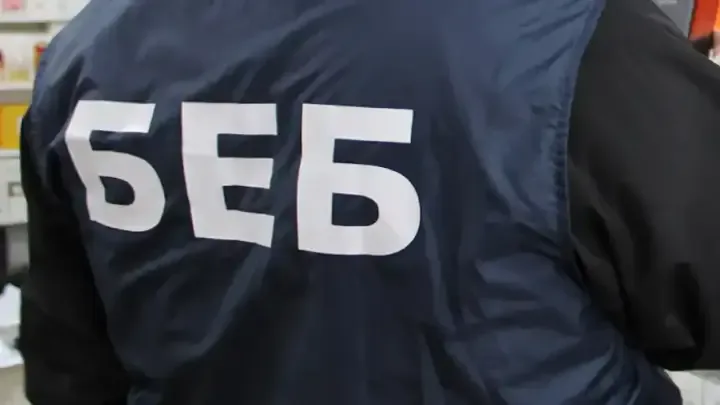
Cosmolot has been in legal conflict with the state since at least February 2024. Then the Bureau of Economic Security announced suspicion of tax evasion of 1.2 billion UAH and arrested 700 million UAH in LLC "Spaciex" accounts. According to the investigation, a group of individuals organized unlicensed games through over 30 mirror websites with interfaces similar to Cosmolot, using "misdecoding" of payments — a method of masking transactions that makes it impossible to identify them as gambling-related.
Cosmolot rejected the accusations then, claiming the mirrors were the work of third parties illegally using the trademark. In March 2024, the company further claimed that the prosecutor's office was artificially delaying the removal of arrest from accounts to prevent payment of quarterly taxes of 1 billion UAH.
The Shevchenko District Court of Kyiv eventually removed the arrest after the company, according to case materials, "voluntarily remedied the harm and paid taxes in full." Without a verdict. Without confiscation. Without a public report on the actual settlement amount.
Who stands behind the company
In autumn 2024, American investment holding Nevada Gaming Holding announced the completion of acquiring LLC "Spaciex." The holding's CEO is Anglo-German businessman Arnulf Damerau, who earlier, in February 2024, publicly accused "corrupt officials in Ukrainian security agencies" of demanding tens of millions of euros. The company planned a US IPO with a valuation exceeding $1 billion.
Before the transfer to the American holding, Sergiy Potapov was listed as the ultimate beneficiary of LLC "Spaciex" in registers. A number of Ukrainian media outlets claimed that Potapov was a nominal owner, with the real controller being Russia-linked Sergiy Tokarev. Cosmolot denies these versions; verified evidence of the connection has not been publicly presented.
PlayCity: a new regulator with an old problem
PlayCity was created in March 2025 to replace KRAIL — after KRAIL's head Ivan Rudoy was detained in December 2024 on suspicion of assisting Russian online casinos. The current PlayCity head Hennadiy Novikov previously held the position of deputy head of KRAIL's apparatus.
Acting Minister Bornyakov announced that the market is transitioning to DSUS — a real-time transaction monitoring system that will automatically detect any "schemes." The draft law with corresponding amendments to the basic gambling law is expected to be considered by the Verkhovna Rada by the end of 2026.
While the court pauses in the Cosmolot case, the question remains open: if the online monitoring system truly starts working in real time — will the casino have time to once again "voluntarily remedy violations" before the regulator has evidence that cannot be challenged?