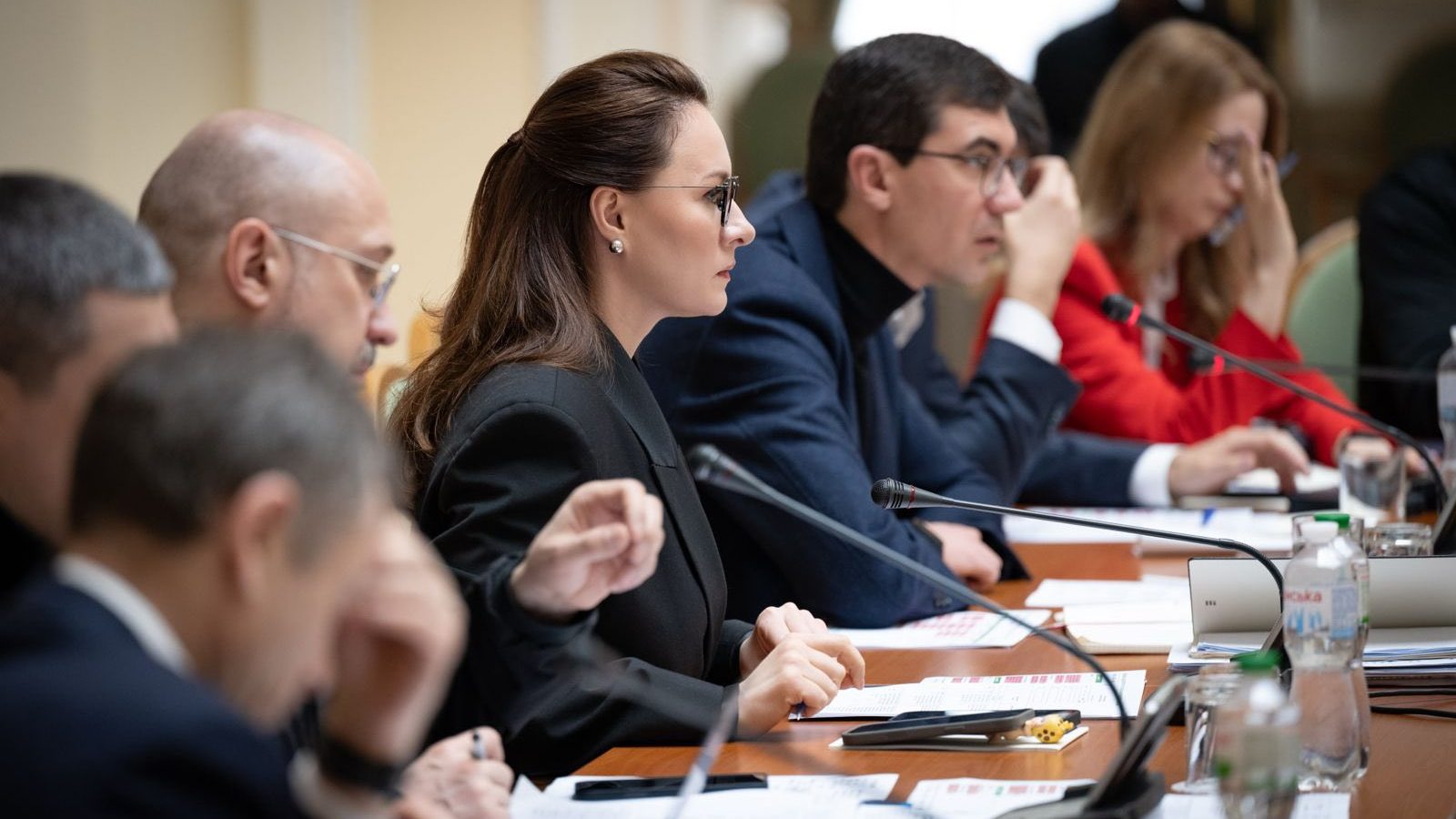
Prime Minister Yuliia Svyrydenko met with the heads of parliamentary committees on Monday and announced that this week will see the consideration of "urgent" bills on which "there is an understanding." Contentious ones will wait longer. President Zelenskyy previously mentioned the total number of necessary laws: ten.
What lies behind this "understanding"
Key dates are April 7–8 and 28–29. According to Andrii Motovilovets, first deputy chairman of the Servant of the People faction, these dates concentrate "all laws tied" to commitments with international partners — the IMF, World Bank, and EU within the framework of Ukraine Facility. Even the consideration of military bills has been moved to Thursday to keep Tuesday and Wednesday free.
The reason for the rush is concrete: already on April 13, the Ukrainian delegation flies to Washington for a meeting with the IMF. As reported by Yaroslav Zheleznyak, first deputy chairman of the Finance Committee, the external financing deficit for the first two months of 2026 already amounts to $3.5 billion, while the total sum of unfulfilled commitments to partners reaches almost €7.4 billion.
"I'm frankly quite frightened about what could happen if we don't vote and don't receive the funds"
Andrii Motovilovets, first deputy chairman of the Servant of the People faction
How the crisis developed
Voting failures have been ongoing since the beginning of the year. On January 15, the Council failed to include three bills on the agenda — none received 226 votes. In particular, bill No. 14025 on taxing income from digital platforms (the so-called "OLX tax") was supported by only 113 deputies. In March, the situation repeated itself: the last plenary week of the month was effectively blocked — Tuesday's session was cancelled due to lack of attendance.
According to LB.ua, Servant of the People openly sabotages government bills, accusing the Cabinet of ignoring parliament. Among the reasons are deputies' fears of anti-corruption bodies: since the beginning of the year, five parliamentarians have been notified of suspicion by NABU and SAP in cases of bribery for voting.
By the end of March, Ukraine had failed to meet three key structural milestones under the IMF's Extended Fund Facility (EFF) program: a tax reform package, strengthening the nomination of supervisory board members of state banks, and appointing the head of the State Customs Service. According to analysts at the #RRR4U Consortium, Ukraine failed to meet nine Ukraine Facility indicators in the fourth quarter of 2025.
Backup plan: rewrite the rules
In parallel, Svyrydenko announced a structural way out of dependence on voting. As Public Radio reported, the prime minister stated that Ukraine plans to reformat Ukraine Facility together with the EU this year — making the program "more flexible and oriented toward government action rather than parliamentary voting."
"This way we won't have dependence on voting in the Verkhovna Rada. The government is ready to implement this plan, and there is an understanding with the European Commission"
Yuliia Svyrydenko, Prime Minister of Ukraine
This is an acknowledgment of a systemic problem: if the mechanism needs to be rewritten so it doesn't depend on parliament — that means parliamentary support is no longer considered a reliable resource.
What this week actually tests
"Agreed" — this is a declaration of intent to put bills on the agenda. The implementation mechanism — voting in the session hall — has never worked stably. The Council has already twice failed to gather 226 votes for bills that are now back in line.
- On April 7–8, all bills that passed first reading and are ready for adoption are put to a vote
- Contentious documents — in particular those that "raise discussion" according to Svyrydenko — remain for April 28–29
- The Finance Ministry warned: if financing continues to be delayed — restrictions on non-military payments will be considered
If on April 7–8 the Council does not vote for at least a package of "non-contentious" bills before the delegation flies to Washington on the 13th — negotiations with the IMF will take place without any new fulfilled commitments from the last quarter.