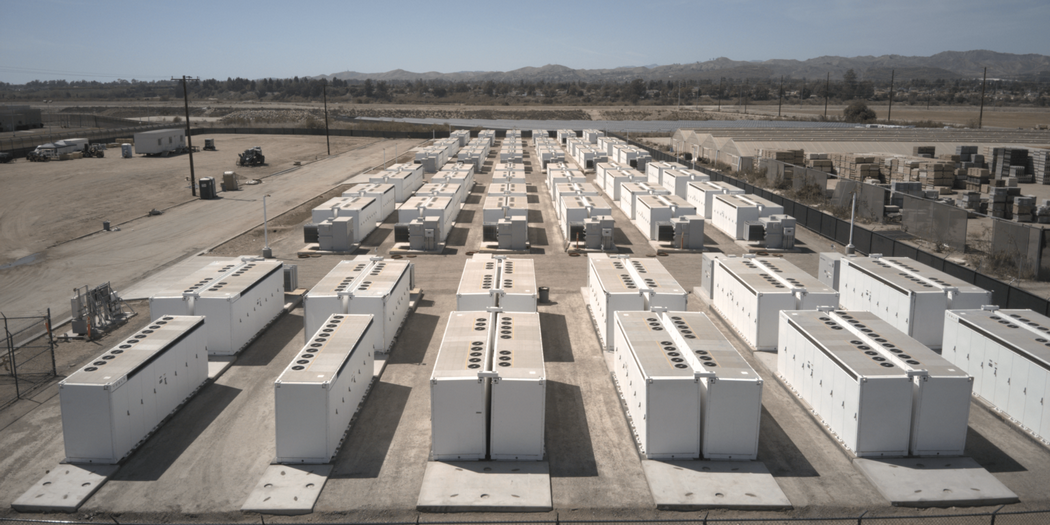
When Oschadbank announced a loan of €23.6 million for the construction of an energy storage system with a capacity of 50 MW, the press release emphasized megawatts and coverage percentages. The real news was in a single paragraph at the bottom: for the first time in Ukrainian energy sector history, Lloyd's syndicates were involved in the agreement.
Why insurance underwriting matters more than lending
Project financing amid active warfare is not just a line item on a bank's balance sheet. It's a question of whether anyone outside is willing to stake money on whether the facility will survive the next strike. Until this deal, the answer from international insurers was largely "no."
According to Interfax Ukraine, Oschadbank called this project its first experience structuring energy sector financing with international insurance coverage — including participation from Lloyd's syndicates. This is not a line from a press release about "innovation" — it's an acknowledgment that previous agreements did not have such coverage.
"Energy storage systems are not simply an infrastructure asset, but the foundation of Ukraine's energy security and the basis of the future energy system"
Maksym Pyshnyy, director of Electrica Ukraine LLC
What stands behind 50 MW technically
The BESS with a capacity of 50 MW and a volume of 131.2 MWh will not operate as a backup generator in case of a blackout. The project is implemented under a long-term contract with Ukrenergo for automatic frequency restoration services — a balancing tool that responds to deviations within seconds, before a dispatcher can manually react.
After strikes on major generation facilities, this function became critical. According to the IEA, before the full-scale invasion, Ukraine had approximately 38 GW of dispatched capacity; after the spring 2024 attacks, only 12 GW remained. Maneuvering resources — the ability to quickly compensate for shortfalls — decreased disproportionately: large thermal units were either damaged or occupied with baseload.
Insurance market and war risk: where the line is now
Lloyd's has long published analytics on BESS as a promising insurance direction — but this concerned peaceful jurisdictions. Insuring energy infrastructure in an active conflict zone is a fundamentally different risk category.
The industry association SEAU in its 2025 review separately recommended "legislative implementation of effective mechanisms for insuring war risks" — meaning that even after the market began moving, there is still no systemic solution. The Electrica Ukraine deal is manual work, not a scaled model.
- Financing: €23.6 million — approximately 70% of project cost
- Insurance: Lloyd's syndicates, the first such precedent in Ukrainian energy sector
- Contract: long-term agreement with Ukrenergo for frequency regulation services
- Market context: in 2024, within Ukrenergo auctions, 398 MW of storage units were installed — there is demand, but insurance coverage remains an exception
Precedent or one-off deal
The key question is not whether this particular BESS will work. The question is whether this deal structure — state bank plus international insurer plus long-term offtake from Ukrenergo — will become a reproducible scheme for subsequent projects.
If SEAU is right and Ukraine expects over 3 GW of new storage facilities by the end of 2026, financing without insurance will become a bottleneck. Lloyd's precedent will either scale through standardized coverage terms — or remain an exception for those who can afford individual deal structuring.
If over the next 12 months no other agreement with international war coverage emerges, it will mean one thing: Lloyd's entered this deal as an exception, not as the beginning of a new policy toward Ukraine.