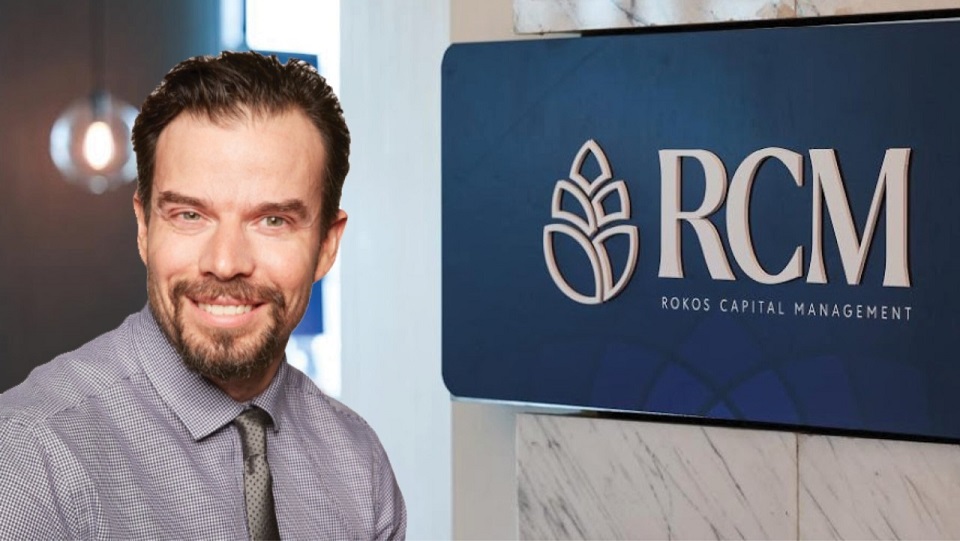
Chris Rokos paid approximately £330 million in taxes to the British Treasury last year — the third-largest contribution in the country according to the Sunday Times ranking. Now he is relocating his tax residency to Greece and opening an office for his hedge fund in Athens. The Rokos Capital Management fund manages $22 billion in assets, while Bloomberg estimates the founder's personal wealth at $4 billion.
At first glance, this is another story about a billionaire tired of British rain. But behind the figures lies a practical question that is now painful for any government facing a budget deficit: what is the cost of losing one wealthy person and can this be compensated by raising taxes on those who remain.
What exactly changed in Britain
Rokos is not leaving due to sudden frustration, but because of a specific rule change. Britain abolished the long-standing non-dom regime, which allowed wealthy foreigners not to pay British tax on income earned outside the country. Instead, a new Foreign Income and Gains regime was introduced — complete exemption from tax on foreign income, but only for four years.
Four years is not much compared to what competitors offer. Greece allows wealthy foreigners the option to pay a fixed €100,000 per year on all foreign income and has a separate 15-year preferential regime for investors. This summer, Athens additionally simplified rules for fund managers: now carried interest — the share of profits received by the manager — is taxed at only 5%.
So it is not about the absence of taxation altogether, but rather that Greece has offered a longer and more predictable deal. For a person who plans to manage a $22 billion fund for the next fifteen years, the difference between four years of benefits and fifteen years is not a detail, but the foundation of financial planning.
Rokos is far from the first
The list of those who have already left Britain recently reads like a chronicle of capital flight: Norwegian billionaire John Fredriksen, German investor Christian Angermayer, founders of Improbable and Revolut, Icelandic billionaire Thor Bjorgolfsson, and even Lakshmi Mittal — a man who has topped the list of Britain's richest residents eight times.
When it is not just one random investor leaving the country, but the same trajectory systematically repeating itself, this is no longer a personal decision, but a market signal about where capital is moving in response to tax policy.
Why this is happening now
Here a second layer of the story emerges — the budget layer. The first budget of Chancellor of the Exchequer John Healey is scheduled for October 28, and it is being prepared at a time when the government's fiscal reserves have already been cut in half — from £23.6 billion in March. The reason is a sell-off of bonds on the world market, which complicates borrowing.
Against this backdrop, Britain is again discussing raising taxes on banks, oil companies, and wealthy citizens. The logic is clear: if money is needed, the simplest way to find it is to tax those who earn the most. But the paradox is that this very logic accelerates the departure of those same people whose taxes the government wants to increase.
The loss of one taxpayer at Rokos' level means that someone else will have to fill the £330 million hole — or the government will have to cut spending.
A question without a simple answer
Britain finds itself in a classic tax trap: raising rates for the wealthy to cover the deficit is an attractive idea for voters, but it only works if these people have nowhere else to go. Greece, Italy, and other jurisdictions have proven that alternatives exist, and they are quite real for people with capital and mobility.
If after October 28 Britain still raises taxes on the richest, it is worth watching not for market reaction on day one, but for how many more names are added to the list of those who have already left — Fredriksen, Angermayer, Mittal, and now Rokos.