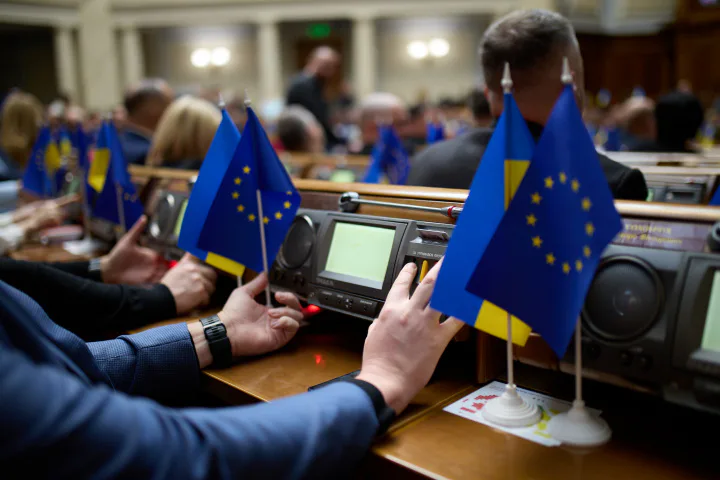
The Verkhovna Rada on June 9 passed Bill No. 15111-d on taxation of digital platforms: 241 votes in favor, with no principled opposition from business. For a law that the public dubbed the "OLX tax," the result is atypical.
What Actually Changes
The key paradox of the law is that it does not increase but decreases the rate. Instead of the previously effective 23% (personal income tax + unified social contribution), it is now 10%: 5% personal income tax and 5% military levy, without the unified social contribution. This is how MP Danylo Hetmantsev explained the logic.
The law applies to marketplaces and classified ad platforms (OLX, Prom, Temu), service and delivery aggregators (Bolt, Uber, Uklon), streaming platforms, and freelance services. In other words, nearly the entire segment of informal digital employment where millions of Ukrainians earn income with practically no reporting.
Where the Line Is Drawn
If you sold less than 2,000 euros worth of goods on the platform per year, no tax is levied at all. This applies specifically to goods sales; conditions for services and rentals are separate.
Technically, you won't have to pay yourself: platforms will become tax agents and automatically withhold and transfer 10% to the budget. For example, YouTube will deduct the percentage directly from channel payouts.
"You won't have to pay anything yourself"
— MP Yaroslav Zheleznyak, comment to RBC-Ukraine
What Was Removed From the Original Text
The revised version differs significantly from what was originally submitted. The final text eliminated:
- mandatory opening of special accounts for sellers;
- provisions on disclosure of banking secrecy;
- the risk of automatically recognizing the relationship between platform and seller as employment — which could have meant accrual of the unified social contribution.
According to Zheleznyak, these concessions made the text acceptable to all business associations that supported it.
Context: Why the IMF and Why Now
The law is a structural benchmark in the cooperation program with the IMF — that is, its adoption was a condition for receiving financing. At the same time, Hetmantsev insists that the document is not purely a fiscal compromise: it is an attempt to legalize shadow digital income through a simple and automated administration model similar to the one already in place in the EU.
When exactly the law will take effect remains unclear: it needs the President's signature and publication. A transition period will apparently give platforms time for technical integration with the tax service.
The main question now is not the rate but coverage: if international platforms (such as Etsy, Fiverr, Patreon) refuse to act as tax agents for Ukrainian users, the state will get a law with a hole precisely where the most undeclared income is.