When private cars began appearing more frequently on the streets of Pyongyang in spring 2025, economists already knew the reason. According to the Institute of National Security Strategy at NIS (South Korea's National Intelligence Service), from August 2023 to December 2025, North Korea earned between $7.67 and $14.4 billion — primarily from weapons sales and military deployments to Russia. This effectively equals the country's annual GDP.
What it sold and how much it received
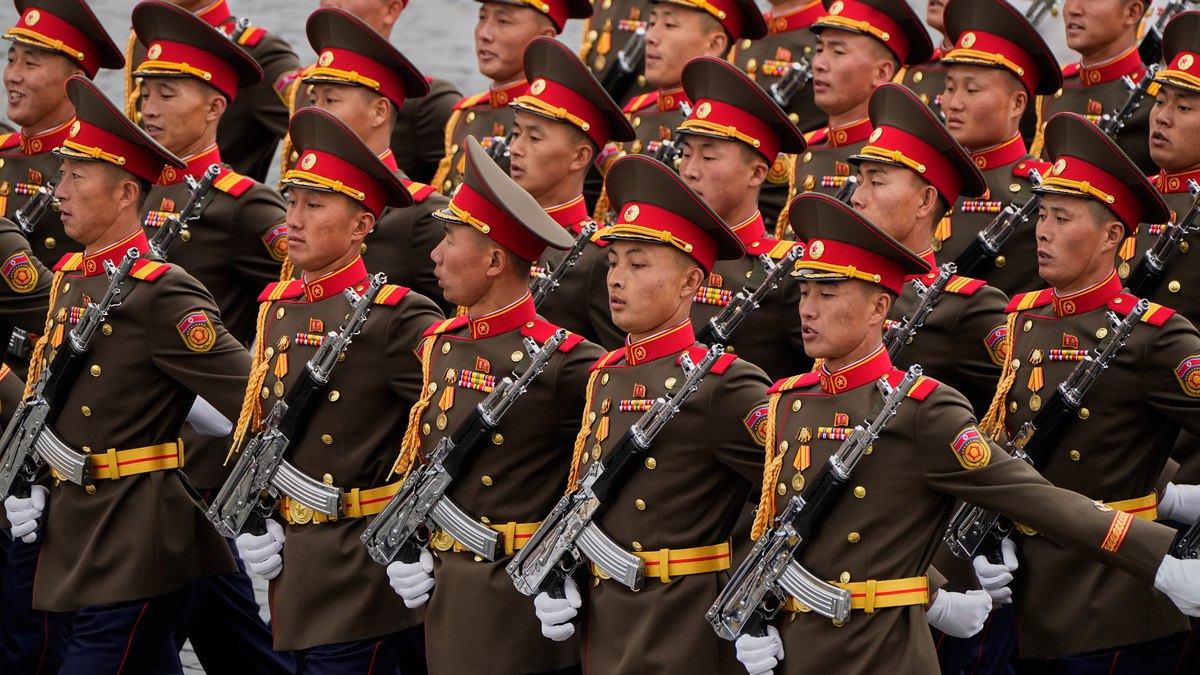
The scheme works like this: from July 2023, North Korea began massive weapons exports, and from October 2024 — military deployments. According to Seoul intelligence, there were four deployment waves in total — over 20,000 soldiers, including special forces and engineering units. The British analytical center Open Source Centre, analyzing satellite imagery, recorded 15,000 containers of ammunition shipped between September 2023 and April 2025 — approximately 4 million shells. According to the Council on Foreign Relations (CFR), by July 2025, Russia had received 12 million artillery shells from North Korea in total.
Income from military deployments — salaries and compensation for the dead — is estimated at $620 million. If the current pace continues, Pyongyang will receive approximately $560 million annually from this "export" category alone.
"Selling several containers of artillery shells gives North Korea the opportunity to purchase hundreds of thousands of tons of rice".
Wi Sung-lac, former South Korean ambassador to Russia, in an interview with The Korea Herald
Numbers and reality: who actually gets the money
Here begins the key detail that can easily be lost among the large figures. The NIS Institute clarifies: Pyongyang actually received only between 4% and 19.6% of the estimated income — the rest is counted as "added value": access to advanced military technology, military training in real combat conditions, modernization of the missile program. In other words, a significant portion of the "earnings" — is not cash, but technological dividends.
This is confirmed by the nature of Moscow's payments. As noted in the analytical report by the Congressional Research Service (USA, May 2025), Russia transferred anti-aircraft missile equipment and electronic warfare systems to North Korea, unfroze $9 million in North Korean assets, and provided access to the global financial system bypassing UN sanctions.
Meanwhile, North Korea's heavy chemical industry grew by 10.7% in 2024 — the largest figure in all available statistics, according to the South Korean Central Bank. The country's overall GDP growth was 3.7% — a record in eight years. The bank's official representative Park Chan-hyun directly linked this to the "expansion of economic cooperation between North Korea and Russia".
The price of the boom: 6,000 killed and wounded
The British Ministry of Defence estimates North Korean military casualties at over 6,000 killed and wounded — primarily during operations in the Kursk region. The Hwasong-11 missiles that North Korea supplies to Russia initially struck targets with low accuracy — however, according to senior Ukrainian officers, since late 2024, accuracy "has noticeably improved". In other words, the battlefield in Ukraine has become a testing ground for perfecting North Korean weapons — at someone else's expense and with others' deaths.
In June 2025, Pyongyang began construction of the largest military-industrial facility in its history near Hichon — apparently for new contracts with Moscow.
Cars in Pyongyang — and hunger beyond its borders
The appearance of private cars on the streets of the capital is a real, but narrow fact. Legislative changes in 2024–2025 allowed private car ownership, mostly Chinese-manufactured vehicles under North Korean brands. Meanwhile, Korea Times notes: the gap between rich and poor in North Korea is widening — luxury is concentrated among those close to the regime, while extreme poverty is growing in regions outside Pyongyang. An economic boom and mass prosperity are not synonyms in a country without independent statistics.
If Russia does not cease military operations by the end of 2026 and North Korea maintains its current supply pace, Pyongyang could transform a temporary currency influx into a long-term rearmored army — with combat experience, more accurate missiles, and a nuclear program that Moscow de facto subsidizes. The question is not whether North Korea has become enriched. The question is what it bought with this money, and who will pay for it next.