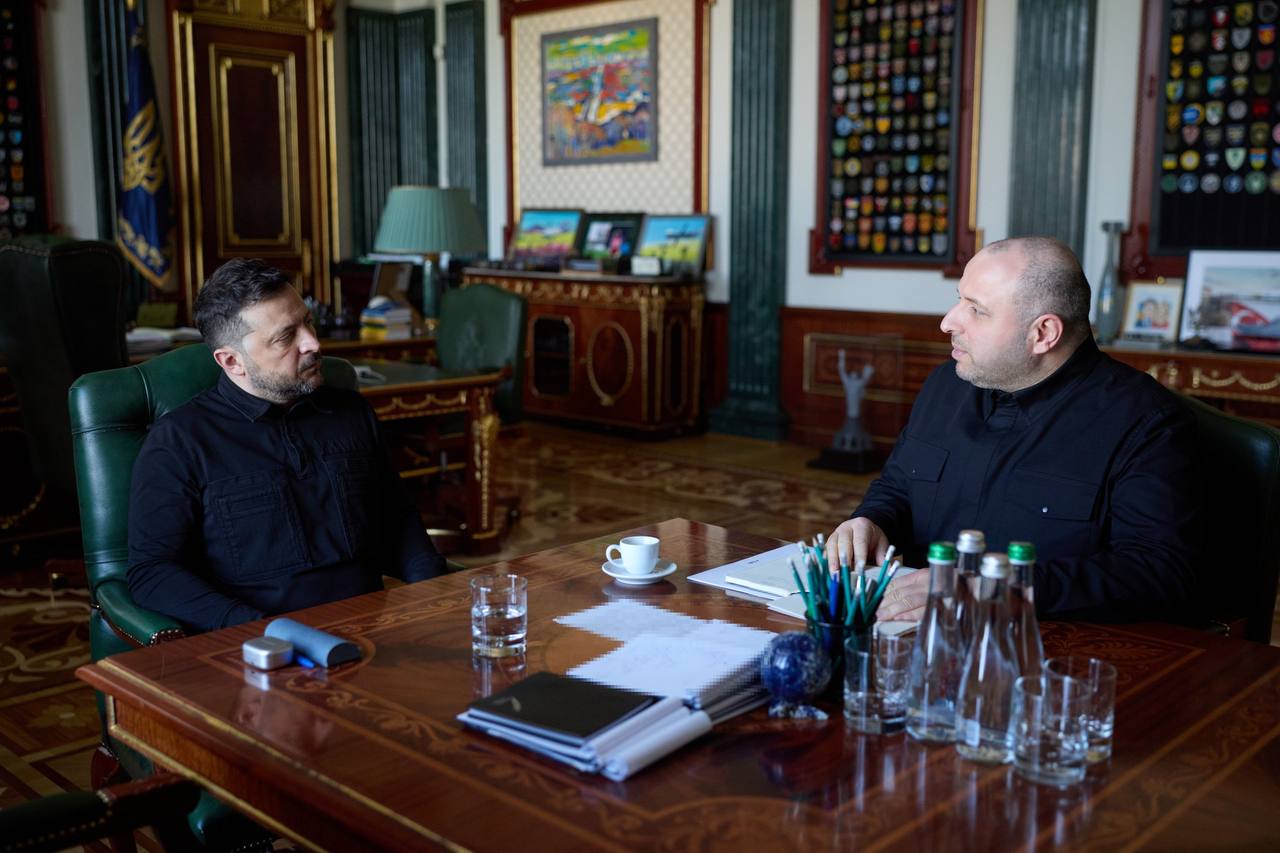
Secretary of the National Security and Defense Council Rustem Umierov has returned from Miami, where he spent several days meeting with U.S. Presidential Special Representative Steve Witkoff, his son-in-law Jared Kushner, and White House official Josh Gruenbaum. National security advisors from several European countries also participated in the negotiations as the parties attempted to align their strategic positions. Umierov's report to President Zelensky was released on Telegram on Monday, May 11.
Three tracks, varying levels of specificity
The first track is humanitarian. According to Umierov, the main focus centered on the return of Ukrainian prisoners of war. Trilateral negotiations between Ukraine, the United States, and Russia have not taken place since February, and Miami marked the first direct contact between Kyiv and American representatives after the White House became preoccupied with operations against Iran.
The second track concerns peace. Participants agreed on frameworks for security agreements and discussed "necessary deterrence measures to ensure sustainable peace" — but without details on implementation mechanisms or timelines. Formats for possible meetings at the leadership level were discussed, but no specific dates or venues were named. Umierov himself noted tersely: "Real progress depends on the Russian Federation."
"We continue to be in communication with U.S. representatives practically daily. We can see that even regarding a ceasefire, the Russian side unfortunately does not demonstrate constructiveness."
President Zelensky, Telegram, May 11
Drone Deals: What are the four agreements and what comes next
The third track is defense-industrial, and here there are the most measurable results. The Drone Deals initiative covers joint production of drones, missiles, electronic warfare systems, and software — unlike traditional weapons purchases, the agreements provide for technology transfer and co-production at facilities on both sides.
- ~20 countries are currently "working at various stages" of agreement preparation.
- Four agreements have been signed. Three of them have been publicly confirmed: Saudi Arabia, the UAE, and Qatar — 10-year contracts, each providing for at least 10 separate contracts. The fourth signed agreement has not been officially disclosed.
- Under the signed agreements, the necessary volume of fuel for the Ukrainian market has already been secured — the first concrete energy result of the initiative.
- Zelensky announced that Drone Deals will soon cover "another part of the world" — without specifying the region.
In parallel, negotiations continue regarding an agreement with the European Union: Umierov and Chief of the General Staff Hnatov have been tasked with developing "military modalities" for a Drone Deal with the EU. The U.S. proposal remains on the table unanswered.
Declaration and mechanism are different things
Agreement on "frameworks" in the security sphere is standard diplomatic language that records intent but does not commit to specific actions. The four signed Drone Deals are also "general agreements" which, according to Zelensky, "are further broken down into contracts" — meaning commercial implementation is only just beginning. No mechanism for independent monitoring of compliance with any of the agreements has been publicly disclosed.
If Russia does not change its position on the negotiation process before the next round of contacts, will there still be a point for the United States to continue the trilateral format — or will Miami become not a point of resuming diplomacy, but rather its upper limit?





