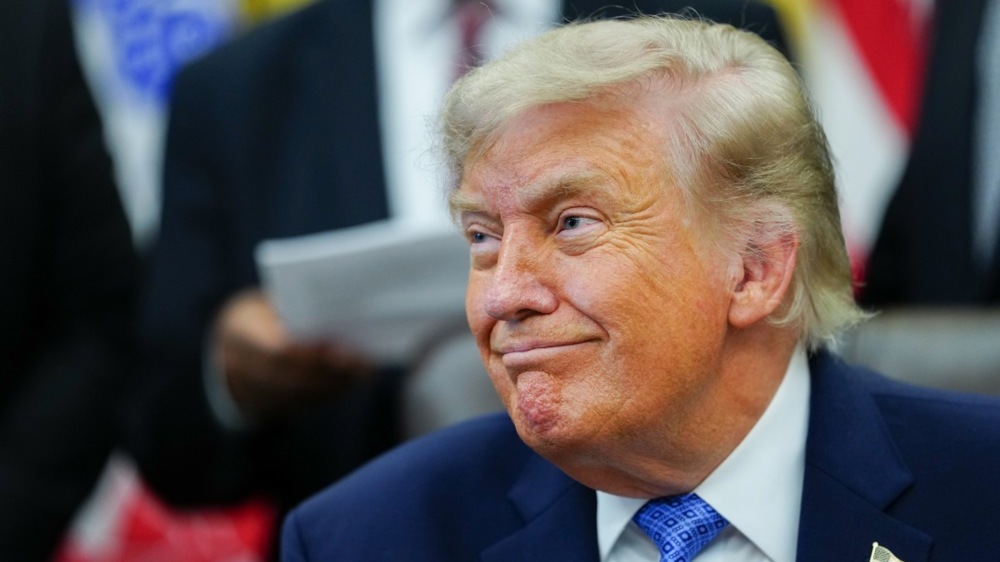
On July 2, 2026, Donald Trump sat in the Oval Office before CNBC cameras and explained why he had no conflict of interest in crypto. The argument was unexpected: "I could have known about it. I didn't know. There's nothing illegal about it, nothing bad." In other words, the US president admitted that he does not track his own income of over a billion dollars.
What the declaration showed
An annual financial disclosure filed with the Office of Government Ethics (OGE) recorded at least $1.4 billion in income from cryptocurrency projects for 2025 — the first full year of Trump's second presidential term. For comparison: the Mar-a-Lago resort brought in $77 million, and the golf club in Northern Virginia — $25 million.
The largest stream — approximately $635 million — is royalties from the $TRUMP memecoin, launched on the Solana blockchain three days before the inauguration in January 2025. Another $515–580 million came from World Liberty Financial (WLF) tokens — a crypto venture that Trump founded together with his sons. Reuters estimates the cumulative profit of the Trump family from crypto during this period at at least $2.3 billion.
Business assets are managed by a trust overseen by Donald Trump Jr. The administration insists that transactions are executed through automated third-party technologies.
Law signed — money already earned
Parallel to accumulating crypto income, the Trump administration pushed the GENIUS Act through Congress — legislation on stablecoin regulation, which the president signed. Trump publicly pressured Republicans, demanding they not let banks "destroy" the bill: "The GENIUS Act is under threat from banks, and that's unacceptable."
Here a structural problem arises that no White House argument resolves: WLF is actively developing in the stablecoin direction, and the president himself is lobbying for stablecoin legislation. The president and vice president are legally exempt from conflict of interest laws that apply to the rest of the executive branch. Trump directly cites this exemption.
"Of course, this is a conflict of interest."
Richard Painter, chief White House ethics lawyer under President George W. Bush, — BBC
"There is no precedent to compare this to. No president in the 20th or 21st century had anything even remotely similar."
Douglas Brinkley, historian at Rice University, — NBC News
Opposition without leverage
Democratic senators — Warren, Blumenthal, Peters, Durbin, Wyden — sent a letter to the heads of Senate committees demanding hearings. They point to an investigation showing that structures linked to the UAE purchased 49% of World Liberty Financial for approximately $500 million — a deal allegedly closed the day before the inauguration.
The Democrats' problem is purely arithmetic: Republicans control both the Senate and the House of Representatives. Without their agreement, no hearings will take place. So far, no Republican has publicly supported the idea of an investigation.
White House Press Secretary Anna Kelly responded to CNBC formulaically: "Neither the president nor his family have ever been and will never be involved in conflicts of interest" — and accused journalists of spreading "the same tired Democratic lies."
What comes next
The crypto industry invested $189 million in the 2024 elections — more than a third of all corporate campaign spending. This made it the largest corporate donor of the cycle. In return, it received: lifted regulatory pressure, the signed GENIUS Act, and a president whose personal financial interest directly depends on the state of the digital asset market.
Trump says he wants to make the US the "crypto capital of the world" so as not to fall behind China. The question is not about the goal — the question is about the mechanism: if a president signs laws regulating a market on which he personally made $1.4 billion, who and how will verify that these laws were written for the country and not for his portfolio?