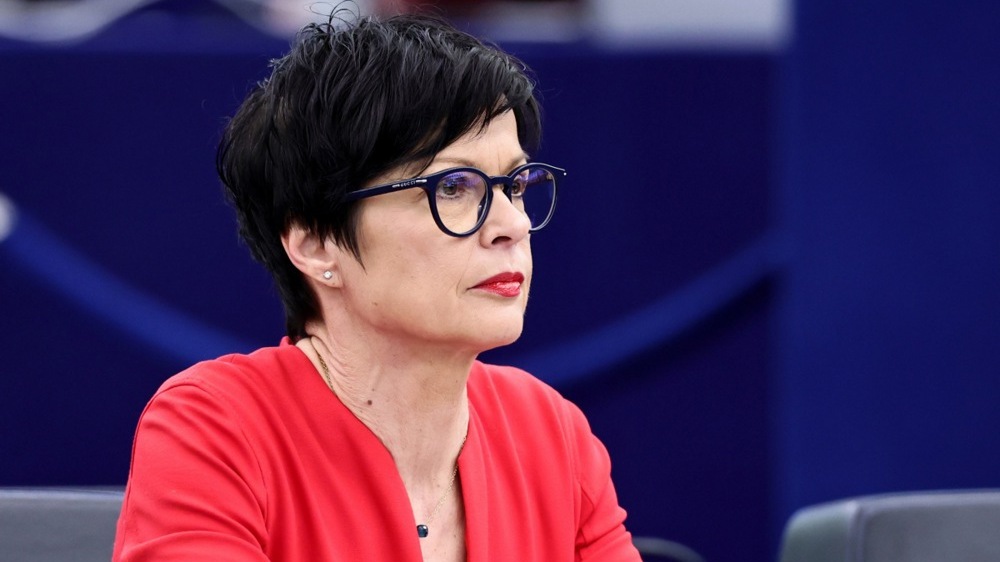
European Commission Vice President Martta Kos hinted to journalists that on April 16 at a ministerial dinner of the G20 financial track, the EU could announce the allocation of €2.5–2.7 billion to Ukraine under the Ukraine Facility program. This was reported by Politico.
What actually unblocked the funds
To understand the scale of the delay: these funds were supposed to arrive earlier but were frozen due to unfulfilled reforms. Only in early April did the Verkhovna Rada adopt several key laws. Among them are bill No. 14005 on digitalization of court decisions execution, bill No. 12087-d on the integration of Ukraine's and the EU's electricity markets, as well as a law on "industrial visa-free" trade with the European Union.
"I welcome the positive progress in the Verkhovna Rada — the parliament adopted important laws related to reforms for the EU and IMF"
Martta Kos, European Commission Vice President for Neighborhood and Enlargement, in a post on X
According to the EU representative Podesta, the payment mechanism works as follows: after the laws enter into force, Ukraine submits a request for a tranche, the European Commission assesses the request and sends a proposal to the EU Council in the form of an implementation decision — and only after its approval do the funds actually reach the budget.
Context: far from everything is completed
Ukraine Facility is a financial support program worth €50 billion until 2027 based on the principle of "money in exchange for reforms." For 2025, Ukraine was supposed to receive €12.5 billion. Overall, the plan includes 151 indicators across 69 reform areas.
However, the picture is not as rosy as the official "finally completed" sounds. According to VoxUkraine, in 2025, 14 indicators worth over €3.9 billion were not fulfilled, of which 10 are from the fourth quarter. Among chronically unfulfilled ones are the selection of judges for the High Anti-Corruption Court, ARMA reform, and the delineation of authorities between local governments and state administrations.
For comparison: the previous third tranche of €3.5 billion was approved by the EU Council in March 2025 — Ukraine fulfilled 13 out of 16 conditions. The three unfulfilled points did not block the payment: Ukraine Facility provides flexibility and a grace period for completing reforms.
- Digitalization of court decisions execution — adopted April 7
- Integration of electricity markets with the EU — adopted April 7
- "Industrial visa-free" trade with the EU — adopted April 7
- Oversight of local authorities' decisions (No. 14048) — one of the most difficult indicators, delayed for years; adopted in October 2024
What this means for the budget
The IMF completed the seventh review of the EFF program in March 2025 and transferred another $0.4 billion to Ukraine. According to the fund's estimate, real GDP growth in 2025 will be 2–3% — modest, but under conditions of three years of full-scale war, this is "resilience."
"External support alone is not sufficient to finance the deficit, restore debt sustainability, and finance reconstruction"
IMF, report on the seventh EFF review, March 2025
In other words: tranches from the EU are critical — but they only stabilize, they do not solve. Prime Minister Yulia Sviridenko has already stated that an additional €440 million may arrive after the completion of negotiations on public administration reform.
If the EU Council approves the tranche without delays — Ukraine will for the first time in several months exit "blocked funds" mode. But the real question is not in the April announcement: will the Verkhovna Rada manage to close six more unfulfilled indicators by the end of July — on which the next €2.11 billion depends?





