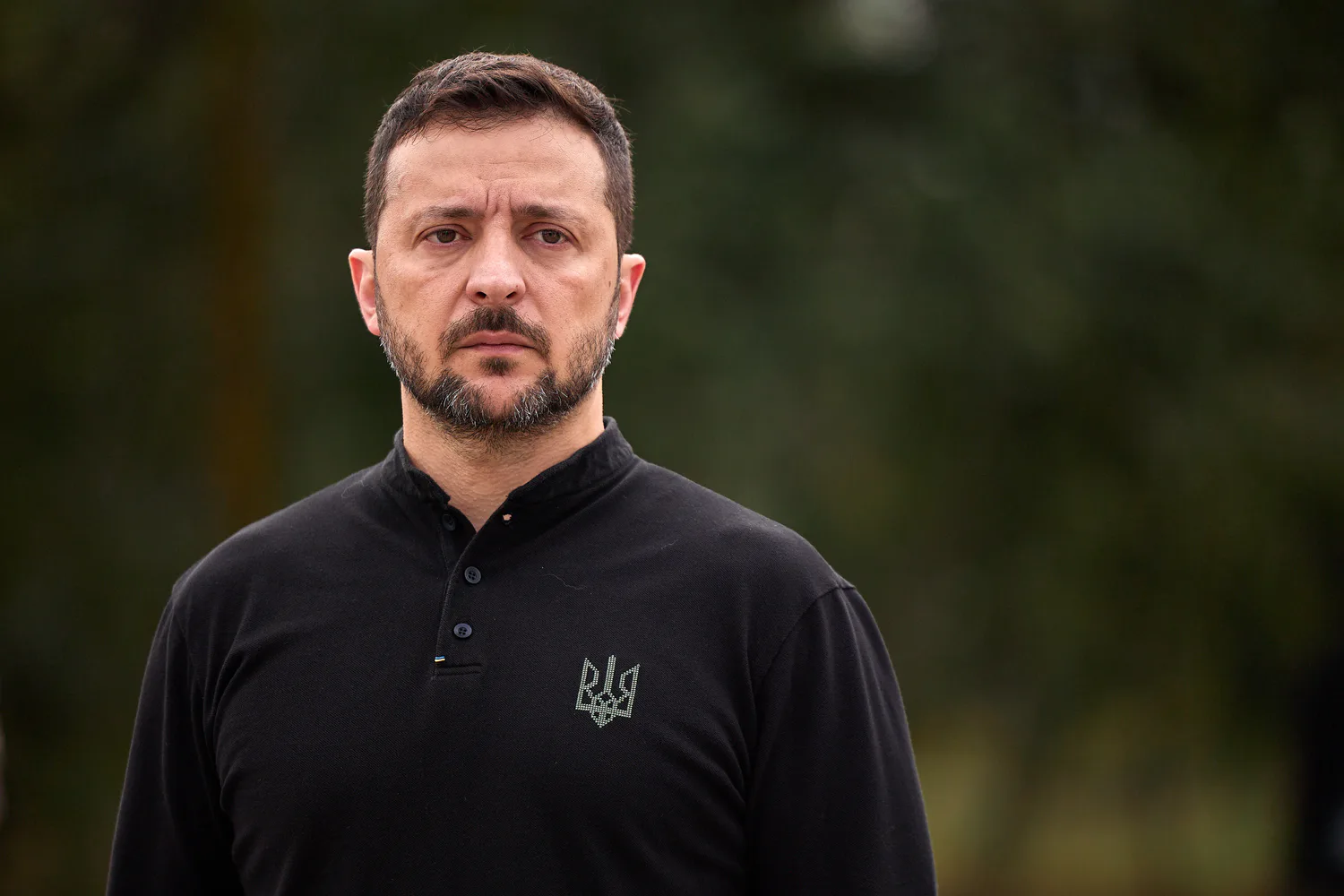
President Volodymyr Zelensky signed two sanctions decrees following decisions of the National Security and Defense Council. The first concerns 127 Russian military personnel — commanders of long-range aviation units of the Russian Air Force. The second targets 29 civilian cargo ships involved in transporting goods for Russia's military needs.
Who is on the list and what for
Sanctions have been imposed on officers who deployed over 4,100 air-launched cruise missiles — X-101, X-55, X-555, X-22, X-32 — and aeroballistic Kinzhal missiles. The President's Office specified the targeted strikes: the attack on the Okhmatdyt children's hospital in Kyiv on July 8, 2024; the strike on a multi-story building in Ternopil on November 19, 2025, which claimed 38 lives, including eight children; the bombing of Mariupol using FAB-1500 and FAB-3000 bombs; the strike on Groza village in Kharkiv region in October 2023.
These ships are involved in regular transportation of large volumes of weapons, ammunition and military equipment in circumvention of international restrictions.
Office of the President of Ukraine
29 vessels of the "shadow fleet" — civilian merchant ships formally unconnected to Russian armed forces, but effectively integrated into the weapons supply logistics chain. The EU began systematically pursuing such schemes separately: in October 2025, the EU Council sanctioned 41 shadow fleet vessels; in December, nine more structures involved in their servicing.
The logic behind the move: documentation rather than freezing
Ukrainian sanctions themselves do not block assets abroad — their direct effect is limited to Ukraine's jurisdiction. The real weight of such lists lies elsewhere: they form a named evidence registry that can be used in coordination with the ICC and partner jurisdictions. The ICC has already issued arrest warrants for Shoygu and Gerasimov specifically for strikes on civilian infrastructure — the court's prosecutorial strategy is moving toward concrete perpetrators, not just command.
For the shadow fleet, the mechanism is somewhat different: adding a vessel to Ukraine's sanctions list complicates its entry into ports of states that recognize these restrictions and creates additional pressure on insurance companies and port administrations.
Context: personalization as strategy
This wave of sanctions is part of a broader trend: Ukraine is consistently transitioning from general restrictions against "Russia as a state" to individual accountability of specific perpetrators. The same approach is being applied in the Council of Europe's registry of damages and in materials transmitted to international tribunals.
The question that will determine the real weight of these sanctions: whether at least several EU or G7 states will join Ukraine's list — and whether names from this list will appear in future ICC arrest warrants.





