On January 15, 1999, Serbian forces surrounded the small Kosovo village of Račak and began a systematic search of the houses. Residents found were taken away, tortured, and shot. Forty-five people were killed. On the same day, William Walker, the head of the OSCE mission, called it a "crime against humanity" and insisted that the victims were civilians, not KLA fighters — contrary to Belgrade's official position, which has not changed to this day.
Twenty-six years later, Kosovo police executed a court warrant and arrested five Kosovo citizens of Serbian descent — four of them former police officers. A sixth suspect remains at large. The operation was carried out as part of the "Račak II" case — a joint effort by the Special Prosecution and the Directorate for Investigation of War Crimes.
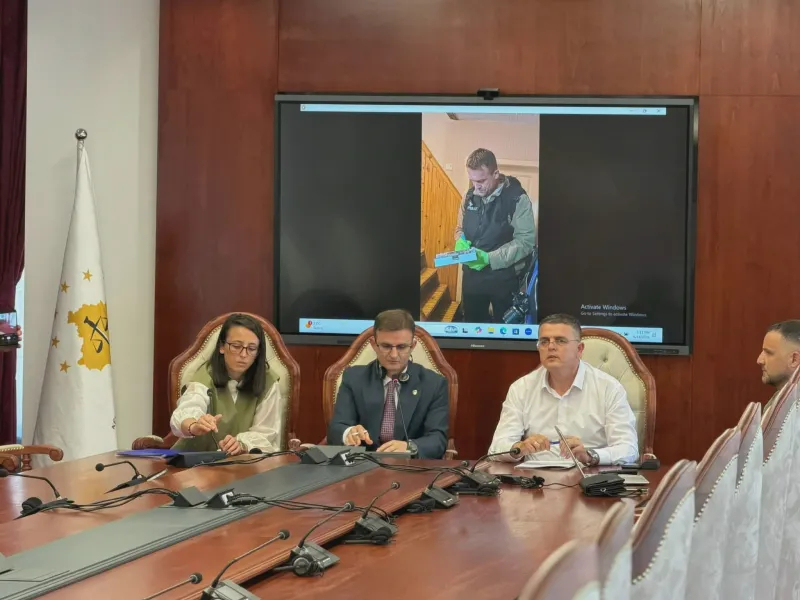
"We executed the court order and arrested five people suspected of involvement in the Račak massacre"
— prosecutor Ilir Morina at a press conference of the Kosovo Prosecution System
How they were found after a quarter century
According to prosecutor Morina, the suspects were members of units commanded during the war by Goran Radosavljević (alias "Guri") — a former commander of special police units of Serbia, whom the Special Prosecution has been searching for as one of the key figures since 2023. Radosavljević is in Serbia and sits on the supervisory board of the ruling Serbian Progressive Party. He denies wrongdoing.
Bashkim Spahiu, director of the Directorate for Investigation of War Crimes, reported that investigators used archival video footage to identify the suspects — including materials from Kosovo's RTK and Radio Television Serbia. The fact that identities were established through television footage also reflects a weakness: Morina acknowledged that no serious investigation into the Račak massacre was conducted at all until 2020.
Scale and precedent
Račak was not an isolated incident. The massacre became part of the charges against Yugoslav President Slobodan Milošević in The Hague tribunal — but a verdict was never delivered: Milošević died in 2006 during the trial. The only person convicted for this specific massacre to date is former Serbian officer Zoran Stojanović — 15 years handed down by judges from the UN mission in Kosovo.
Now the case is gaining broader dimensions for the region: in April 2024, a Belgrade court sentenced seven former Yugoslav People's Army soldiers to a combined 56 years in prison for massacres in Kosovo villages in 1999 — a precedent showing that Serbian courts are also capable of handing down such sentences, although rarely.
- 45 victims — the number of civilians killed on January 15, 1999; the body of one woman has never been found
- Until 2020 — no full investigation, according to the prosecution
- The 6th suspect in the "Račak II" case remains at large
- Goran Radosavljević — the main wanted person — is in Serbia and remains beyond the reach of Kosovo justice
Suspicion is not conviction
All five detainees are suspects, not convicted persons. Prosecutor Morina emphasized that criminal responsibility is only possible with sufficient evidence. This is fundamentally important in a case where 27 years have passed, witnesses are aging or deceased, and archives have been partially destroyed.
The Serbian side traditionally qualifies events in Račak as a "fiction" (President Vučić's formulation) or as a legitimate counterterrorism operation — a position Belgrade has not changed since 1999 and which has found no support in international courts.
If Kosovo's prosecution indeed files several indictments by the end of 2025 — as announced — it will become clear whether these arrests turn into a systematic accountability campaign or remain a single gesture after twenty-five years of inaction.





