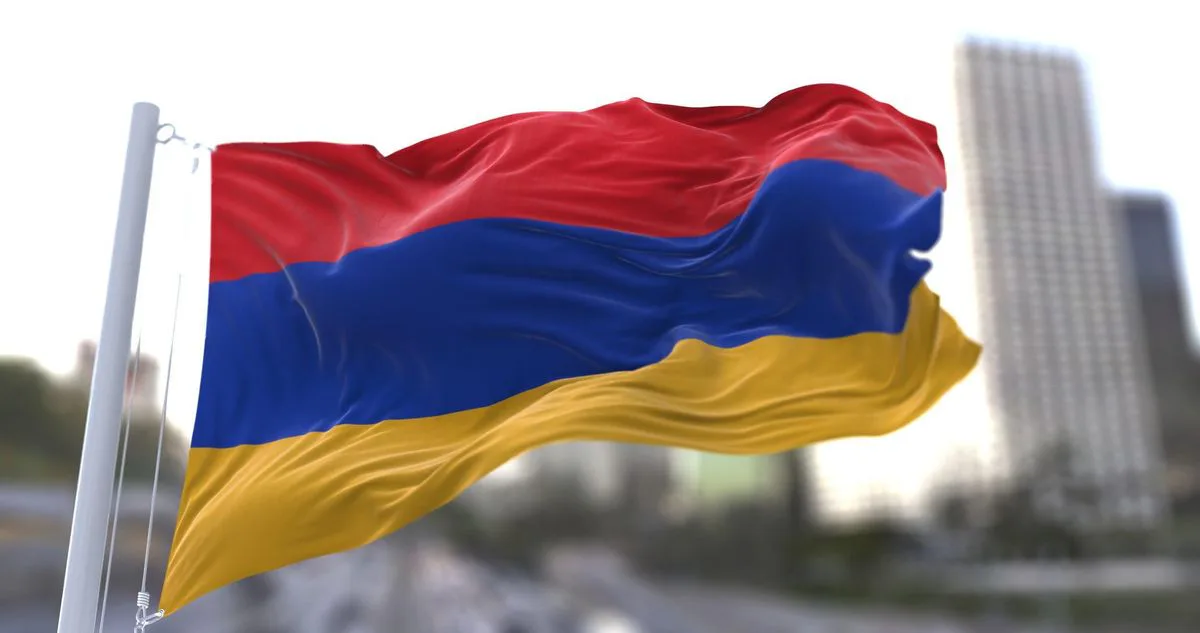
On June 7, Armenians came to polling stations with a turnout of 58.97% — the highest since 2018. The Central Election Commission registered a victory for Nikol Pashinyan's "Civil Contract": 49.81% of votes. The pro-Russian "Strong Armenia" party of businessman Samvel Karapetyan took second place with 23.3%. The "Armenia" bloc of former president Robert Kocharyan received approximately 9.9%.
Together, two pro-Russian groups received over 31% — more than exit polls predicted. This means that one-third of Armenians voted not for European integration, but against it. And it is this third that transforms Pashinyan's victory into a limited mandate.
What Was Missing
To conduct a constitutional referendum, which Azerbaijan demands as a condition for a peace treaty, two-thirds of parliament is needed. Pashinyan did not achieve this. As Al Jazeera notes, without this majority, the most ambitious points of his program — normalizing relations with Baku and Ankara — remain without an implementation tool.
In his victory speech, Pashinyan called the result a "historic victory" and promised to continue rapprochement with both the West and Russia. But the "both-and" formula increasingly satisfies neither side.
The Price of Turnaround — in Numbers
Armenia is economically embedded in Russian infrastructure more deeply than any other post-Soviet state that declares European integration. 82% of gas comes from Russia through Gazprom networks at a preferential price of $177.5 per thousand cubic meters, while the European spot market quotes approximately $600. Annual remittances from labor migrants in Russia exceed $800 million, which significantly pressures consumer demand and the dram exchange rate. Bilateral trade between the two countries in 2024–2025 reached $10–12 billion.
If Yerevan exits the Eurasian Economic Union, losses are estimated at approximately $5 billion — about 15% of GDP. "It is absolutely obvious that at some point Armenia will have to make a final geopolitical choice, since the prospect of EU integration is incompatible with EAEU membership," said expert Alexei Bobrov.
"Moscow is converting economic relations into an instrument of political pressure — extending export restrictions on Armenian goods."
Ursula von der Leyen, President of the European Commission, June 4, 2025
In response, the EU promised Yerevan a €50 million support package and easier trade conditions for Armenian products. In April, President Vahagn Khachaturyan signed a law on the formal start of the EU accession process — although an official application has not yet been submitted.
Symbol and Number
Pashinyan's geopolitical turnaround is measured not only by election percentages. When he met with Volodymyr Zelensky in Yerevan, both leaders communicated in English — not Russian, the common language of post-Soviet diplomacy. For the Kremlin, this was a demonstrative shift in code.
Zelensky congratulated Pashinyan on his victory, calling it "a victory for Armenian sovereignty and independence," and called on the EU to provide Yerevan with real support: "Now is the time when the European Union must act." Trump, even before the vote, wrote on Truth Social that he fully supports Pashinyan's re-election.
Armenia froze its participation in CSTO after Russia failed to protect it from Azerbaijan's offensive in Karabakh in 2023. But the Russian military base in Gyumri still stands. Gas pipelines still belong to Gazprom. And the railway — to Russian Railways.
- 49.81% — result of "Civil Contract"
- 23.3% — "Strong Armenia" (pro-Russian, Karapetyan)
- ~9.9% — "Armenia" bloc (Kocharyan)
- 58.97% — turnout, a record since 2018
- 2/3 of parliament — threshold for constitutional referendum, which Pashinyan did not achieve
Yerevan chose a direction, but did not get a fast lane. If the EU does not propose a specific mechanism to compensate for losses from exiting the EAEU — especially in energy and remittances — the next elections could put even this mandate in doubt.





