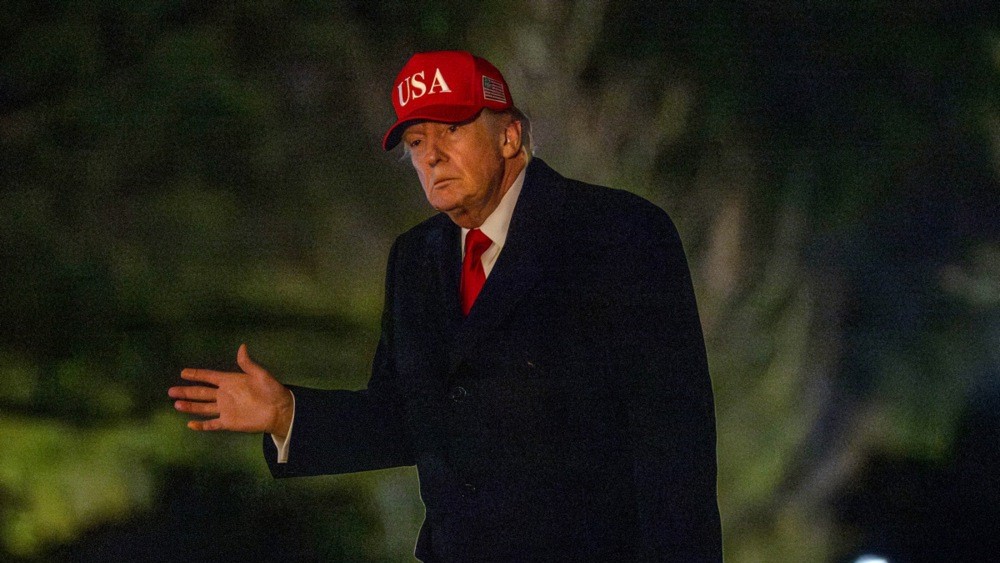
On the morning of April 18, U.S. President Donald Trump convened a meeting in the Situation Room. The topic — a new crisis around the Strait of Hormuz and the course of negotiations with Iran. This was reported to Axios by two American officials on condition of anonymity.
What happened before the meeting
Following the failure of negotiations in Pakistan in early April — where the U.S. delegation was led by Vice President JD Vance and the Iranian delegation by Foreign Minister Abbas Araghchi — Washington announced a naval blockade of Iranian ports in the Strait of Hormuz. Tehran responded by resuming control over shipping through the strait, imposing fees exceeding one million dollars for the passage of each vessel. Brent crude immediately jumped to $102 per barrel — 40% above pre-war levels.
On April 17, Iranian Minister Araghchi announced that the Strait of Hormuz is open to all shipping during the ceasefire period. Oil fell 11%. But the very next morning, Trump told his staff in the Oval Office that Iran had "outsmarted itself — wanted to close the strait again," and that the country "cannot blackmail us," according to Axios.
Why April 22 is more than just a date
The ceasefire achieved after the failure of the Islamabad negotiations expires exactly three days after the Situation Room meeting. There is no specific date set for the next round of negotiations. According to White House spokesperson Karine Jean-Pierre, talks with Iran are "productive and ongoing" — but this is the same formula the American side used even before the Islamabad breakdown.
The positions of both sides remain far from compromise. According to CNBC, citing Iranian state television, Tehran is demanding:
- control over the Strait of Hormuz and international recognition of Iranian sovereignty over it;
- payment of war reparations;
- a ceasefire across the entire region, including Lebanon;
- unfreezing of frozen Iranian assets abroad.
The United States, for its part, insists on the complete dismantling of Iran's nuclear program, restrictions on its missile arsenal, and severing ties with pro-Iranian armed groups. The American 15-point proposal, delivered through Pakistan in March, was rejected by Tehran.
Economic pressure as an argument — and a trap
Before the invasion, approximately 20% of global oil supplies passed through the Strait of Hormuz. Karen Young, a senior research fellow at Columbia University, warned CNN that even after the conflict ends, prices will not fall quickly — until the strait operates at full capacity and damaged oil infrastructure is restored. "These are enormous variables that are absolutely unresolved right now," she said.
"If there is a blockade — we still have a deficit of approximately 7 million barrels of crude oil per day. And we have only increased it by removing Iranian barrels from the market".
Karen Young, Columbia University — CNN
Speaker of the Iranian Parliament Mohammad Baqer Ghalibaf promised that the blockade will soon force Americans to "feel nostalgic for gas at $4-5," according to CNN. Trump, for his part, has stated that the blockade will remain "in full force" regardless of the fate of the ceasefire.
Who benefits from prolonging this
There is no consensus within the Trump administration regarding the scenario after April 22. According to CNN, most advisors do not want a resumption of combat — and understand that American public opinion is beginning to tire of the conflict. At the same time, Trump's harsh rhetoric leaves him little room for a "soft" continuation of the ceasefire without visible concessions from Tehran.
Iranian leadership, in turn, finds itself caught between two fires: Deputy Speaker of Parliament Hamid-Reza Haji Babaei stated that he "trusts the army, but not negotiations" — indicating internal pressure against any diplomatic concessions.
If by April 22 the parties do not announce at least the date of the next meeting — not an agreement, but merely a date — this will become the first concrete signal that the ceasefire will indeed not be extended.





