Who Opposed Seoul
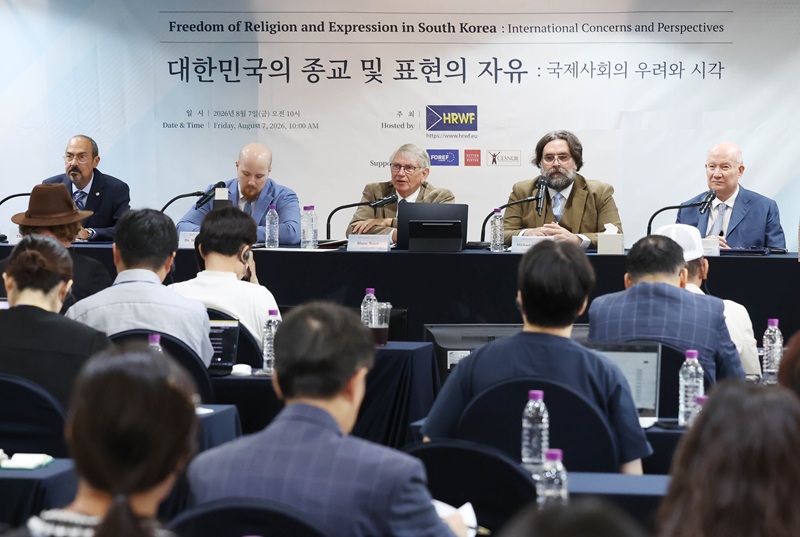
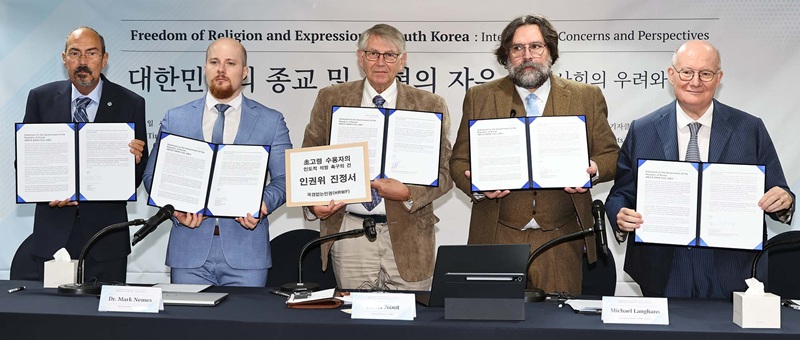
The press conference was held by Human Rights Without Frontiers (HRWF), Coordination of Associations and Individuals for Freedom of Conscience (CAP LC) — an organization with accreditation at the UN ECOSOC, European Forum for Freedom of Religion (FOREF), Center for Studies on New Religions (CESNUR), and the online journal Bitter Winter.
At the center is the case of Lee Man-hee, a 95-year-old leader of the Shincheonji religious movement, who is being held in custody pending a verdict. Human rights defenders also mentioned 83-year-old Hak Ja Han Moon from the Family Federation for World Peace and Unification and called on authorities to ensure that legal measures against religious minorities remain neutral and proportionate.
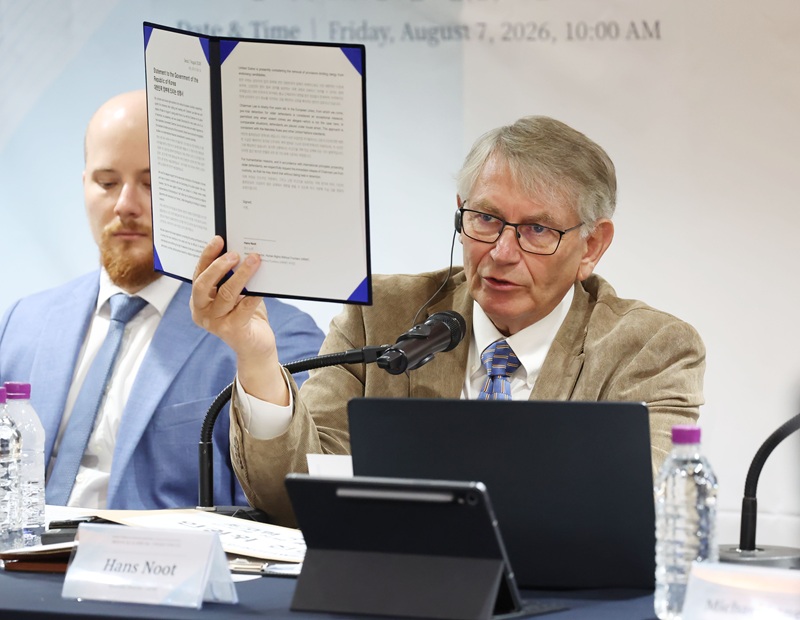
Hans Noot, deputy director of HRWF, opening the meeting, immediately dismissed suspicions of lobbying for a specific confession.
"We are not defending some theology or movement, but a principle: fundamental rights must be applied equally to everyone. When religious communities are stigmatized, peaceful assemblies are restricted, and dissent is seen as a problem to be contained — the consequences extend far beyond one group or one case."
— Hans Noot, Deputy Director of Human Rights Without Frontiers
An Argument Hard to Dismiss: International Law
Thierry Vallée, president of CAP LC, built his claim on a legal foundation. South Korea ratified the International Covenant on Civil and Political Rights in 1990 and the Convention Against Torture in 1995. Vallée's question is simple: is holding a 95-year-old person in a detention facility pending trial compatible with these obligations?
He recalled that the presumption of innocence must be stronger than the presumption of guilt, and cited examples where states chose a different path: Cardinal Joseph Zen in Hong Kong in 2022 was released on bail, and Vietnamese Buddhist patriarch Thich Quang Do was placed under house arrest instead of in prison.
Michael Langhans, executive director of the German branch of FOREF, posed an even sharper question: if there is already sufficient evidence for prosecution, why keep a person behind bars before trial at all? And was this evidence gathered impartially — or within a narrative that predetermined the defendant's community as a "cult"?
Massimo Introvigne, managing director of CESNUR and editor-in-chief of Bitter Winter, invoked the Nelson Mandela Rules — UN minimum standards for the treatment of prisoners. According to him, they directly provide for house arrest rather than a prison cell for a person of such age. He called the charges themselves, related to ordinary participation by members of a religious minority in political life, "excessively broad — both legally and conceptually."
Not One Case, But a System
Participants emphasized: the Lee Man-hee case is the tip of the iceberg. Mark Nemesh, deputy director of CESNUR, cited three recent scientific studies of Shincheonji communities in Europe, Argentina, and Australia — all three documented growing hostility toward this movement. This means the pressure in Seoul echoes among believers thousands of kilometers away from Korea.
The list of concerns also includes:
-
Segero Church in Busan, which reportedly remains under government attention even after the release of Pastor Son Hyeon-bo;
-
Public hostility toward a mosque construction project in Daegu;
-
Alternative service for Jehovah's Witnesses: HRWF has documented for decades the imprisonment of hundreds of believers who refuse to bear arms. An alternative was eventually introduced — but it is 36 months of work in correctional facilities, twice as long as military service. Critics call this punishment rather than a choice.
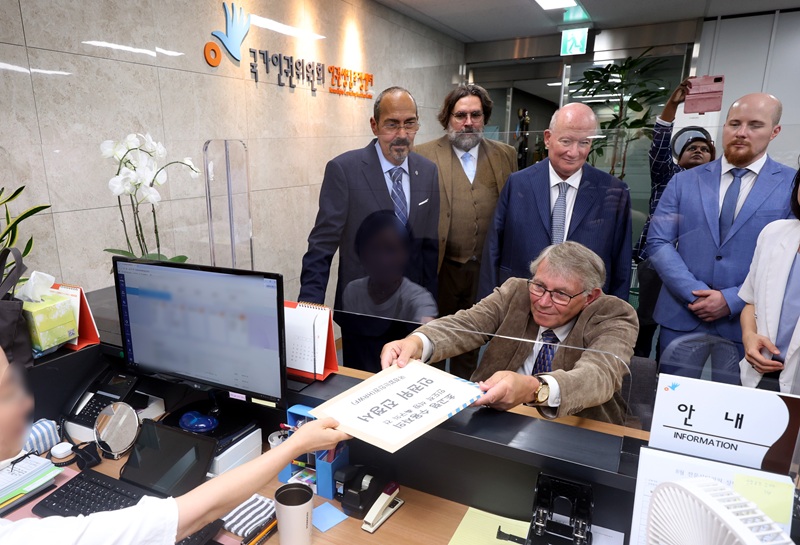
At the conclusion, the present scholars signed an official letter demanding that the South Korean government immediately release Lee Man-hee. European organizations separately filed a collective petition to South Korea's National Human Rights Commission. And CAP LC is preparing a written statement for the 63rd session of the UN Human Rights Council, which will run from September 7 to October 9, 2026.
What It Means
For Ukraine, this story is not about distant Asia. It is about a test that every democracy faces: does it have the fortitude to apply the law equally — both to the majority and to those whom society does not like. This is the field where it is easiest to lose, because pressure on an unpopular minority almost always has the approval of the crowd.
Context. Shincheonji is a controversial movement that became the center of a scandal during the COVID-19 outbreak in Korea in 2020, and attitudes toward it in Korean society remain sharply negative. The press conference materials are distributed by HWPL, an organization associated with Lee Man-hee, and the position of the Korean prosecutors and courts in these materials is not represented. Human rights defenders, however, emphasize: their demand concerns not vindication, but procedure — bail or house arrest instead of detention for a 95-year-old person pending trial.