At the beginning of 2026, it seemed that Ukraine had found a formula for asymmetric advantage: long-range drones striking oil refineries and military facilities deep in Russian territory, and medium-range unmanned systems controlling tactical depth up to 300 kilometers. But by mid-year, this advantage began to shrink rapidly — and the reason is not that Ukrainian engineers missed something.
Valentyn Badrak, director of the Center for Army Research, Conversion and Disarmament, explains the mechanism more simply than it seems in a text for LIGA.net: Russia is not competing in innovation, it is competing in copying and scaling. And in this game, it has a structural advantage — the size of its industry.
A Copy That Scales Faster Than the Original
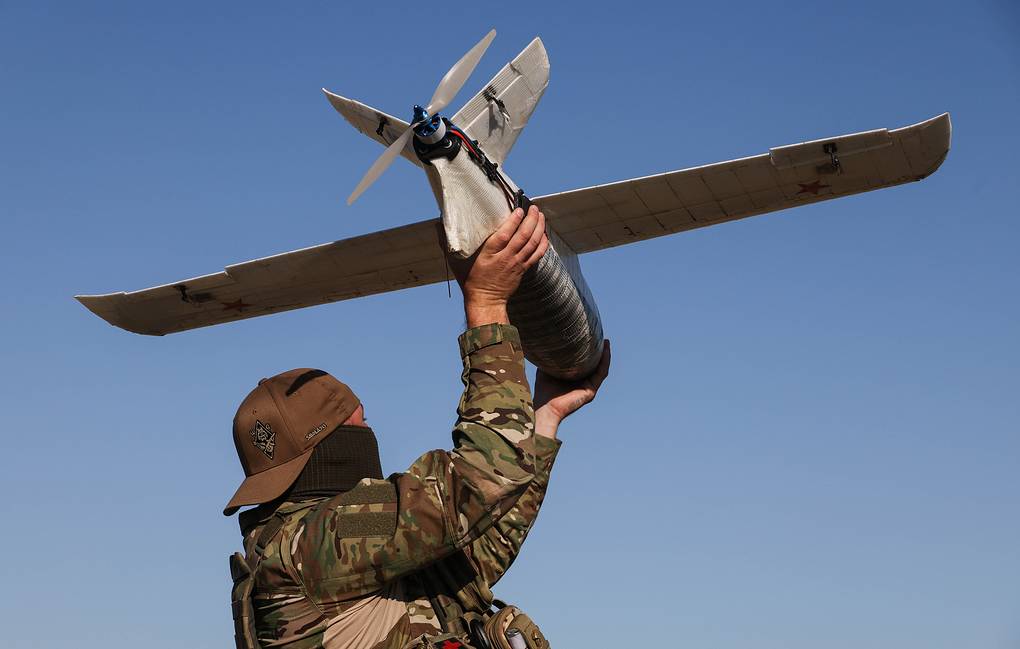
In November 2025, the Russian Federation created unmanned systems troops — according to Badrak, "essentially following Ukraine's blueprint." In July 2026, the 50th Brigade of the "Varyag" unmanned aerial vehicle appeared, which is already being compared to Ukraine's "Rubicon." In parallel, units "Delta" and "Squadron" are operating.
This is not a story about the enemy's technological breakthrough. This is a story about how an institutional model — separate drone forces, specialized brigades, coordination of development and application — can be copied in a matter of months if you have the resources to throw state contracts at it. Russia plans to produce over 15 million drones and ammunition for them in 2026. This number alone explains why "who invented it first" ceases to be a decisive factor.
Where Ukraine Still Maintains Advantage
Parity or advantage is not maintained equally everywhere. On the contact line from 0 to 50 kilometers — where fiber optic drones come into play — the sides are roughly even, but Ukrainian units are more effective in using interceptor and bomber drones. This is a narrower, more tactical advantage that depends on the training of specific crews, not on the industrial mass.
The problem is that such an advantage is fragile: it rests on people and experience, not on the number of units of equipment that can be increased regardless of the quality of operator training.
Where the Russians Are Heading
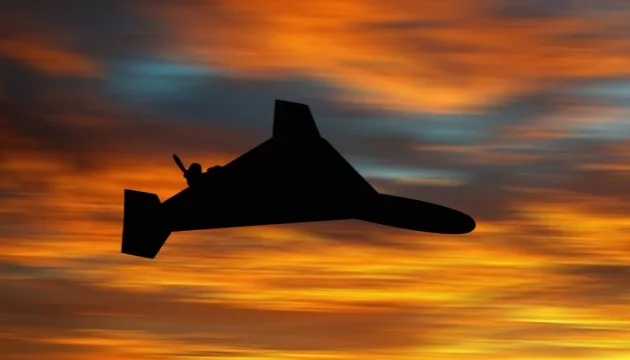
Badrak highlights two directions where the Russian Federation is most systematically investing effort: swarms of AI-powered kamikaze drones capable of operating without constant operator control, and increasing strike range through drone carriers — platforms that deliver unmanned aerial vehicles closer to targets before launch. Separately, there is ongoing improvement of "Shaheds," which are learning to independently bypass air defense systems — this is no longer about quantity, but about the ability of individual munitions to "think" in flight.
"The Russian Federation copies Ukrainian solutions, but they scale faster," Badrak noted.
Practical Conclusion
The main risk here is not that Ukraine is falling behind technologically — but that an advantage in innovation without the ability to quickly scale solutions to industrial production has limited shelf life. If Russia is capable of copying an organizational model in half a year and ramping up production to millions of units per year, then the question for Ukraine sounds not like "what to invent next," but whether it will be possible to restructure the defense industry so that the speed of implementing new solutions into production does not lag behind the enemy's copying speed.