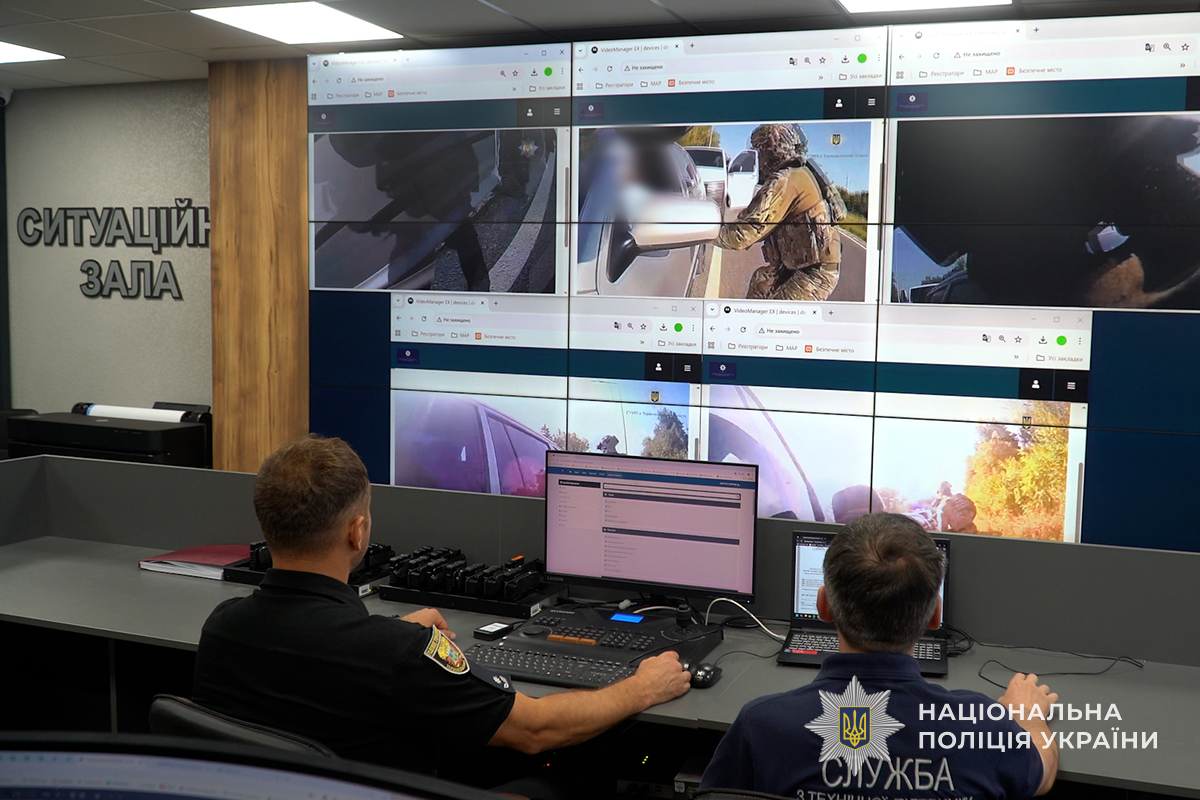
When a Chicago police officer shot 18-year-old Paul O'Neal in 2016, his body camera was off. He said he forgot to turn it on during the pursuit. This incident accelerated the development of a sensor that removes the human factor from the equation. Now this technology has appeared in Ukraine — and Ternopil region was the first to implement it.
How it works
The system is built on a special sensor embedded in a holster. As soon as a police officer draws a pistol, the sensor transmits a signal to the body camera via secure Bluetooth — and recording starts automatically. The law enforcement officer doesn't need to press any button at the moment when every second is critical.
«When a police officer draws a pistol from the holster, the sensor automatically transmits a signal to the body camera using secure Bluetooth technology to record the current event»
— Communication Department of the Ternopil Region Police
Ternopil region became the first region in Ukraine where this system started operating. Before this, body cameras in Ukrainian police were turned on manually — and it was at this stage that most gaps in video recording occurred.
Not a new idea — but still not widespread
In the West, similar technology has existed since at least 2016. The company Axon (formerly TASER) released the Signal Sidearm sensor — it attaches to the holster and activates all Axon cameras within a nine-meter radius simultaneously. By 2025, according to Britannica, more and more U.S. police departments are transitioning to "smart holsters" with such sensors.
But the technology itself does not solve the main issue of accountability. A study of 593 American police agencies, published in 2025 in the Journal of Public Economics, showed that body cameras reduce the number of police killings only where strict activation rules are in place — and have almost no impact where these rules are weak or poorly enforced.
What this means for Ukraine
Automatic activation eliminates one specific problem — "forgot to turn it on." But it does not answer the question of what happens to the recordings after an incident: who has access to them, within what timeframes, under what conditions they can be used as evidence or become grounds for an internal investigation.
The Supreme Court of Ukraine has already confirmed that a body camera video recording is admissible evidence in court even without prior warning about the recording. So the legal framework exists. But the procedural framework is a separate question.
- Ternopil region — the first region in Ukraine with automatic activation
- USA — the technology has been in use since 2016, but not universally
- Effect on accountability depends not on the presence of a camera, but on the strictness of rules for handling recordings
If Ternopil region remains a pilot without a clear protocol for accessing recordings and independent oversight — the system will become a technological upgrade without substantive change. The question is not whether the camera turns on automatically, but whether the recording will be reviewed if the police officer makes a mistake.





