What happened
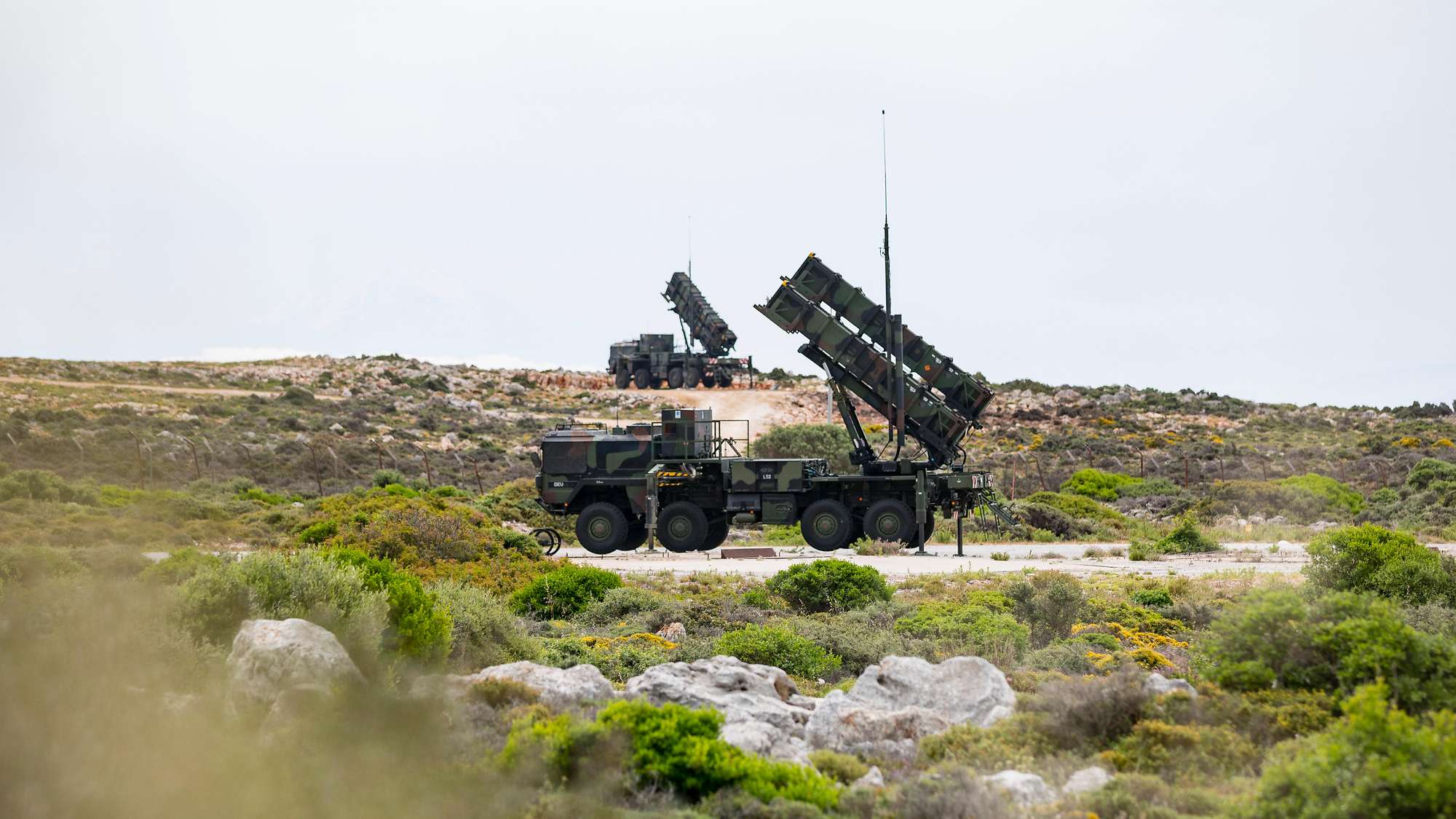
The European Commissioner for Defence and Space, Andrius Kubilius, during a visit to Poland, said that in a few days of Iranian attacks Middle Eastern countries expended more interceptors for Patriot (PAC-3) systems than Ukraine needs for four months of the winter season. This was reported by Euronews, quoting the official's remarks.
In his assessment Kubilius reiterated the figures: Ukraine needs about 700 PAC-3 interceptors specifically for the four-month winter period — because destroying a single ballistic target sometimes requires several interceptor missiles. President Volodymyr Zelensky previously stated that over three days the countries in the region expended "around 800+" such missiles. For comparison, Lockheed Martin's production volumes in 2025 were about 600 units.
Why this matters for Ukraine
A shortage of interceptors is not just a statistic. It is a direct threat to the safety of cities, critical infrastructure and front-line logistics. If the number of available PAC-3s falls below needs, the risk increases that missiles will have to be conserved for interceptions or that forces will have to rely on other systems with more limited effectiveness.
At the same time Kubilius recalled the scale of Russian strikes in 2025: around 2,000 missile strikes on Ukraine, of which approximately 900 were ballistic. This underlines a double challenge — defending against the aggressor and competing for limited resources with the strategically important Middle Eastern region.
"Rockets, drones and extended-range 155 mm ammunition are key priorities for Ukraine"
— Andrius Kubilius, European Commissioner for Defence and Space
What response options exist
Kubilius and partners are talking about two parallel directions: speed up interceptor production in the United States and diversify supplies through European industry and Ukrainian developments. In Brussels they are discussing a concessional loan for Ukraine worth €90 billion for 2026–2027, two-thirds of which were planned to be directed to defence needs with a priority for purchases from European and Ukrainian manufacturers — however, the disbursement of these funds is currently being blocked by Hungary. Another instrument is the SAFE defence loan programme worth €150 billion.
In addition, Ukrainian developers are offering their solutions: the "Shershen" complex, which can work with a wider spectrum of missiles, is not yet in service but could theoretically reduce dependence on PAC-3s alone in the future (see more in the expert piece by Valentyn Badrak).
"The Americans will not be able to provide enough of these missiles to the Gulf countries, their own military, and also Ukraine"
— Andrius Kubilius, European Commissioner for Defence and Space
What this means in practice
The decisions have two components: political (turn declarations into contracts and remove blockades in the EU) and industrial (expand production capacity in the US and Europe and speed up localisation of production in Ukraine). Without concurrent progress on both fronts the risk of a shortage will remain.
Conclusion
We see a simple logic: limited global resources and a new front of demand (the Middle East) increase competition for key air defence assets. For Ukraine this means: diplomacy must convert into accelerated contracts and funding, and the defence industry must receive priority support. Whether partners will have enough time and political will is currently the central question for the security of our cities and defence systems this winter.
"The situation is truly critical — partners need to very quickly ramp up missile production"
— Andrius Kubilius, European Commissioner for Defence and Space





