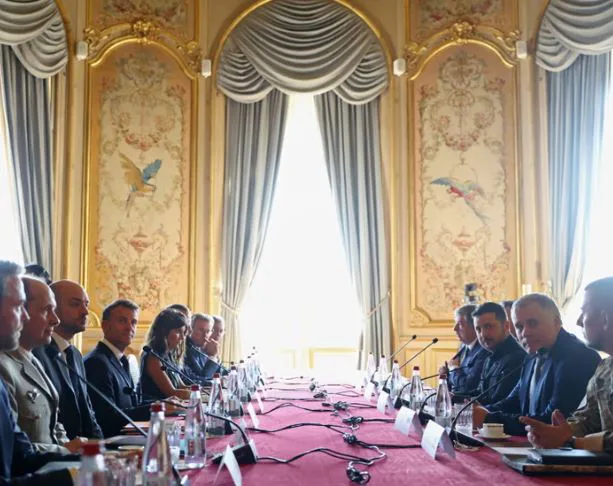
On July 13 in Paris, leaders of ten countries signed a declaration on the creation of an Integrated Coalition on Air and Missile Defense. Besides Ukraine — Denmark, France, Germany, Italy, the Netherlands, Norway, Spain, Sweden and the United Kingdom. Twelve defense companies were present as industrial partners.
What is Freyja and why $700K is the argument
At the heart of the coalition is the Freyja project by Kyiv-based company Fire Point. The system is built on the principle of open architecture: it does not replace Patriot or SAMP/T, but integrates with existing NATO-standard radars and command posts. The central element is the FP-7.X interceptor, developed on the basis of the Soviet 48N6 missile from the S-400.
The main commercial argument: one Freyja intercept is estimated to cost approximately $700,000, whereas Patriot PAC-3 MSE costs between $3.8 and over $5 million per missile, and two to three are typically expended to guarantee target destruction. This very calculation — the economic asymmetry between the aggressor's cheap ballistics and expensive interception — became the main justification for the new architecture.
In June, Fire Point signed a memorandum with German Hensoldt on joint development, and the TRML-4D radar — capable of simultaneously tracking up to 1,500 air targets — is already included in the program as a sensor element.
"Freyja is not a replacement, but a supplement to our defense. A reliable shield over all of Europe, faster and cheaper".
President Zelenskyy, Paris, July 13, 2025
Where the coalition is strong — and where it leaves questions
The declaration confirms recognition of growing ballistic threat and a common industrial platform. Fire Point has already conducted the first controlled flight test of the FP-7.X prototype. Zelenskyy publicly expects the system to be operationally ready within 12 months.
- Signatories: 10 countries + 12 defense companies, including Thales, HENSOLDT, Diehl Defense, Saab, Kongsberg, Leonardo, MBDA.
- Architecture: system of systems, compatible with NATO standard — integration with existing infrastructure, not parallel development.
- Cost of interception: ~$700K versus $3.8–5+ million for PAC-3 MSE.
- What remains open: the declaration contains no joint budget or financing mechanism for production.
The coalition includes countries with varying levels of dependence on American air defense systems — from Norway with NASAMS to France with SAMP/T. This is both an advantage of Freyja's open architecture and a potential friction point in standardizing interfaces.
If Fire Point completes flight tests and confirms the claimed unit cost of serial interceptors by the end of 2025, the coalition will have technical grounds to move from declaration to joint contracts. If not, the document risks remaining a symbolic gesture in a series of well-intentioned but unfunded commitments.







