Throughout the summer, Russian command concentrated forces of the 90th Tank Division and the Eighth Combined Arms Army in the Druzhkivka area, preparing a classic encirclement operation: to cut off logistics routes, sever supplies, and then develop the offensive toward Dobropillia. The plan was built over months. They dismantled it in a few days—not through a massed assault, but through targeted clearing operations.
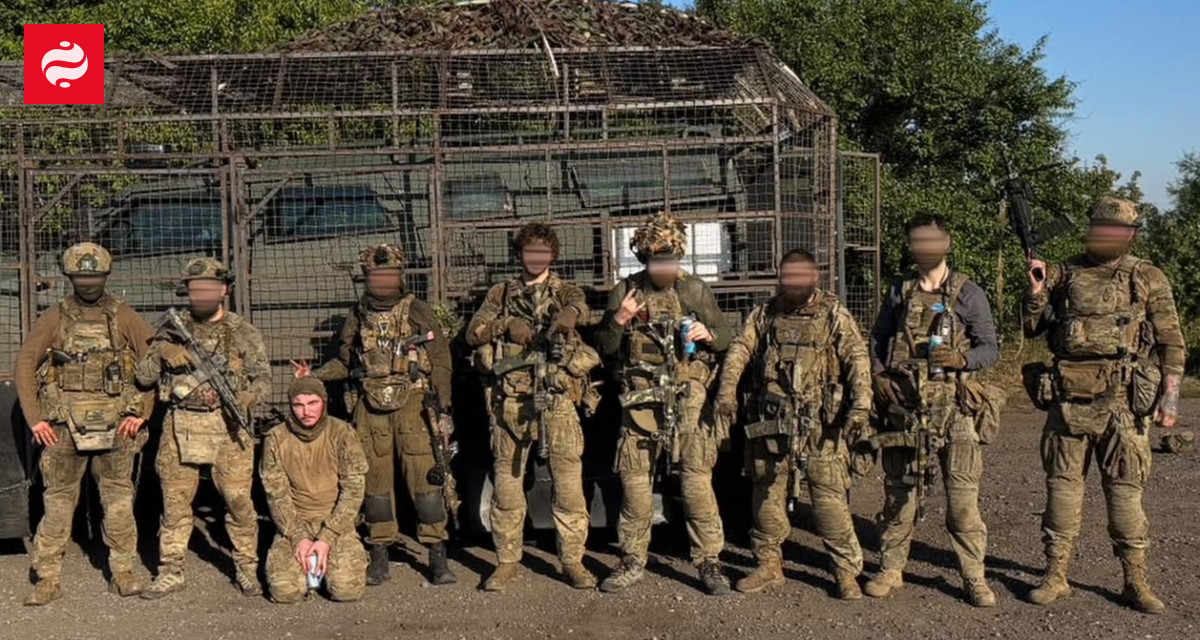
The operation in the area of responsibility of the First Corps of the National Guard "Azov" was conducted by special operations reconnaissance, the first and sixth battalions of the 12th "Azov" Brigade, the "Tuman" unit, and the "Shkvall" battalion of the 425th Separate Assault Regiment "Skelia" with support from OZSP Lasar's Group. Five different units worked according to a single plan that was prepared jointly—this is the detail that explains why they managed to thwart the plan at the accumulation stage rather than during the actual attack.
The logic of "first isolate, then clear"
The commander of the 12th "Azov" Brigade, Lev, with the call sign Khorus, explained the sequence of actions: the first task was not to destroy the enemy, but to isolate it through firepower—to prevent further advance and prepare conditions for assault groups.
"The first task was to isolate the area of enemy force accumulation through firepower to prevent further advance and create favorable conditions for our assault groups to advance. I consider this task accomplished," Khorus said.
In other words, they first cut off the accumulated enemy grouping from maneuver, and only then moved in for clearing. This is the difference between attrition warfare and a surgical operation—and it determined the casualty ratio.
Why FPV drones and aerial bombs replaced frontal assaults
A practical detail that rarely makes it into official reports: how they preserved infantry lives in places where enemy fortifications made assaults dangerous. The commander of the "Shkvall" battalion, Sergiy with the call sign Zamok, explained the mechanics of rapid response.
"If the enemy was difficult to clear—there were shelters or our servicemen could suffer casualties or wounds—we worked with both our and the 12th brigade's means, using both FPV devices and bombers. The response was quick. We tried to work quickly so the guys wouldn't be harmed and could secure the point where we detected the enemy," Zamok said.
Instead of assault groups taking fortified positions under fire, drones and aerial bombs worked first—infantry moved into an already "cleared" position. This explains the final figures: 237 Russian irreplaceable losses and 44 sanitized against no reports of significant losses on the Ukrainian side in this specific operation. Three occupants were captured.
What this means for the map of Donetsk region
This clearing operation is not a separate story but part of the broader logic of the "Vivaldi" offensive operation, which the commander of the Third Army Corps Andriy Biletskyi announced on September 15: in the first phase, approximately 75 square kilometers were cleared, over 10 were liberated, in the second phase, another 40 square kilometers were freed. Deputy Head of the Presidential Office Pavlo Palisa previously noted that Russia has already postponed the deadline for full capture of Donetsk region 15 times.
The question now is not whether the enemy will repeat the attempt to encircle Druzhkivka—concentrating forces takes months, and the 90th Tank Division and Eighth Army are unlikely to recover quickly. The question is whether Russia will manage to regroup before winter while Ukrainian units maintain initiative in this direction, or if this is already the 16th postponed deadline.