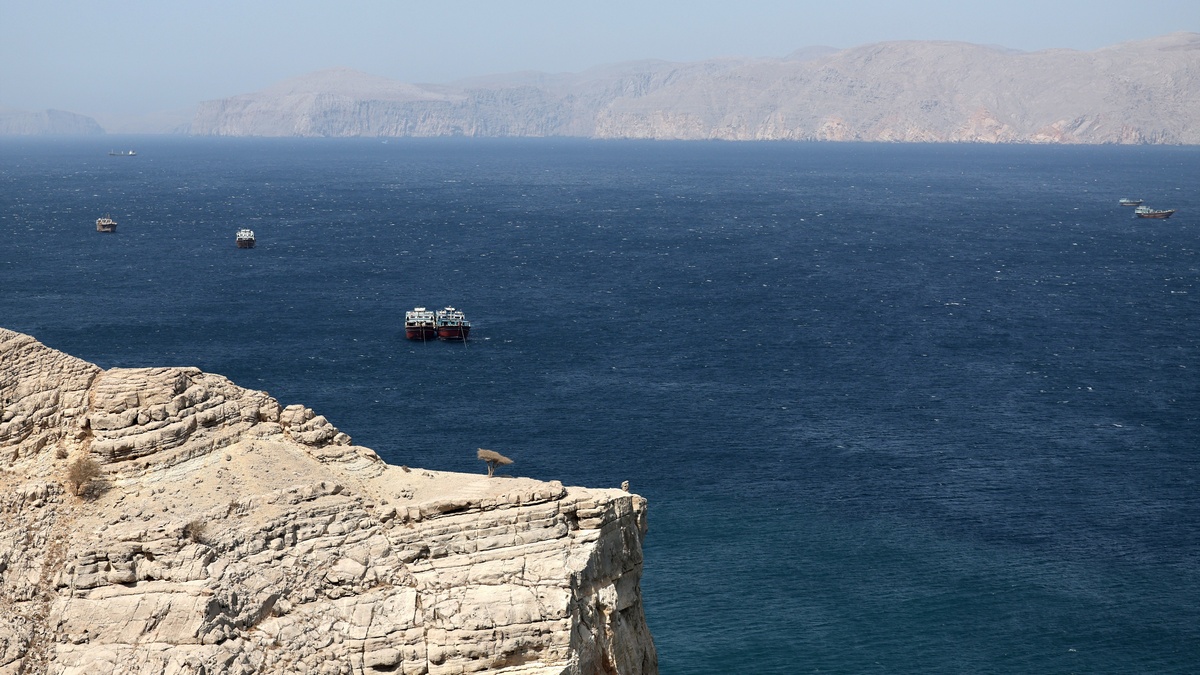
The Islamic Revolutionary Guard Corps (IRGC) launched a cruise missile strike on two UAE oil tankers — "Mombasa" and "Al-Bahia" — as they passed through the southern lane of the Strait of Hormuz in Omani territorial waters. The UAE Ministry of Defense confirmed that one Indian crew member of the Mombasa tanker was killed, and eight more people were injured — four of them seriously. Among the injured were six Indian nationals and two Ukrainians.
The IRGC publicly claimed responsibility, calling the attacked vessels "non-compliant" — Iran had previously announced the closure of the strait and demanded that ships not cross it. Both tankers caught fire, but the crews managed to extinguish it and avoid an oil spill.
"We urge an immediate cessation of hostilities and full opening of the strait. Attacks on commercial shipping threaten regional stability, freedom of navigation, and global energy security"
— Foreign Minister Andrii Sybiha, confirming the injury of two Ukrainians and announcing the provision of consular assistance
Why this happened now
The tanker attack is part of an escalation spiral between Iran and the United States. The American Central Command (CENTCOM) was already conducting several consecutive waves of airstrikes against Iranian military infrastructure at the time. In response, the IRGC declared the Strait of Hormuz closed and began attacking ships that continued to move. According to CBS News, in addition to the Emirati tankers, Iran struck the Qatari gas tanker "Al-Rekayt" and the Saudi supertanker "Wejan" on the same day.
Approximately 34% of the world's maritime oil traffic passes through the Strait of Hormuz, according to the International Energy Agency. Following the start of the escalation, Brent crude oil prices jumped more than 4% in a single trading day, reaching $78.82 per barrel — the highest level in several weeks, according to Al Jazeera.
Ukrainians in someone else's war
The injury of two Ukrainian sailors is a reminder that Ukrainian citizens work in the merchant fleet around the world. The maritime industry is one of the few sectors where Ukraine traditionally supplies qualified specialists to the international market. Consular protection in such cases is standard procedure, but its effectiveness depends on whether Ukraine has diplomatic presence in the country where the vessel is being repaired or where the injured are being treated.
- The strike — in Omani territorial waters, where Muscat is trying to maintain neutrality between Iran and the US
- The IRGC officially claimed the attack, calling the vessels "non-compliant" with Iran's transit ban
- Both tankers are UAE state property; Abu Dhabi qualified the strike as "a gross violation of international law"
- On the same day, the IRGC claimed a strike on an American base in Bahrain
In response, the US announced the introduction of a 20% levy on vessels passing through the strait and the resumption of a naval blockade of Iranian ports. CENTCOM launched another round of strikes.
If Iran does not restore free passage through the strait by the end of diplomatic contacts between Tehran and Washington — insurance premiums on maritime cargo will continue to rise, and this will directly affect the cost of imported fuel in Ukraine, which is already dependent on global energy markets.







