The victory of Peter Magyar's "Tisza" party in the Hungarian elections on April 12 is not just a change of government in one of the EU's 27 countries. For Brussels, it is the first real chance to close the systemic vulnerability that Viktor Orbán turned into a foreign policy weapon.
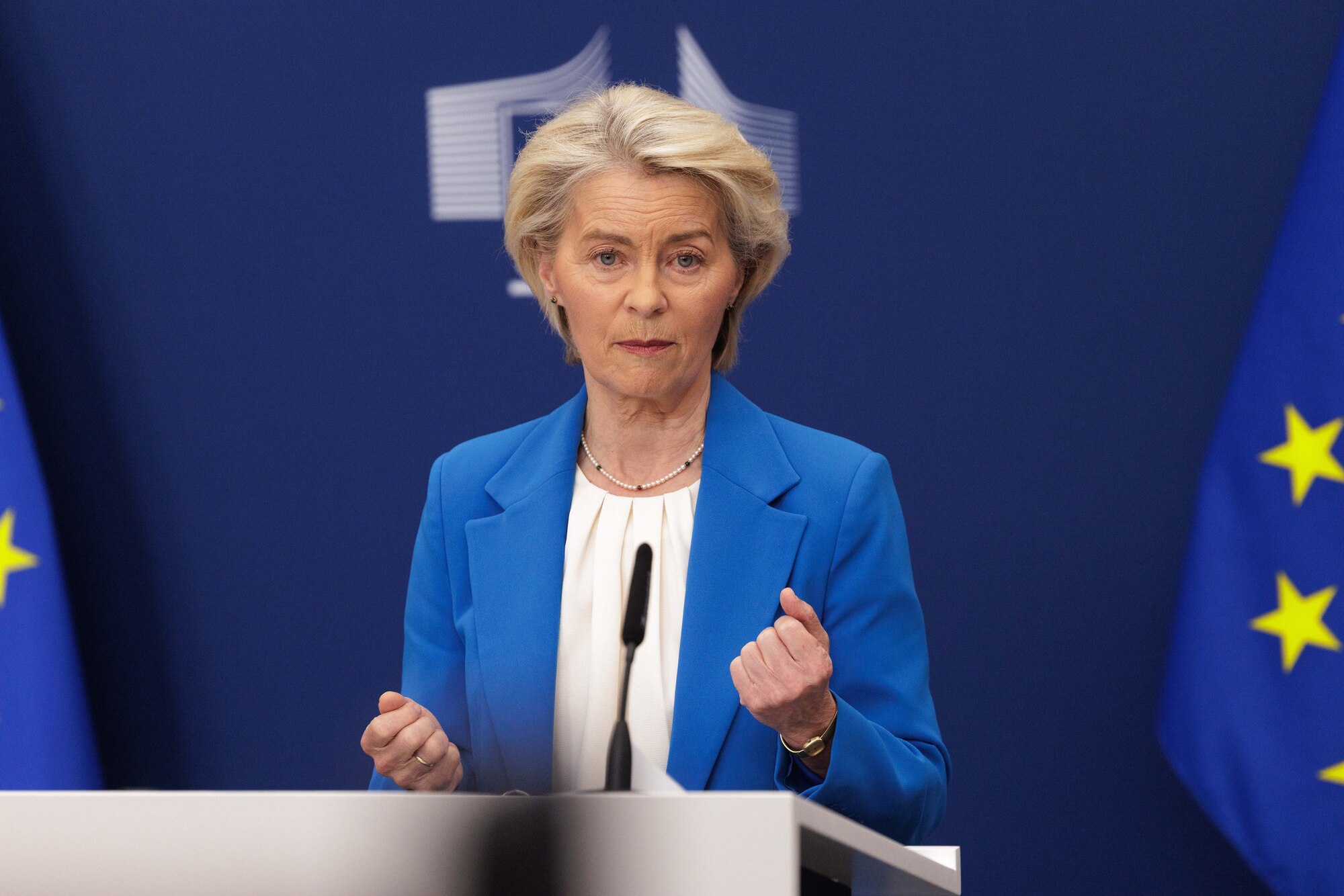
Just the next day, on April 13, European Commission President Ursula von der Leyen spoke at a conference in Brussels with a direct call for reform.
"We must draw lessons learned from the EU. Shifting to qualified majority voting in foreign policy is an important way to avoid systematic blockages, as we have seen in the past, and we need to use the current momentum to move forward."
Ursula von der Leyen, conference in Brussels, April 13, 2026
What this means in practice
Currently, any decision in the field of EU foreign and security policy requires unanimity among all 27 member states. In practice, this means a veto right for each of them. Hungary actively used it: it blocked sanctions packages against Russia, delayed aid to Ukraine, and hindered joint defense decisions.
According to researchers, between 2016 and 2022 alone, member states used the veto right or the threat of veto at least 30 times to block foreign policy measures. As Euronews reports, Hungarian obstruction also froze the payment of €90 billion under the Facility for Ukraine.
Qualified majority means 55% of member states representing at least 65% of the EU's population. Under such a system, one country would no longer be able to block a decision.
The mechanism already exists — but it's not used
The Lisbon Treaty contains the so-called "passerelle clause" (Article 31(3) TEU): it allows a transition to qualified majority voting on certain foreign policy issues — but only by unanimous decision of the European Council. In other words, to transition to a system without veto, you first need a unanimous vote to abolish unanimity. This is the main structural paradox of the reform.
Daniel Hegedüsh, analyst at the German Marshall Fund, notes a shift in Brussels's approach: "We see a clear desire of EU leadership to bypass potential vetoes from Hungary and Slovakia and move important decisions to qualified majority voting."
Is there support among EU members
The idea is not new — and has previously hit a wall. As Daily News Hungary reports, von der Leyen's initiative "has so far not received broad support from member states, many of which do not want to give up their veto right," viewing it as one of the last guarantees of national sovereignty within the EU system.
Thu Nguyên, acting co-director of the Jacques Delors Centre, points to another problem: "Veto is used as a political lever for purposes unrelated to the decision itself — sometimes to unfreeze EU funds or appeal to domestic voters." In other words, the reform removes a tool of pressure used not only by Budapest or Bratislava.
What changes after the Hungarian elections
Magyar won with a stunning result: "Tisza" secured a constitutional majority of 138 out of 199 seats. The new prime minister has already announced Hungary's restoration of full participation in the EU and NATO. The day after the elections, he planned visits to Warsaw, Vienna, and Brussels — according to von der Leyen, "he is making very clearly his course towards Europe."
For voting reform, this means the disappearance of the biggest symbolic argument of opponents: the example of Orbán as a "systematic blocker" will now become retrospective rather than current. But it is precisely this argument that von der Leyen is trying to use while it is still fresh in memory.
If the new Hungarian authorities truly support the reform — or at least do not block the passerelle procedure — von der Leyen will have for the first time a real path to the unanimity needed to abandon unanimity. The question is whether there will be enough political will from the remaining member states while the "Hungarian moment" has not yet faded.





