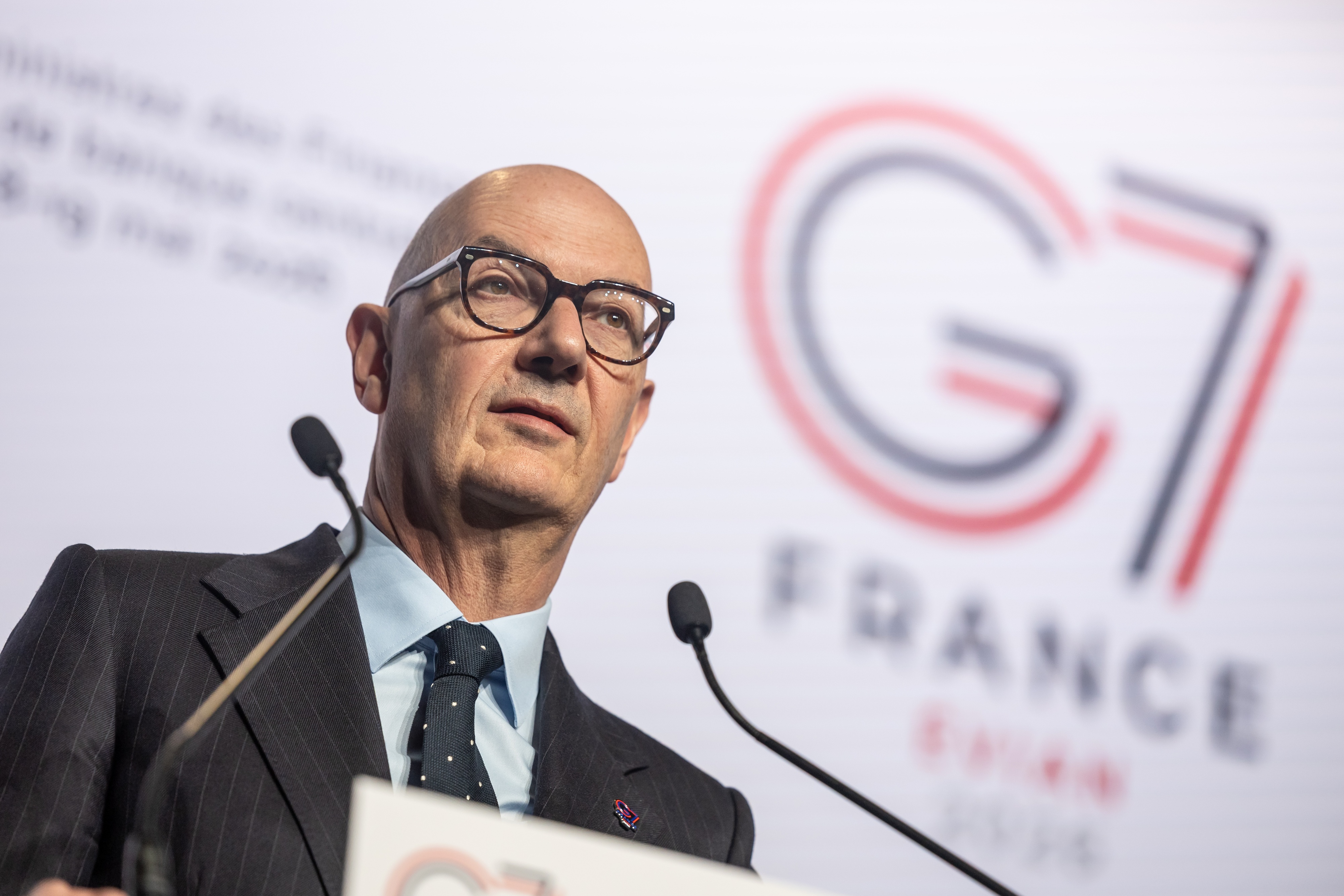
While the G7 finance ministers gathered in Paris to demonstrate unity on sanctions against Russia, Washington quietly made a step back — and it was precisely this that turned the closing statements into a test rather than confirmation of that unity.
An Exception That Was "Unexpected"
On the eve of the second day of negotiations, the U.S. Treasury Department announced another extension of the sanctions waiver on Russian oil. Secretary Scott Bessent explained this as a need to "stabilize the physical crude oil market" amid rising prices due to the Middle East war. However, as noted by EU Commissioner for Economy Valdis Dombrovskis, this is already the second extension of a measure that was originally supposed to last only 30 days.
"From the EU's perspective, now is not the time to ease pressure on Russia. If anything, we need to increase it."
Valdis Dombrovskis, EU Commissioner for Economy, Reuters
Lescure in response emphasized: the decision on the waiver was not a joint G7 decision. He insisted that "willingness to maintain pressure on Russia was unanimous" — but this unanimity concerned rhetoric, not Washington's specific action.
The Irony of the Moment: Russia Benefits from the Iran War
Dombrovskis formulated the paradox directly: it is Russia that is now receiving windfall profits from rising fossil fuel prices caused by the Middle East conflict. That is, the American "temporary" waiver to stabilize the oil market objectively eases pressure on the very country against whom this pressure is declared.
Ukraine: Progress Exists, But Work Is Not Complete
Regarding Ukraine's financing, G7 members recorded "significant progress" in reducing the state budget deficit. But Lescure was cautious: "We have not yet completed this work". Support is tied to reform conditions — the specific list of which is not publicly disclosed in the closing communiqué.
The ministers' closing statement confirmed "commitment to multilateral cooperation," but, according to France 24, was "sparse on concrete measures." The next point is the G7 leaders' summit in Evian in June.
If the U.S. does not return to full sanctions regime on Russian oil by Evian, the formula of "unanimous pressure" risks becoming a statement of intent — rather than an instrument that Russia feels in its own budget.