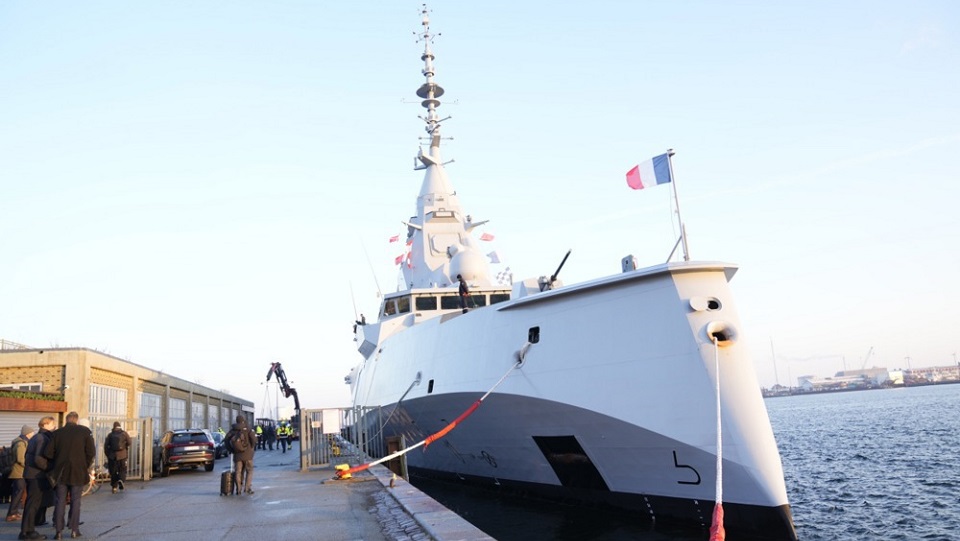
On May 19, 2026, Prime Minister Ulf Kristersson announced an agreement with French Naval Group directly from the deck of the corvette HMS Härnösand in Stockholm. Four frigates of the Luleå class represent the largest investment by the Swedish Navy since the Cold War. The program cost is approximately 40 billion Swedish kronor, or ≈3.7–4.25 billion euros depending on the final configuration.
Why France and not Great Britain or Spain
Three options competed in the tender: the French FDI from Naval Group, the British Arrowhead 120 from Babcock (with Swedish Saab participation), and the Spanish F-110 from Navantia. According to Defense Minister Pål Jonson, the deciding factor was delivery speed rather than offset agreements — that is, ties to production in Sweden were deliberately not prioritized.
The first frigate is expected in 2030, then one per year, with the last arriving in 2033–2034. As Defence News explains, the FDI already has an active production line: the French Navy's flagship Amiral Ronarc'h was delivered in October 2025, so Sweden is acquiring a proven platform without development delays.
"Fast delivery is absolutely critical given the very serious security situation we are facing"
— Swedish Defense Minister Pål Jonson, cited by Defence News
What exactly is Sweden buying
The ships will be built in Brittany and adapted to Swedish requirements. Although the primary contractor is French, the vessels will integrate:
- anti-ship missiles Saab RBS 15 and Torpedo 47 torpedoes
- GIX radars and Trackfire remote combat modules from Saab
- 57mm and 40mm guns from BAE Systems / Bofors
- air defense missiles Aster 15/30 in a 32-cell Sylver launcher
This configuration allows Sweden to triple its land and sea air defense capabilities — Kristersson points to this as the main strategic outcome of the deal. According to Jonson, an opponent would need to commit "significant resources" to neutralize a single such frigate.
4 billion euros in context: where is Sweden's defense budget headed
The program cost represents approximately 25% of Sweden's entire defense budget for 2026 (≈$16.5 billion). Meanwhile, the government has already announced a course toward 3.5% of GDP by 2030 — an additional $30 billion compared to the current 2.4% level, according to Breaking Defense.
In parallel, Stockholm increased its military aid package to Ukraine from 25 to over 40 billion kronor in 2025 — partly by shifting investments from 2026. In other words, frigates and support for Ukraine are not alternatives but simultaneous line items, creating joint pressure on Swedish finances.
An additional rationale for the deal is cooperation with current FDI operators. France and Greece already operate or have ordered these ships, allowing them to share maintenance costs. Simultaneously, France recently purchased two Saab GlobalEye long-range radar aircraft — reciprocal purchases became part of the strategic justification for the choice.
What this means for the Baltic
Sweden joined NATO in February 2024 and, according to Breaking Defense, has effectively transformed the Baltic Sea into a "NATO lake." The new frigates are intended to transition the Swedish Navy from coastal defense to full-fledged missions: convoy escort, missile defense, and operations in the North Atlantic alongside allies. The ships' service life is approximately 40 years, meaning the 2026 decision will define Sweden's position in the Baltic until the mid-2060s.
If the first delivery in 2030 is delayed — due to workload at Naval Group's shipyards or complications in adapting Swedish systems — the question becomes whether Sweden will fill this gap with other air defense means, or whether the Baltic will remain vulnerable precisely during the period when the threat is highest.







