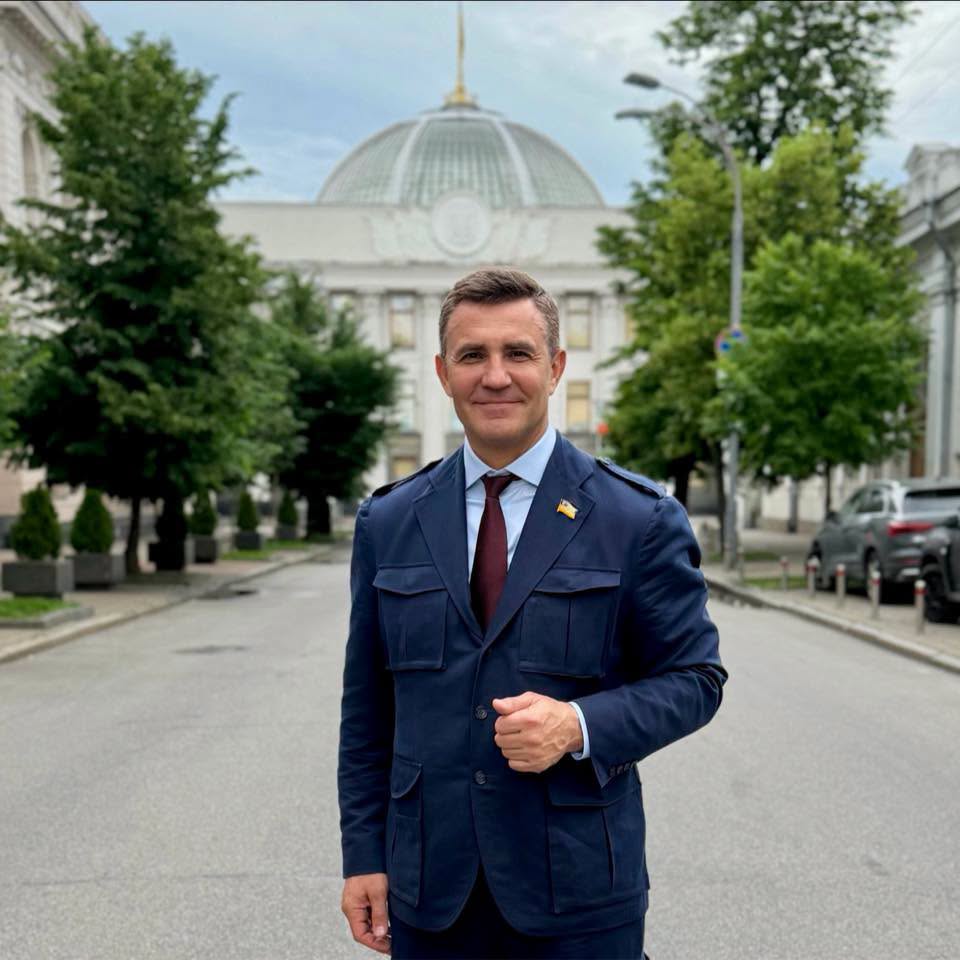
On July 10, the Supreme Anti-Corruption Court confirmed that the full bail amount of 10 million hryvnia had been received for Mykola Tishchenko, a People's Servant party member and parliamentary deputy. The Schemes project revealed details of the payment structure citing sources in law enforcement: 650,000 hryvnia was contributed by the deputy himself, 5 million hryvnia by a private company from Dnipro, and 4.35 million hryvnia by an unidentified private individual. In other words, the deputy personally secured less than 7% of the court-ordered sum.
What he is accused of
The National Anti-Corruption Bureau (NABU) and the Specialized Anti-Corruption Prosecutor's Office (SAPO) announced suspicion against Tishchenko on June 29. According to the investigation, in August 2023, the deputy, under the guise of publicly "fighting call centers," approached a person he believed was involved in this business, requesting over 1 million dollars in unlawful gain.
"In return, he promised to use his authority to interfere with the activities of some call centers in this person's interests and not obstruct the work of others. However, he did not receive the unlawful gain."
— NABU, official statement
The deputy never received the money — so this concerns an attempted extortion rather than a completed crime. Nevertheless, the investigation believes that the mere fact of the request and the proposed scheme for using deputy's powers are sufficient grounds for suspicion.
Money laundering scheme: ex-wife and fictitious gift
In parallel, NABU suspects Tishchenko of laundering 12.6 million hryvnia. According to law enforcement, the scheme worked as follows:
- the deputy and his ex-wife executed a gift agreement — according to documents, the woman allegedly gifted him the specified amount;
- the investigation established that the woman had no legitimate income sufficient for such a gift, and no actual transfer of funds took place;
- subsequently, Tishchenko included this amount in his annual declaration as legitimate income — which NABU qualifies as deliberate false declaration.
Precautionary measure and seven weeks between suspicion and bail
On July 3, the Supreme Anti-Corruption Court deliberated on a precautionary measure for over six hours. The prosecution requested Tishchenko's arrest with an alternative bail of over 19 million hryvnia. The court settled on 10 million — confiscated his foreign passport and imposed procedural obligations on the deputy: to appear before investigators, prosecutors, and the court, and not to leave the country.
As early as July 9, Tishchenko's lawyer informed the public broadcaster that the bail had been posted, but the Supreme Anti-Corruption Court did not confirm this — the account lacked funds. The full amount arrived only the next day. The lawyer stated that the defense had not decided on an appeal: "We only received the full text of the decision yesterday in the afternoon."
Tishchenko denies his guilt. His lawyer Yaroslav Horbatenko called the case fabricated and claimed it is a "message to parliamentary deputies" who may face prosecution before votes on bills expanding NABU's and SAPO's powers. It should be recalled: suspicion is a procedural document, not a verdict; only the court establishes guilt.
Notably, the Schemes project recorded back in July 2024 that Tishchenko had conducted "audits" of call centers for years, citing an investigative commission that had long ceased its work. In other words, he had no formal authority for such visits — which became part of the investigation's evidentiary base.
If the Supreme Anti-Corruption Court ultimately confirms the prosecution's version, a specific question will arise: whether the court will identify the person from Dnipro and the private individual who contributed over 93% of the bail — and whether clarifying their connection to the suspect will become a separate proceeding.