What was opened on July 14
On July 14 at a meeting of the EU Council on General Affairs in Brussels, the European Union officially opened the sixth negotiation cluster for Ukraine — "External Relations." It includes two key blocks: common foreign and security policy (CFSP) and common security and defense policy (CSDP), as well as trade, humanitarian aid, and development cooperation.
The opening came after months of delays — Hungary under the previous Orbán government had blocked any progress. Only after Budapest, under the new government of Péter Magyar, lifted its veto on the sixth cluster did the procedure become possible to launch. Meanwhile, four other clusters — 2, 3, 4, and 5 — remain closed.
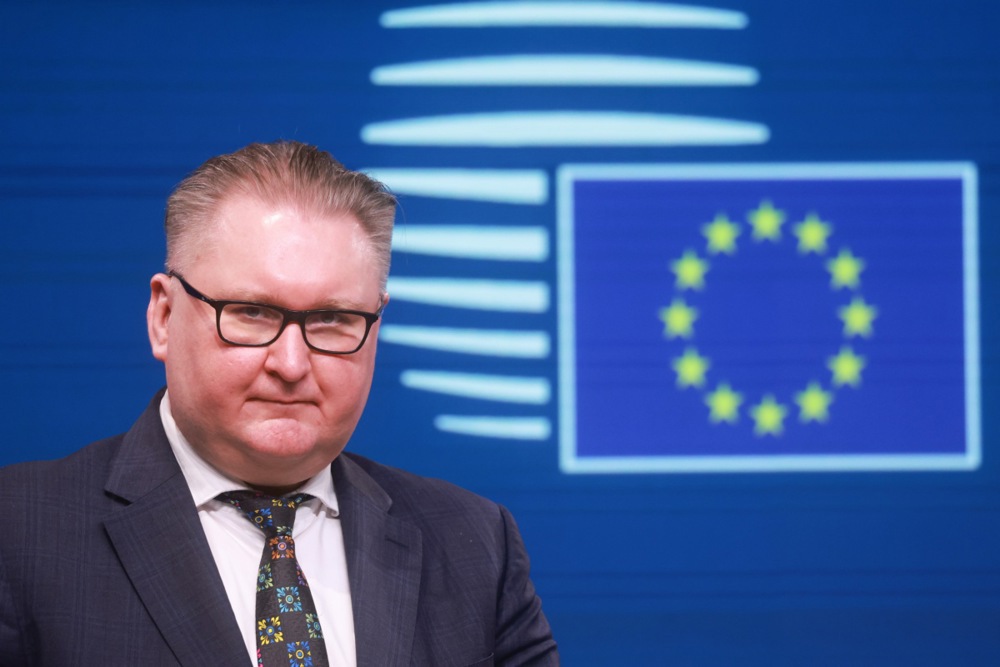
"Cluster 6 is particularly important in the current global security environment. Common security and defense policy, trade, humanitarian aid, and development cooperation bring Ukraine closer to the EU's common foreign and security policy"
— Taras Kachka, X, July 10
What the cluster gives — and what it doesn't
A LIGA.net correspondent asked Kachka a simple question: does opening the sixth cluster automatically result in security guarantees from the EU before accession? The answer was clear: no.
According to Kachka, the negotiation track and the security track are parallel but not identical processes. Successfully closing the CFSP/CSDP cluster will deepen Ukraine's integration into the EU's defense architecture but will not activate any collective defense mechanism. Article 42.7 of the EU Treaty — the equivalent of NATO's Article 5 — currently covers only full members.
Formally, cluster 6 contains the acquis that Ukraine must implement: alignment of foreign policy positions with CFSP standards, participation in EU civil and military missions, harmonization of legislation with CSDP requirements. European Commission Vice President for Enlargement Marta Kos stated this directly on July 14:
"It covers defense cooperation and countering hybrid threats. Both countries will contribute to the European security architecture"
— Marta Kos, EU-Ukraine Intergovernmental Conference, Brussels
In other words, the direction of movement is from Ukraine to the EU (implementation of standards), not the other way around (guarantees from the EU to Ukraine).
What this cluster really changes
The practical effect of opening the cluster is not declarative but procedural. Ukraine receives structured negotiations with clear closing benchmarks: criteria that must be met to close the cluster. Moreover, in December 2025, the EU submitted to Ukraine Draft Common Positions (DCP) on cluster 6 — before its official opening, which is unprecedented in EU enlargement practice.
In parallel, Ukraine has already joined four of five defense projects under the European Defense Industrial Program (EDIP) with a budget of €1.5 billion. A separate support mechanism for Ukraine within EDIP provides an additional €300 million. This is real, though not guaranteed, integration into the EU defense framework.
- What Ukraine gets now: participation in CSDP missions, access to EU defense programs, alignment of foreign policy positions
- What remains outside the cluster framework: mutual defense guarantee equivalent to NATO's Article 5
- What is needed to close the cluster: fulfillment of closing benchmarks — specific legislative and reform steps, with deadlines Kachka set for the end of 2027
Context: where security guarantees are really being discussed
The parallel track involves negotiations on European security guarantees for Ukraine for the period following a possible ceasefire. According to Gordonua, the European Union has stepped up this work following Kaja Kallas's statement about the need for consensus among member states on "red lines" in negotiations with Russia. On January 6, Ukraine, France, and Great Britain signed a declaration of intent on deploying multinational forces — but this is a separate document with no binding implementation mechanism.
EU accession as an element of security guarantees also figures in Zelenskyy's plan, announced on December 24, 2025. But there is a distance between "an element of the plan" and a legally binding guarantee that no negotiation cluster alone can bridge.
If by the end of 2027 Ukraine fulfills the closing benchmarks of the sixth cluster — will this be sufficient argument for member states to accelerate ratification of the accession treaty, despite the ongoing war?