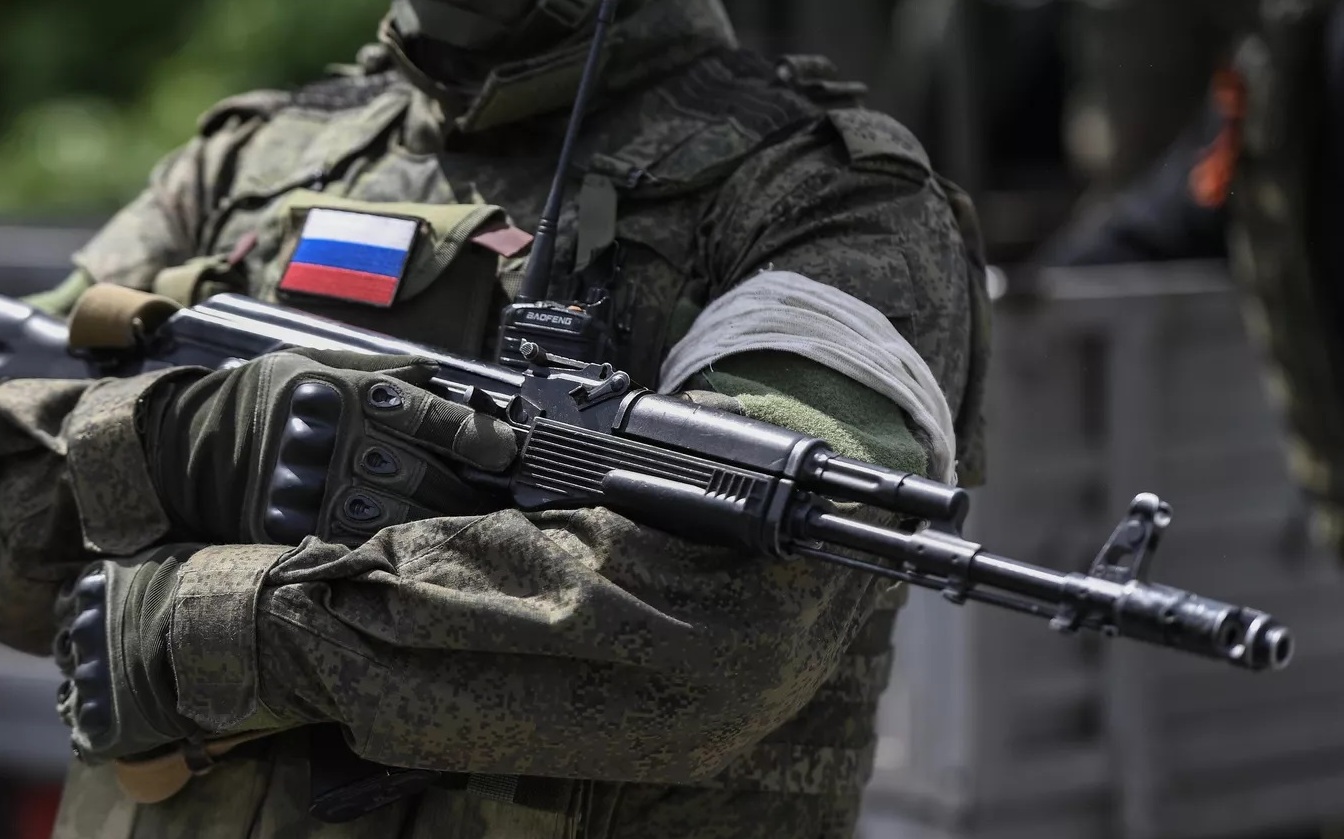
Russia's State Duma has passed a draft law on first reading that gives the military the right to use force abroad under the pretext of protecting Russian citizens. The Center for Countering Disinformation (CCD) at the National Security and Defense Council (NSDC) views this as part of a systematic campaign to psychologically prepare the population for a possible armed conflict with NATO countries.
The logic of the document is simple and dangerous at the same time: wherever there is a Russian citizen — or a person to whom Moscow decides to issue a passport — a legal basis for a military operation appears. This is exactly the scheme that worked behind the "humanitarian" rhetoric before the annexation of Crimea in 2014 and the invasion of Donbas.
The CCD notes that Russian state media has been consistently forming an image of NATO as a direct threat to Russian citizens over recent months — in the Baltic states, Moldova, and Georgia. The draft law provides legal cover for this rhetoric.
Important context: Russia has already used similar mechanisms. The 2014 law on "protection of compatriots" was one of the formal justifications for the occupation of Crimea. The current draft law expands the geography and removes previous restrictions on the scale of operations.
For the Baltic states and Poland, where hundreds of thousands of people with Russian passports reside or are registered, the law adopted in this form creates a permanent pretext for escalation — even without any real incident.
Whether this law becomes a working tool of pressure on specific NATO countries depends on whether the Alliance formulates a clear warning response before the final reading in the Duma, while the document can still be qualified as a signal rather than a decision.





