The U.S. State Department and Ukrainian Ambassador Olga Stefanishyna have prepared a draft memorandum — the first official document on the path toward a defense agreement that would allow Ukraine to export military technologies to the United States and jointly produce drones with American companies. This is reported by CBS News citing three unnamed sources familiar with the details of the negotiations.
A memorandum is not an agreement. It is a framework document of intent that contains no binding obligations and does not define an enforcement mechanism. A full-fledged treaty requires agreement on prices, volumes, joint production formats, and — most importantly — signatures from both parties, which, it seems, will still have to be awaited.
How the idea emerged
The initiative was born in August 2025, when Trump privately praised the SBU's "Spider Web" operation — a massive drone strike against Russian air bases. According to CBS News, Ukrainian pilots remotely guided explosive drones that had been previously smuggled into Russia on inconspicuous trucks and destroyed dozens of aircraft directly on runways. It was after this that Kyiv proposed systematic cooperation with Washington in the field of unmanned aerial vehicles.
"We prepared a Drone Deal for the USA, I offered it to President Trump. It includes drones, repelling mass attacks, electronic warfare systems and much more"
— President of Ukraine Volodymyr Zelensky, April 2026
What Kyiv offers — and why Washington is interested
The figures on the gap between the two countries speak for themselves: one Ukrainian manufacturer plans to produce over 3 million FPV drones in 2026 — while the United States made only 300,000 in total in 2025. According to Army Recognition, Washington is discussing a package potentially valued at tens of billions of dollars — for "millions" of drones over several years.
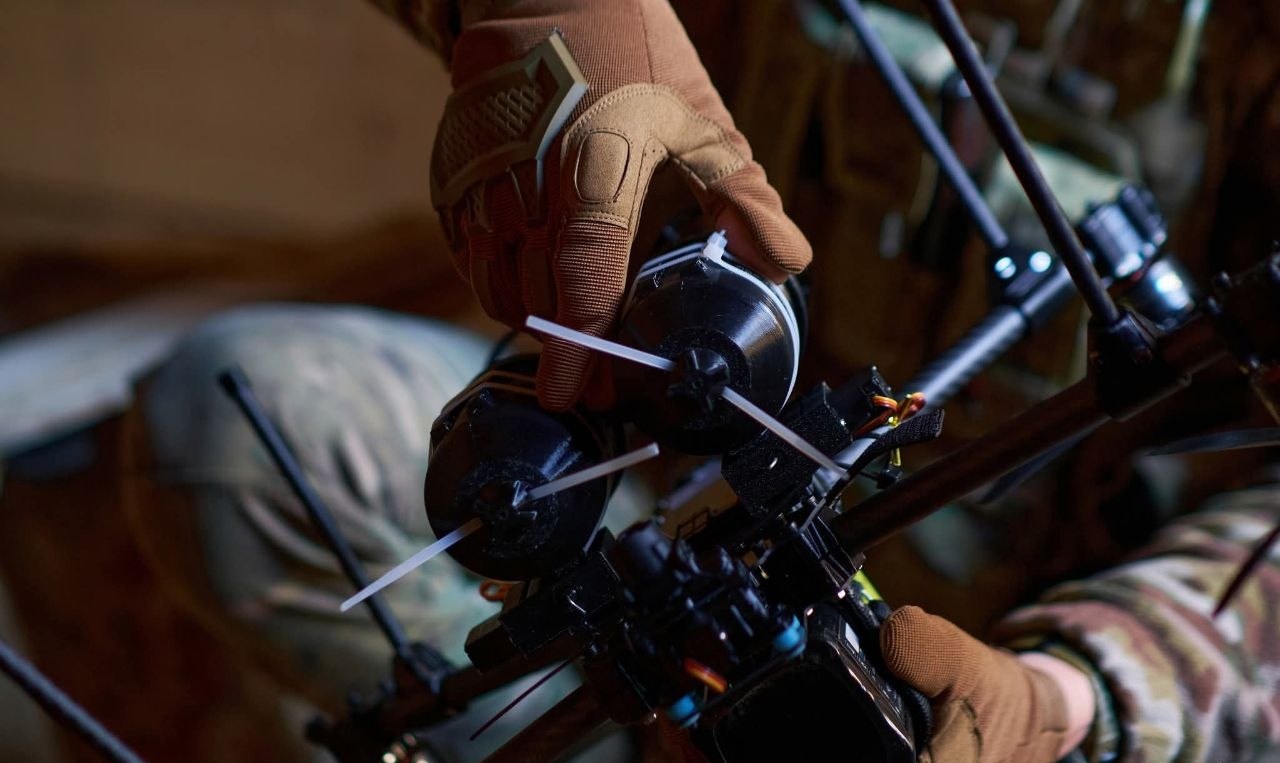
Ukraine's advantage is not a single type of device, but an ecosystem: 3D printing of structures, modular warheads, secure digital communication channels, and rapid software updates based on daily combat data. A separate direction involves anti-jamming technologies. Sine Engineering, which recently received multi-million dollar investments from the U.S.-Ukraine Reconstruction Fund, has developed a system that allows drones to fly without GPS under jamming conditions.
As early as March, General Cherry — one of the largest Ukrainian drone manufacturers — signed a joint production agreement in the United States with American company Wilcox Industries. The Pentagon also invited Ukrainian companies to participate in the Drone Dominance program — an initiative worth $1.1 billion to select drones for the needs of the U.S. Army.
Where the problem lies
The Iranian war has shifted priorities: Ukraine sent interceptors and pilots to the Middle East to help U.S. allies shoot down "Shaheds" — the same drones that Russia has used for years to attack Ukrainian cities. Demand for Kyiv's expertise has surged: over the past two months, Zelensky has signed security agreements with Saudi Arabia, Qatar, and the UAE, and negotiations, according to him, are underway with almost 20 countries.
However, according to Gordon UA citing sources from CBS News, Ukrainian officials are registering "lack of support" for the agreement from senior officials of the Ministry of Defense and the White House — and this is happening right in the midst of the Iranian campaign. Trump had not publicly demonstrated enthusiasm in April for the proposal, which Zelensky had repeated multiple times.
The situation is paradoxical: the State Department has advanced the document — but without the Pentagon and the White House, the memorandum remains a statement of intent without a mechanism for implementation.
What's next
If the signing of the memorandum is not followed by a concrete plan with timelines, volumes, and responsible structures from the American side, the agreement risks repeating the fate of previous Kyiv proposals — postponed and then picked up by competitors: agreements with the Persian Gulf have already been signed, and Ukraine will not wait forever.





