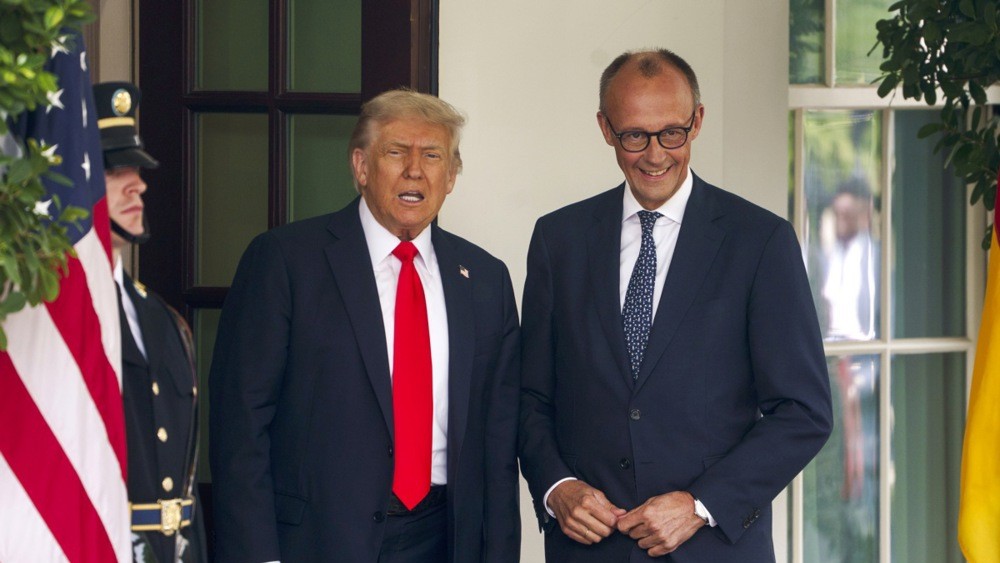
Merz: I will go to Washington with a single European position
Chancellor of Germany Friedrich Merz said in an interview with German broadcasters (according to Reuters) that he will travel to the United States "with a coordinated European position" on tariffs. That message serves two purposes: to show coordination within the EU and to emphasize that tariff policy is the competence of the Union, not individual capitals.
"We will have a very clear European position on this matter, because tariff policy is a matter for the European Union, not individual member states, and I will go to Washington with a coordinated European position"
— Friedrich Merz, Chancellor of Germany
Context: the court, new tariffs and the timeline
On 20 February the U.S. Supreme Court ruled most of the previous administration's tariffs unlawful, but, as Reuters and Politico report, the administration responded with a new scheme — introducing global tariffs under a different law. U.S. Trade Representative Jamison Greer confirmed that sectoral tariffs will remain in effect, and the president himself announced an increase in tariffs from 10% to 15%, which are to take effect on 24 February and last for 150 days.
Why this matters for Europe — and for Ukraine
Uncertainty over tariffs hits investments and supply chains. For the EU — it is a question of competitiveness for the automotive industry, metallurgy and energy components. For Ukraine such changes matter twice: first, as part of shared supply chains (metal, components, logistics), and second, because of the impact on prices in partner economies and on the ability to rebuild critical infrastructure and make defense purchases.
European and American experts warn: prolonged uncertainty undermines investors' plans and delays the restoration of production lines. As Merz noted in a conversation with Politico, in the long term tariffs harm not only exporters but also consumers in the country that imposes them.
"The greatest poison for the economies of Europe and the United States is constant uncertainty over tariffs. And this uncertainty must end"
— Friedrich Merz, Chancellor of Germany
What could happen next — and how to respond
Merz is due to meet with the U.S. president in early March. On the table are several scenarios: a diplomatic settlement with exemptions for critical sectors, temporary compromises, or escalation with additional restrictions. For Ukraine it is important that the EU secures clear guarantees regarding supply chains and special cooperation regimes in the defense and reconstruction spheres.
Brief summary
Merz's message is a signal of EU unity toward the United States. But the real test will come when declarations turn into concrete agreements: mechanisms to reduce uncertainty, exemptions for critical chains and coordination on defense supplies. The question for partners is whether there will be enough political will to put trade stability above short-term tactical moves.





