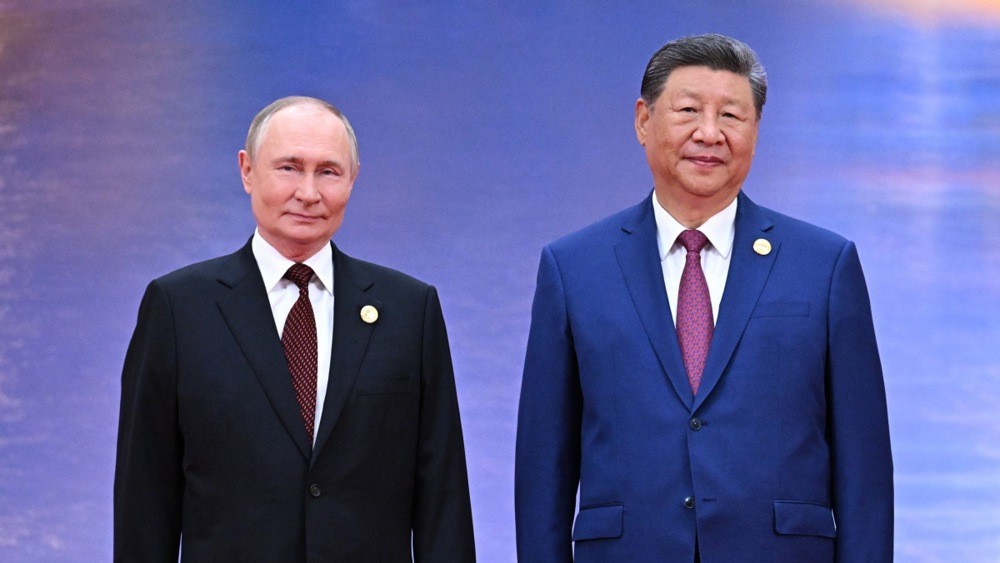
Trump and Xi Jinping met in Beijing on May 13-15. Ukraine was a topic there — but not the main one. Now the same city will host Putin. And only after that will it become clear what role China has truly chosen.
What happened in Beijing
The first visit by an American president to China since 2017 concluded without major agreements. According to Reuters, negotiation participants confirmed that no significant progress was achieved. The parties discussed trade, Taiwan, Iran's nuclear program — and briefly Ukraine.
Trump confirmed at a press conference that Ukraine was on the agenda. When asked by journalists whether it was discussed and whether there was progress, he replied briefly: "Yes." Without details. The Chinese side in its summary noted that the leaders touched upon the "crisis in Ukraine" — a term that Beijing has consistently used to replace the word "war" for the fifth year now.
"China and the US hope for a swift end to the conflict. Both countries are ready to play a constructive role in a political settlement."
China's Foreign Minister Wang Yi, summarizing the talks
There is no mechanism for pressure on Russia from China in this formulation. "Constructive role" is a diplomatic formula devoid of substance if it is not backed by concrete actions.
What China is doing in parallel
While Wang Yi spoke about "promoting peace," intelligence data recorded something different. According to Ukraine's Main Intelligence Directorate, as of early 2025, 80% of critical electronic components in Russian drones are of Chinese origin. The Ukrainian side confirmed the supply of machine tools, chemical products, and components to at least 20 Russian defense factories.
Beijing responds standardly: "categorically denies baseless accusations." But this position exists parallel to reality — and the summit with Trump did not change it.
Putin follows suit
On May 19 — the day after Trump's departure — Putin will fly to Beijing. He will spend two days in China. The Kremlin confirmed the date and agenda: officially — bilateral cooperation and "major international issues."
But there is a detail that Moscow does not hide: Kremlin spokesman Dmitry Peskov directly called the trip "a good opportunity to exchange views" regarding Xi's negotiations with the Americans. In other words, Putin is going to find out what Trump agreed to — and offer Xi his own interpretation.
The visit is also timed to the signing of a new treaty "on good neighborliness, friendship and cooperation" between Russia and China. Analyst at the Valdai Club Andrey Kortunov acknowledged that negotiations between Putin and Xi "will not always and not in everything be simple" — but added that "the international situation opens new opportunities for Russia."
Why this matters for Ukraine right now
Board member of the Ukrainian Association of Sinologists Vita Holod clearly outlined the logic: "In a week, Putin will be in Beijing. After his visit, we will draw conclusions." This is not an evasion of the answer — this is a precise understanding of how to read diplomatic signals: not by Wang Yi's words, but by what Xi says or does not say to Putin.
- If Beijing pressures Moscow regarding negotiations — this will be the first real signal of a change in position.
- If they sign an expanded treaty without reservations about the war — "constructive role" will remain an empty declaration.
- If China publicly endorses Putin's conditions — this will effectively be positioning against any just peace.
The U.S.-China summit concluded with an announcement: in the fall, Xi Jinping will visit the United States. That is, both superpowers are interested in dialogue with each other. The question is what place in this dialogue is reserved for Ukraine — and who asked Ukraine for consent to such an arrangement.
If after the Xi-Putin meeting Beijing does not make any public statement about the unacceptability of the occupation of Ukrainian territories — will the West have grounds to continue calling China a "neutral mediator"?





