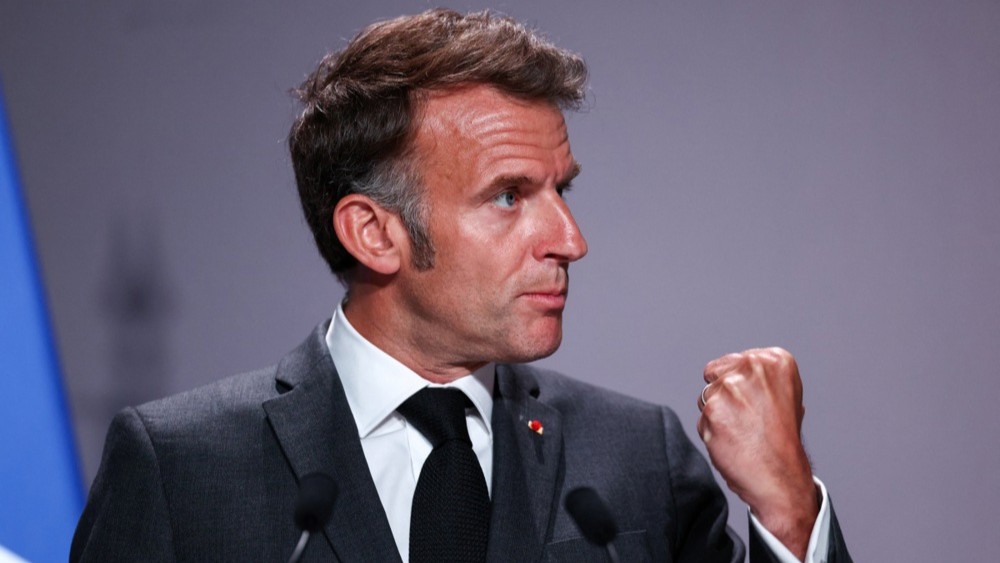
When on May 24, 2026, the Élysée Palace initiated a call to Minsk — the first since February 2022, when Russian columns entered Ukraine precisely through Belarusian territory — this was not a gesture of reconciliation. It was a warning.
What Macron Said and What Lukashenko Heard
According to AFP citing a source in the French president's entourage, Macron "emphasized the risks for Belarus from involvement in Russia's war of aggression against Ukraine" and called on Lukashenko to take concrete steps to normalize relations with the European Union. Minsk described the same conversation differently: "regional problems" and "relations with the EU and France in particular" — phrasing that contains no hint of a warning.
Two different readings of one conversation — this is not a technical discrepancy. This is a demonstration of how Lukashenko uses the very fact of contact with the West as an internal and external signal: they talk to me.
The Context That Changes Everything
Macron's call did not occur in a diplomatic vacuum. Since summer 2025, the Trump administration has been conducting direct negotiations with Lukashenko — primarily around the release of political prisoners in exchange for sanctions relief. In December 2025, the United States partially lifted restrictions on Belarusian potash companies after the release of 123 prisoners. In March 2026, following a meeting with Trump's envoy John Cole in Minsk, Lukashenko released another 250 people — the largest single release in the country's history.
"Lukashenko understands the pain of Western sanctions and is trying to ease them. But let's not be naive: his policy has not changed, repression continues, support for Russia's war continues too."
Sviatlana Tsikhanouskaya — Associated Press
It is precisely in this corridor between sanctions pressure and tactical concessions that Minsk currently exists. Macron's call is yet another element of this structure, where the West is trying simultaneously to restrain Lukashenko from military escalation and not close the window for his partial exit from Moscow's orbit.
Why Belarus Still Has Not Entered the War — And Whether This Is Diplomacy's Merit
Since February 2022, Belarus has provided its territory for the invasion, deployed Russian nuclear weapons, and is de facto integrated into Russia's military infrastructure — but Belarusian soldiers officially do not participate in combat. This is Lukashenko's decision, which, it seems, he is consciously preserving as a trump card in negotiations with the West.
Macron's warning makes sense in this context: to prevent Moscow or internal security forces from persuading Minsk to directly participate at a moment when a diplomatic channel has just been restored.
The question is not whether Lukashenko heard Macron — but whether the Élysée Palace is prepared to offer something concrete: for example, a roadmap for easing EU sanctions in case of verified non-interference by Minsk in combat operations. Without this, the call remains a signal without feedback.





