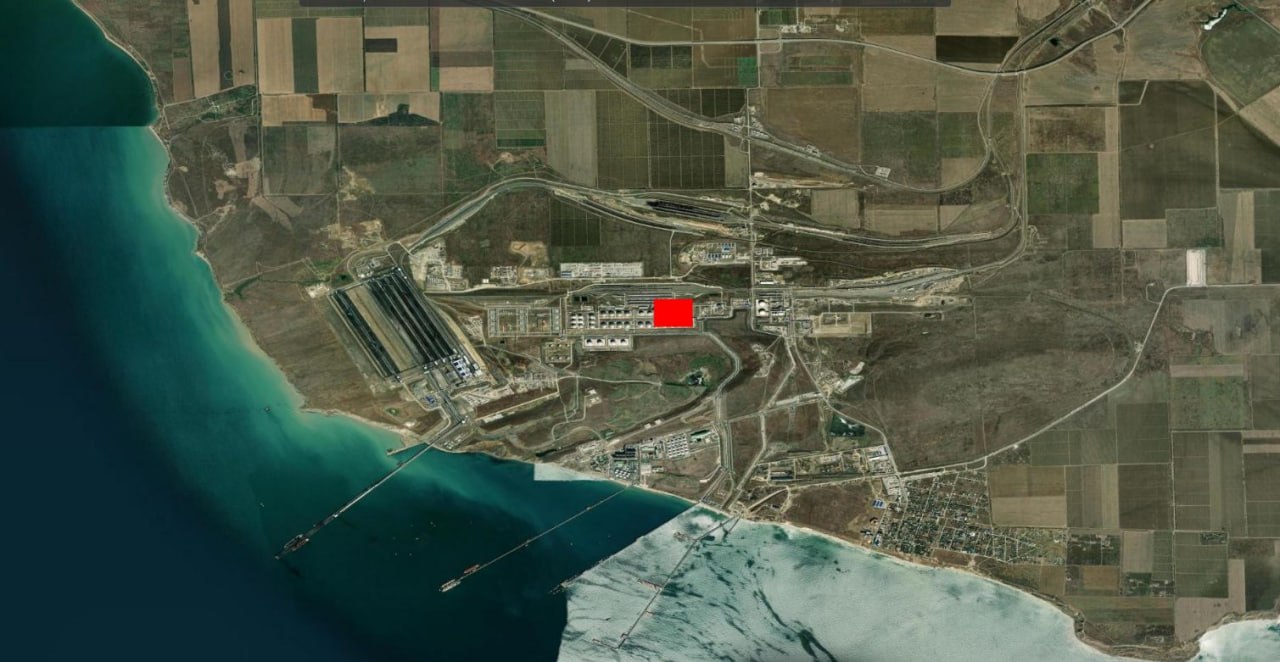
Around 1 a.m. on May 13, unmanned aerial vehicles attacked at least 14 Russian regions and temporarily occupied Crimea. The Russian Ministry of Defense reported the alleged destruction of 286 drones. Two targets — in Krasnodar Krai and Yaroslavl — were burning until morning.
Taman: "Debris" and port fire
The operational headquarters of Krasnodar Krai confirmed a hit on an enterprise in the village of Volna in Temryuk District. The official version — "debris falling from a destroyed drone." One person was injured, equipment caught fire, and the fire had not been extinguished by morning.
According to OSINT channel Exilenova+, the fire broke out directly in the area of the Taman seaport. The village of Volna is home to the oil and gas terminal "Tamanyeftegas" — an export hub that plays a key role in the logistics of Russia's Black Sea Fleet due to its proximity to occupied Crimea.
"Taman, Krasnodar Krai, video of port fire after the attack. Local authorities previously confirmed the attack and fire."
— Exilenova+, OSINT analytics
This is not the first strike on the facility. On the night of February 15, 2026, the Tamanyeftegas terminal was already attacked by fighters of the 1st Separate Center of Unmanned Systems Forces in cooperation with the GUR — powerful explosions were recorded. Earlier, on the night of December 22, 2025, drones also targeted this facility. Thus, over six months — at least three documented attacks on the same terminal.
Yaroslavl: An oil refinery that remains unlucky
Governor of Yaroslavl Oblast Mikhail Evraev announced air defense and electronic warfare operations and traditionally emphasized that "most drones were destroyed." However, debris from one UAV, according to the official version, fell on an industrial facility in the city. No casualties are being reported.
OSINT channel Astra geolocated video from the scene and established: the Slavneft-YANOS oil refinery was struck — the largest oil refining enterprise in Russia's Central Federal District and one of the five most powerful in the country, capable of processing up to 15 million tons of oil per year. The factory's products — gasoline, diesel and aviation fuel — directly support Russian army logistics.
For YANOS, the night of May 13 was not the first unpleasant experience: the plant was attacked in April 2025, and twice in May, including a strike on the eve of May 9.
286 "destroyed" — and still burning
The pattern repeats: Russia's Ministry of Defense reports a record number of intercepted drones each time — this time 286 in 14 regions. But fires at strategic facilities break out regardless of these figures.
- Krasnodar Krai: oil terminal in Taman — a systematic target, damaged for the third time in six months.
- Yaroslavl: YANOS oil refinery — repeated attack on an enterprise that supplies fuel for the army and central Russian regions.
- Other regions: explosions were recorded in Nizhny Novgorod, Tula, Rostov oblasts, Anapa, and also in Crimea.
Rostov Oblast was also hit this time — explosions rang out in Krasnosulinsky and Millerovo districts, where strikes on defense industry facilities had been previously recorded.
The logic of repeated strikes
The systematic nature of attacks on the same facilities is no accident. The Tamanyeftegas terminal is a critical node for oil product exports and simultaneously — an element supporting groupings in Crimea. YANOS oil refinery meets the army's needs for aviation and diesel fuel for the central direction. Both facilities are difficult to replace quickly: building new capacity takes years, and repairing damaged equipment under sanctions is a separate logistical problem for Moscow.
It is telling that none of the strikes on these facilities are officially recognized as direct hits: authorities always refer to "debris." This means Russia cannot admit the ineffectiveness of its air defense without image losses — and cannot hide fires visible for tens of kilometers.
If in August YANOS shuts down operations for at least a month due to another attack — the fuel logistics of Russia's central grouping will feel it already at the front. The only question is whether Russia will have enough reserve capacity to cover the deficit from other refineries — and whether these "reserve" refineries will become the next targets.





