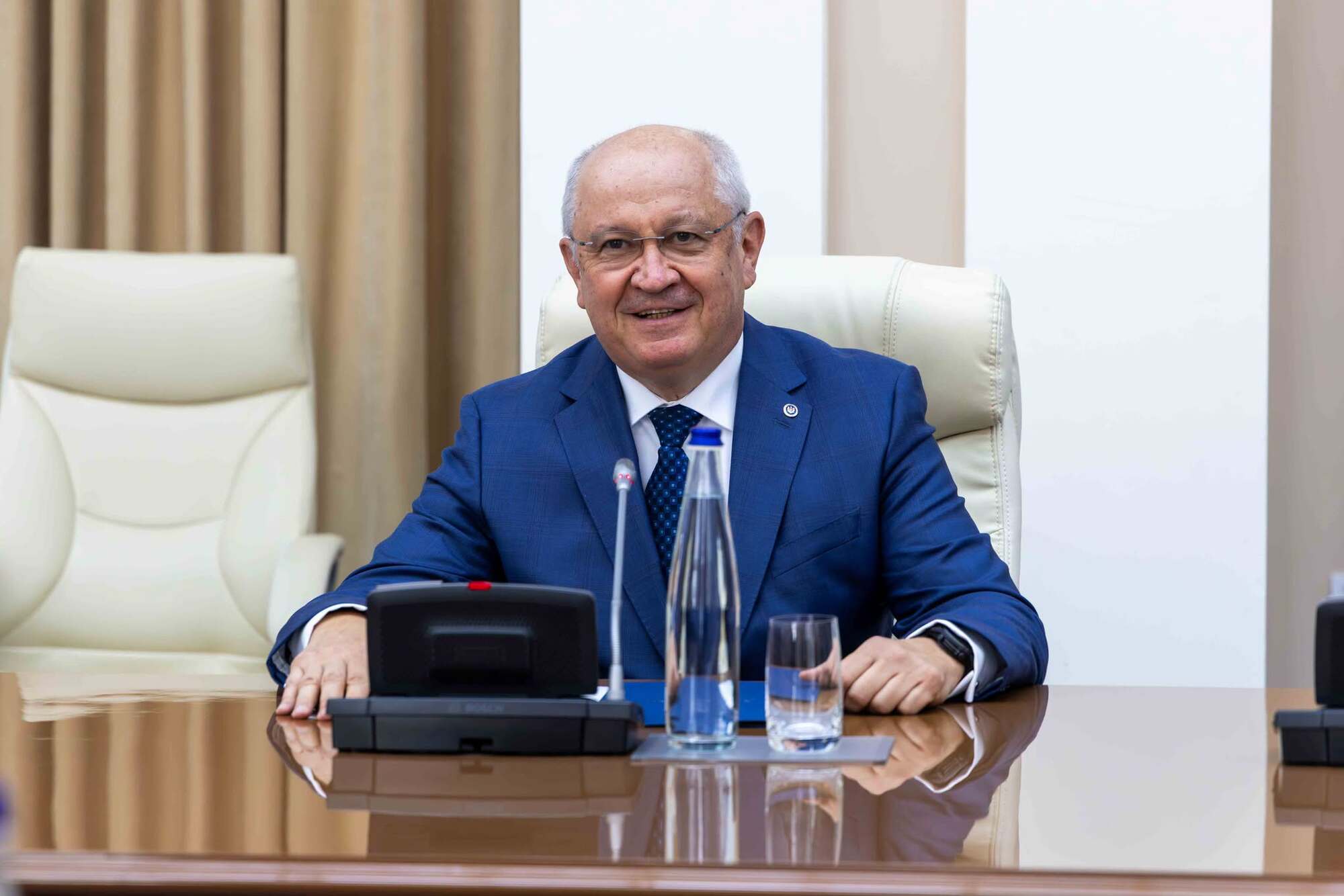
Prime Minister of Moldova Alexander Muntyan announced his resignation after eight months in office as head of government. The statement came without prior warning — even the day before, no Moldovan media had reported on a domestic political crisis capable of provoking such a step.
Muntyan took over the cabinet of ministers at the height of the election cycle, when the ruling party Action and Solidarity of Maia Sandu needed a technical prime minister with a reputation as a reformer. Eight months — a period during which the government managed neither to complete any of the structural reforms nor to publicly fail at them.
No official explanation for the resignation had been provided at the time of publication. This in itself is a problem: in a country that claims membership in the EU and where every institutional change comes under Brussels' microscope, an opaque rotation at the level of prime minister is not a technical detail, but a signal about the state of the system.
Moldova is currently caught in two parallel processes: negotiations on European integration demand stability of executive power, while domestic politics demonstrate the opposite. A resignation without a public report on work completed leaves open the question of accountability — who is responsible to whom for the decisions made over these eight months.
If the next prime minister is also appointed without broad public discussion of the candidacy, this will become an indicator that the Moldovan executive power remains a personal project of the presidential office, not an independent institution — and this is precisely what Brussels will be asking about in the next round of accession negotiations.







