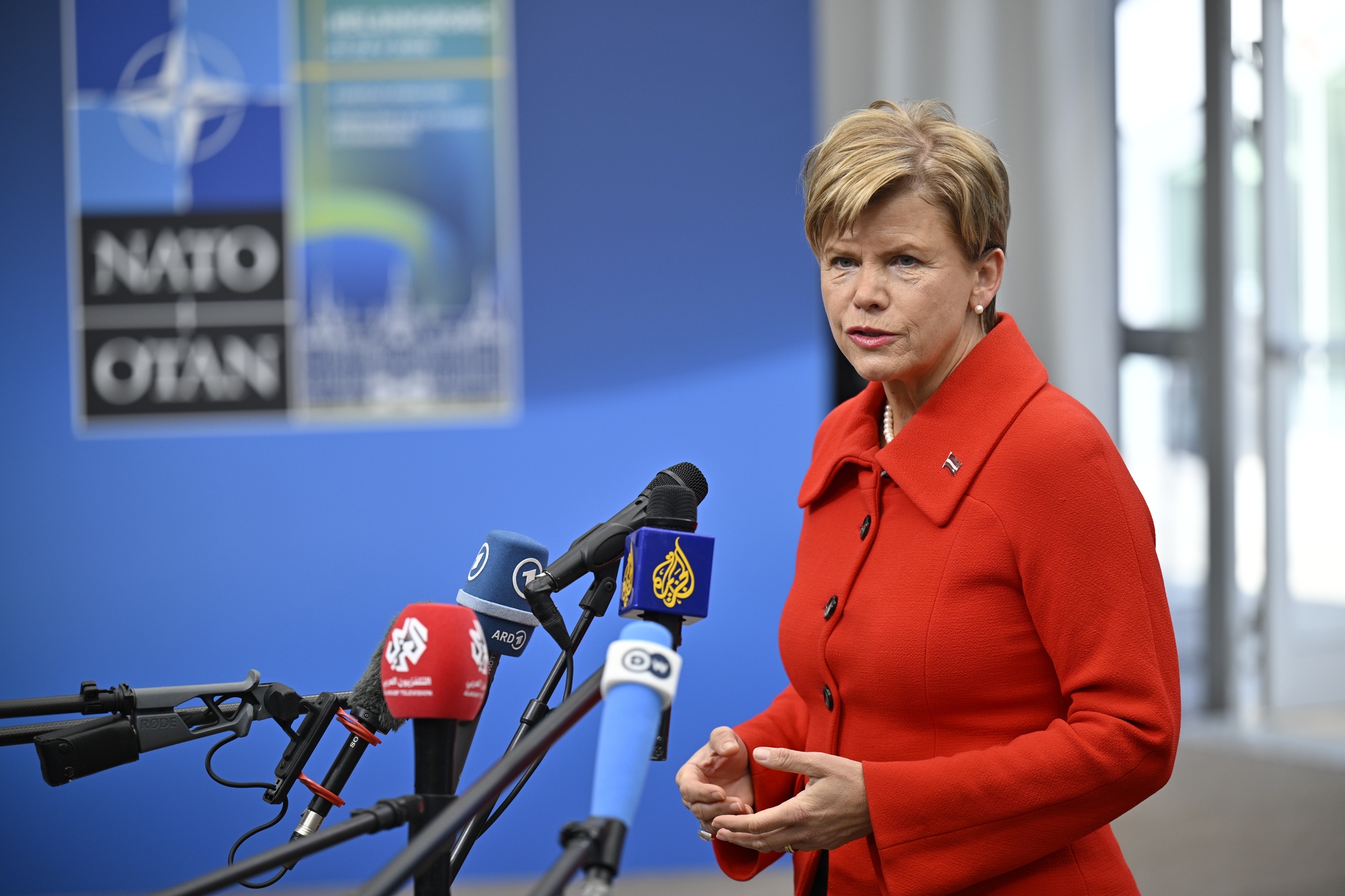
At the Riga StratCom Dialogue conference in Riga on June 3, Latvia's Foreign Minister Baiba Braze stated openly what Brussels has so far been formulating more cautiously: peace negotiations between Russia and Ukraine mediated by the United States are structurally doomed to fail — as long as the Kremlin does not change not its tactics, but its objectives.
What exactly Moscow demands — and why it is unacceptable
Braze did not limit herself to generalities. Among the specific demands from Moscow that she called unacceptable were granting Russian language official status in Ukraine, special status for the Russian Orthodox Church, and concessions regarding Donbas. Separately — Ukraine's neutrality and restrictions on its cooperation with NATO, which she characterized as unacceptable not only for Kyiv, but for the entire Euro-Atlantic community.
«Putin has not changed his goals — to subjugate Ukraine, Russify it, and prevent its integration into the Euro-Atlantic community».
Baiba Braze, Foreign Minister of Latvia, Riga StratCom Dialogue, June 3, 2026
An important detail in Braze's position: she does not completely reject negotiations as a tool. At the technical level, certain agreements are possible. But at the political level — as long as Russia does not renounce its initial objectives — any result will be illusory.
Force as a condition for sincerity
Braze formulated a mechanism that could shift the situation: not diplomatic pressure by itself, but pressure combined with military advantage.
«Only force on the battlefield together with the strength of NATO allies will force Russia to be sincere in negotiations and abandon its political objectives».
Baiba Braze
This echoes the position of NATO Secretary General Mark Rutte, who on the same day at a meeting of the North Atlantic Council in Kyiv stated that there are no signs of Moscow's readiness to stop, and that Russia must be forced to return to the negotiating table — not invited.
Where is Europe in these negotiations
Braze made a separate emphasis on the role of the EU: Europe must be at the negotiating table when its own security is being decided. This is not a declaration of solidarity — this is a rejection of a format where the United States conducts dialogue with Moscow, and Brussels receives the result after the fact.
US Secretary of State Marco Rubio confirmed on June 3: Washington continues diplomatic efforts, but there has been no substantial progress. NATO, meanwhile, believes that recent US negotiations in Moscow yielded only limited results and that the Kremlin will respond exclusively to increased pressure and sanctions.
In other words, three processes are simultaneously taking place now: the US is simulating or genuinely seeking a diplomatic breakthrough, NATO is increasing pressure, and Russia, according to its allies' assessment, is using negotiations to achieve what it failed to accomplish on the front.
If by the end of summer 2026 the US does not propose a format that includes Europe as a full participant, rather than an observer — Braze and her Baltic colleagues will most likely publicly block any agreement signed over their heads.





