When the Kremlin decides to invest in another country's elections, it typically tries to remain inconspicuous. Armenia 2026 is an exception: the operation is so massive that it was exposed before election day.
What Moscow Was Preparing
According to Reuters, citing anonymous Western officials and internal documents, Russia launched a disinformation campaign in Armenia second only in scale to the 2025 Moldova elections in modern European history. Among the tools were the Storm-1516 bot network, previously linked to attempted interference in U.S. elections, and the sanctioned Social Design Agency. One of the plans involved the "Yerevan-1" resource to discredit incumbent Prime Minister Pashinyan.
In parallel, according to the same data, Russia was developing a scheme to physically transport tens of thousands of ethnic Armenians from Russia to Armenia to shift the electoral balance. Three Western officials named billionaire Samvel Karapetyan as Moscow's candidate, who is being prosecuted by Armenian prosecutors for allegedly calling for the overthrow of the government. Karapetyan denies both the charges and any connection to the Kremlin.
"Russia is losing the virtual monopoly it had in Armenia. What Pashinyan is trying to do is a threat to Russia."
Thomas de Waal, Senior Fellow at Carnegie Europe
The results so far are modest: according to a recent poll by the International Republican Institute, Pashinyan's "Civil Contract" party holds about 32% support. Karapetyan's "Strong Armenia" party holds about 6%.
Why Post-Election Protests Won't Take Off
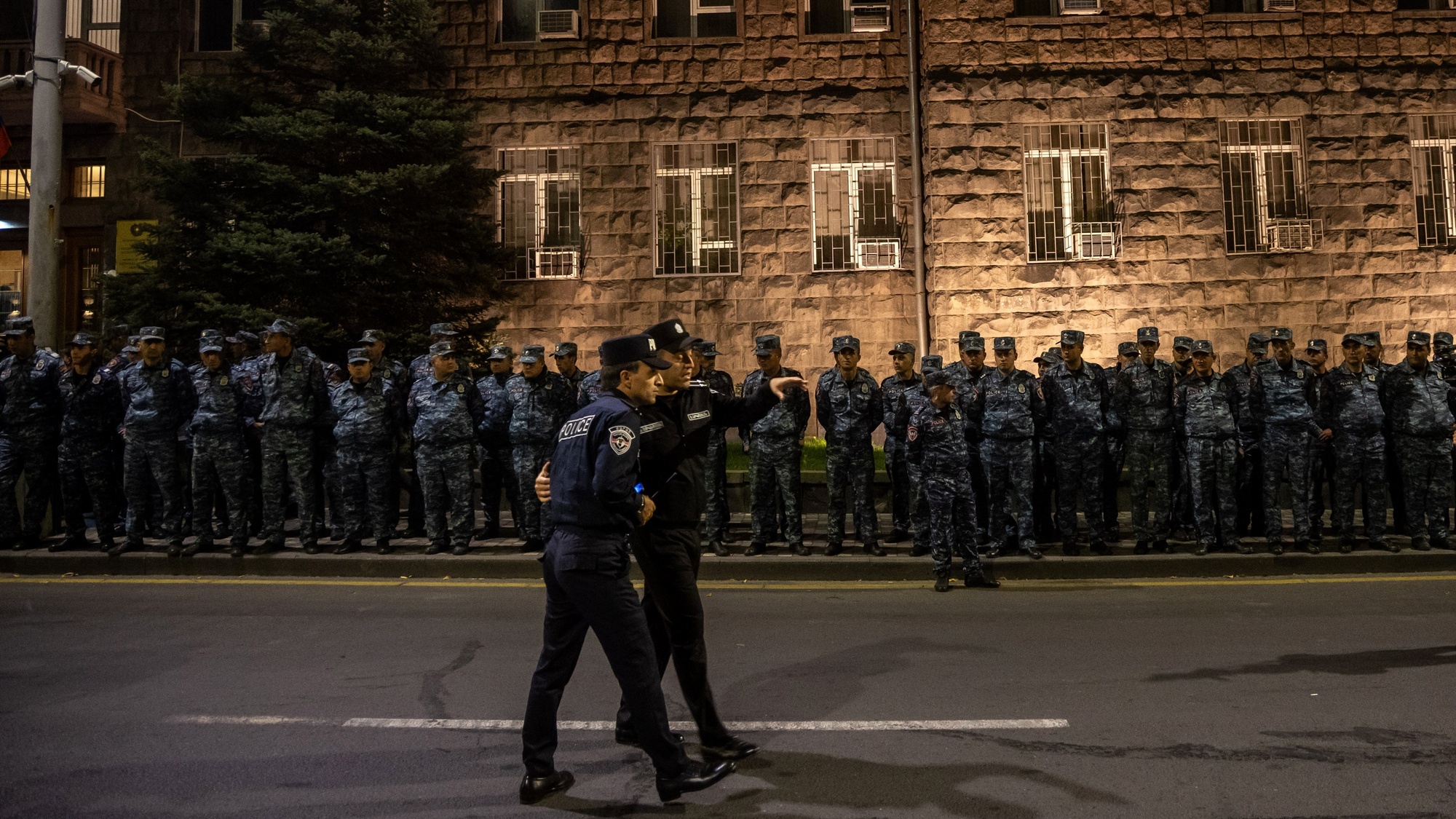
Armenian journalist Robert Ananyan, quoted by LIGA.net, does not rule out the risk of destabilization: Russia invested too much to simply accept defeat. However, he explains why a scenario of street escalation is unlikely to work.
Public sentiment is not on the side of pro-Russian forces. Since 2020, when Azerbaijan completed the second Karabakh war with Moscow's tacit approval and effectively destroyed Armenian Artsakh, trust in Russia in Armenia has collapsed. The opposition, which would play a mobilizing role, is associated with that very era — Kocharyan and Sargsyan — which Armenians associate with defeat and dependence.
- Social base: The Kremlin's candidate is polling at 6% — street protests require a significantly broader core of supporters.
- Karabakh trauma: The lost war left anger toward Pashinyan, but did not convert it into pro-Russian sympathies — on the contrary, Moscow is blamed for betraying a CSTO ally.
- Economic argument: Russia still controls Armenian energy and part of the mining industry, but this is more a lever of pressure than a way to gain popular love.
The Geopolitical Stake Is Bigger Than Elections
In May 2026, Putin drew a direct parallel between Armenia and Ukraine, warning that Yerevan's European integration course requires "special attention." The Iran-Russia strategic partnership treaty, signed in January 2025, obligates both countries to counter the "destabilizing presence" of external actors in the region. For Moscow, elections in Armenia are not just about the Caucasus, but about a precedent: can a former Soviet republic choose the West and survive.
Pashinyan, for his part, is balancing: he declares rapprochement with the EU and the U.S., while publicly not closing the door on a "balanced" course toward Russia. This gives him a win with the domestic audience but complicates clear expectations from Western partners.
If "Civil Contract" receives a constitutional majority without coalitions — and this is exactly what would give Pashinyan a mandate for a new constitution — will he risk doing what he has so far avoided: officially applying for EU membership and permanently closing the door on the CSTO?