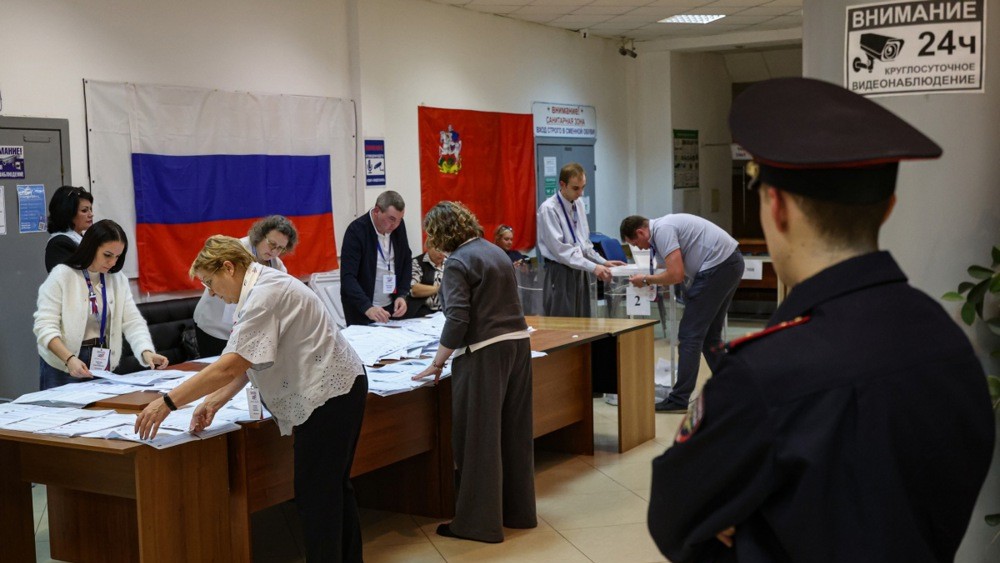
Dictator Vladimir Putin's political party "United Russia" is leading in the pseudo-elections to the State Duma that took place from September 18-20. Russian propagandists from RIA Novosti published preliminary "vote count" data: at the time of publication, they claimed 57.04% for United Russia with approximately a quarter of votes "processed."
There are no free elections or political process in Russia, and all parties allowed to participate in voting are subordinate to the Kremlin. These are the first "elections" to the Russian parliament that the invaders illegally conducted in temporarily occupied parts of the Kherson, Zaporizhzhia, Donetsk, and Luhansk regions of Ukraine.
Why Now
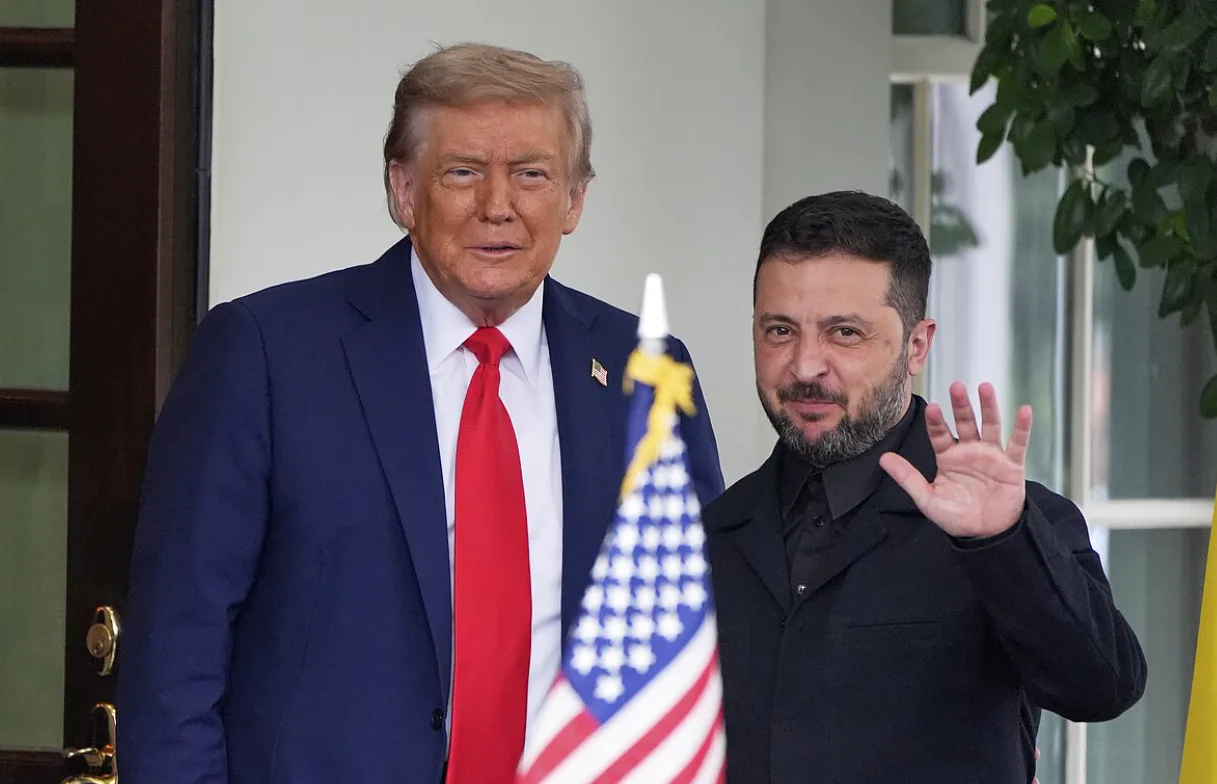
Formally, this is a routine five-year Duma cycle. But for the Kremlin, it is also a way to fill in the occupied pieces of Ukraine on its own political map — to show Russians domestically that the 2022 annexation already "works" as an ordinary administrative reality, rather than a temporary occupation. Simultaneously, the voting served as cover for mobilization plans: President Zelensky warned that Russia is preparing conscription immediately after the "elections," and intelligence assesses Moscow's appetite at 300,000 people per year through 2026-2027.
Pressure and Coercion on the Ground
Earlier, the Foreign Intelligence Service warned of a high probability that Russian special services would carry out provocations and terrorist acts in occupied territories during the elections — and blame Ukraine for them. Ukraine's Security Service called on residents of occupied territories not to participate in fake "elections," recalling the previously prepared coercion scenario.
According to Ukrainian journalists, in the captured part of Kherson region, occupiers organized early "voting" during which so-called election commission representatives visited residents' homes, and locals reported psychological pressure.
"In 2023, the Russians already held pseudo-elections for regional authorities on temporarily occupied territories. Then representatives of Russian occupation administrations similarly included local residents in 'election commissions' and propaganda brigades that called on citizens to 'vote' in the Kremlin's interests," the SBU noted, emphasizing criminal liability for such actions.
Kyiv and International Response
Ukraine's Foreign Ministry called the voting a farce and stated that it does not recognize the conduct and results of "elections" to the Russian State Duma on temporarily occupied Ukrainian territories. It called on foreign states and organizations not to legitimize these actions. The ministry recalled the legal position: after 2014, the only legitimate results of votes on temporarily occupied Ukrainian territories were those displayed on the UN General Assembly scoreboard, when 143 UN member states confirmed the illegality of the occupation.
The Verkhovna Rada did not limit itself to a Foreign Ministry statement and went further — calling on foreign states and parliaments to condemn the pseudo-elections to the Russian State Duma on temporarily occupied Ukrainian territories. The goal is simple: to prevent the new composition of the Duma from receiving any diplomatic recognition, even symbolic.
Ukrainian commentators expressed a sharper position publicly, insisting that a parliament elected under duress should have no access to any international platforms — because voting conducted at gunpoint in regions that are part of another state makes the Russian parliament's composition null and void.
War Continued in Parallel
On the morning of September 20, the last day of "voting," Ukrainian defenders launched new strikes against Russia — in particular, they succeeded in hitting the Moscow oil refinery in Kapotnya again. Moscow Mayor Sergei Sobyanin claimed it was the most massive attack on the city — meaning the Kremlin was literally building the facade of "peaceful self-determination" to the sound of its own air defense.
Recently, Estonia's authorities announced they are ready to immediately close the border with Russia if it announces general mandatory mobilization that threatens the Baltic state. This is the real-world test: if the Kremlin truly announces mobilization immediately after the "elections," the reaction of Russia's neighbors — rather than Moscow's rhetoric — will show how seriously the world takes the legitimacy of the newly "elected" State Duma.