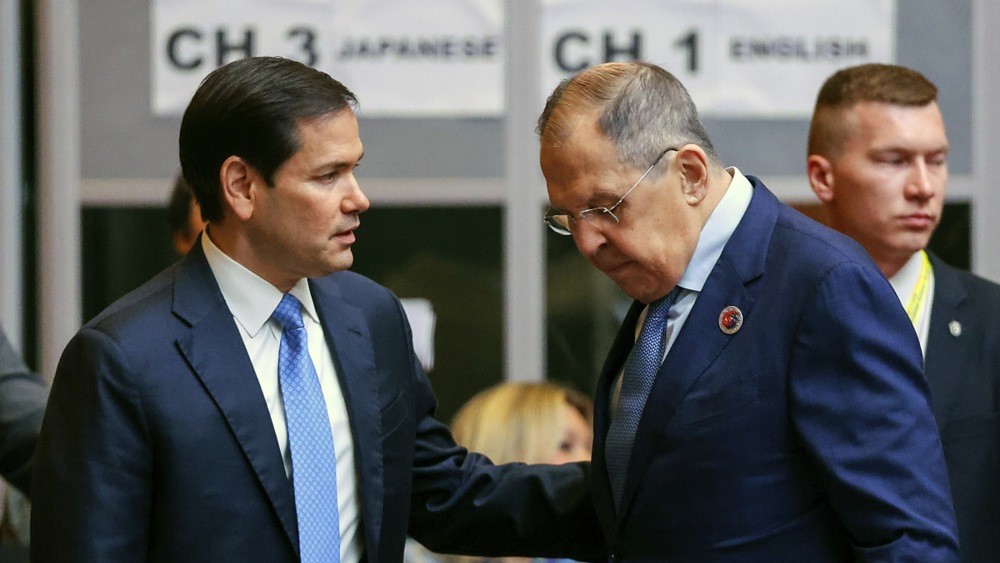
Marco Rubio appeared before the House Foreign Affairs Committee with a dose of diplomatic realism that simultaneously alarmed Kyiv and pleased Moscow. The US Secretary of State acknowledged that the prospects for peace "do not look good" — and immediately promised Russia "friendlier" relations after the war ends.
What exactly Rubio said — and what he didn't
The central thesis of his presentation: the United States must maintain dialogue with the country that possesses the world's second-largest nuclear arsenal — regardless of what that country does. According to Rubio, Washington conducts these conversations "not because it approves of Russia's actions, but because it is a given reality."
"I think our relations with them will become friendlier and easier to develop after the war in Ukraine ends. It is much better to have someone to talk to on the other side than not to have anyone."
Marco Rubio, House Foreign Affairs Committee
Rubio, however, did not clarify what exactly would change in Russia's behavior to make these "friendlier" relations possible — other than the mere fact of a ceasefire.
The same speech where peace "is not in sight"
Alongside his promise of normalization, Rubio delivered the administration's gloomiest public forecast regarding negotiations. According to him, neither side — especially Russia — is ready to make the concessions necessary for a deal. He called the negotiating process one that "has reached a dead end."
The Secretary of State also cited figures illustrating the impasse: Russia is losing approximately 5,000 military personnel per week killed — and, by his account, for the first time in modern military history, the death rate exceeds the casualty rate on the Russian side. Meanwhile, the intensity of strikes on Kyiv has increased precisely because Ukraine is effectively countering on the battlefield.
Rubio directly called the invasion a "strategic catastrophe" for Russia and stated that Moscow "certainly will not achieve the objectives it set from day one" — and possibly will not even achieve what it demands at the negotiating table.
Context: why this was said now
The presentation took place against the backdrop of two important circumstances. First, according to a June 1 report by The New York Times, Moscow has grown "tired" of visits by American special envoys Steve Witkoff and Jared Kushner — a signal that Russia is no longer interested in the pace set by the United States. Second, there is mounting pressure in Congress: a number of Republicans are openly accusing Trump of "dragging out" aid to Ukraine and are preparing to vote on expanding sanctions against Russia.
In this context, Rubio's words about "friendlier" relations with Russia are not merely a diplomatic signal to the Kremlin. It is also an attempt to hold back Republican skeptics from escalating pressure on the administration by demonstrating that Washington has a strategic horizon beyond the conflict.
The US "took sides" — but with caveats
Notably, in that same presentation, Rubio emphasized that the US continues to sell weapons to Ukraine through the PURL program, maintains sanctions against Russia, and has "clearly chosen a side." These words are clearly addressed to Congress, not Moscow.
- Weapons to Ukraine, sanctions on Russia: the administration insists that support for Kyiv has not stopped.
- But Rubio offered Russia the diplomatic "prize" of normalized relations without any visible prior conditions.
- The presentation contained no mechanism for verifying how exactly "ending the war" would be transformed into "friendlier relations."
Kyiv and European allies have yet to receive public explanations of what exactly the administration understands by "ending the war" — freezing the front line or complete withdrawal of Russian forces. The answer to this question will determine whether Rubio's promise becomes an incentive for Moscow to sit at the table — or merely a signal that time is on its side.





