Honorable Consul of Latvia in Slovyansk Alexander Pavenko survived that morning — he was lucky. The consulate building, which was hit by a Russian airstrike on July 24, was less fortunate: both it and neighboring residential areas were damaged, where five people were killed. A week before that, Kyiv was struck so hard that debris reached the Lithuanian embassy. On the night of August 1, a Russian attack on the capital claimed nine more lives.
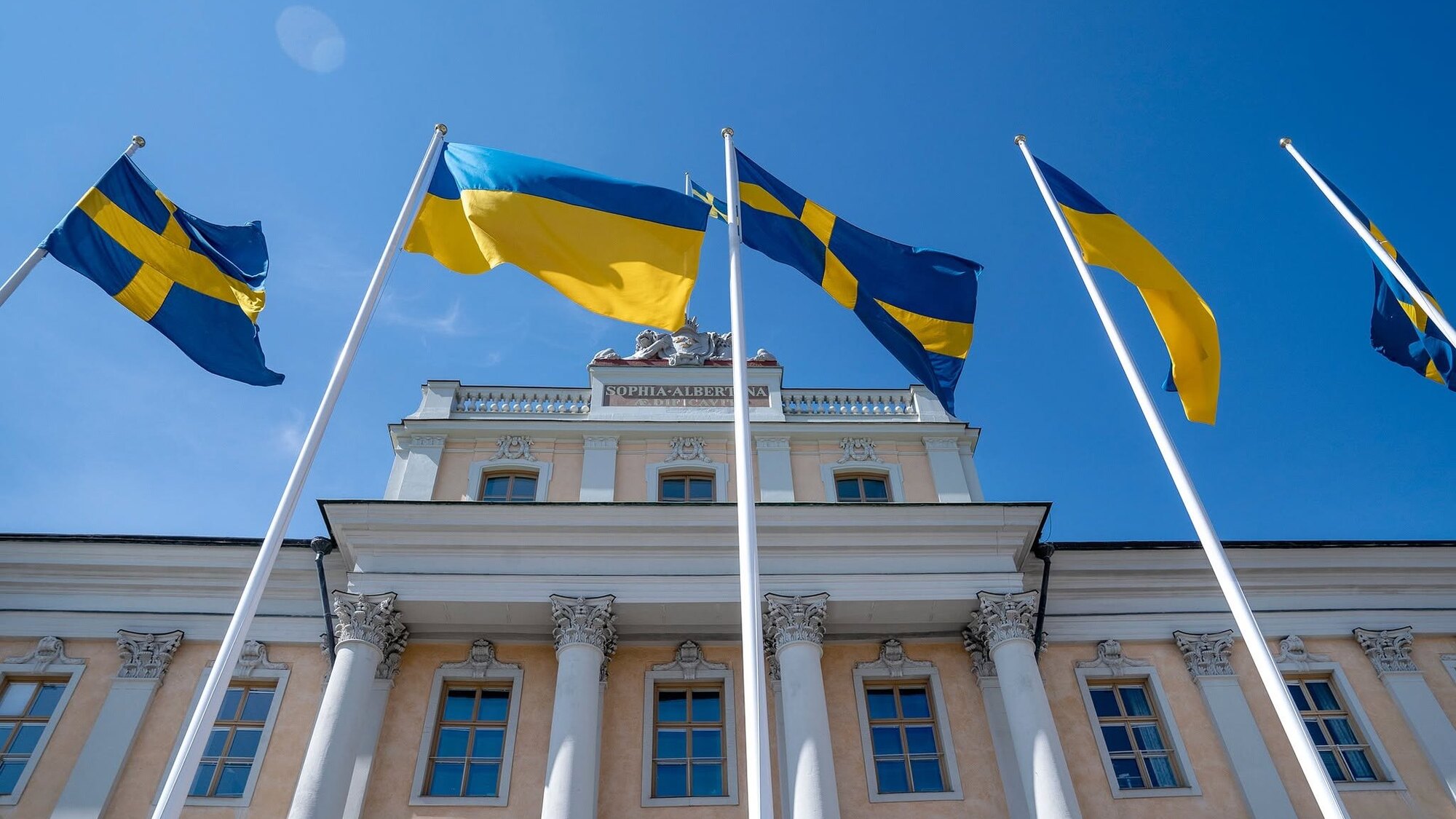
On August 3, Sweden's Foreign Ministry summoned Russia's temporary chargé d'affaires in Stockholm. The official reason — protest against Russia's large-scale attacks on peaceful Ukrainian civilians and civilian infrastructure, including shelling that damaged the diplomatic missions of Lithuania and Latvia.
What a "diplomatic summons" actually means
It is a standard diplomatic procedure: a country invites a representative of another state to officially express disagreement with its actions. A protest note is delivered, a statement is made public — and formal consequences for the other side typically end there. No automatic sanctions, compensation, or guarantees that attacks will stop.
The Swedish press release states that
"During the meeting, Russia's aggression against Ukraine was condemned, as well as Russia's recent violations of the airspace of allied countries. It was also emphasized that Russia has an obligation to comply with international humanitarian law"
Sweden — not the first or the last
Over the past two weeks, several countries have taken the same step:
- Latvia — following the strike on its honorary consulate in Slovyansk on July 24, where five people were killed and nine civilians were injured.
- Romania — at the end of July, after its fighters shot down Russian drones over its territory for three days; Bucharest additionally recalled its own ambassador from Moscow.
- Poland — following a missile strike on its territory on the night of July 30.
- Even India, which traditionally avoids criticizing Moscow, joined this list.
The European External Action Service — the EU's diplomatic body — also summoned Russia's temporary chargé d'affaires over the violation of Romanian airspace by drones and the destruction of Latvia's consulate.
Symbol against the system
This is where the honest part of the conversation begins. Each diplomatic summons is a public signal: the attack has been recorded, condemned, named to the world. For a person whose home was damaged or who lost loved ones in Slovyansk or Kyiv, this is not compensation or a guarantee of safety — only confirmation that the world is watching.
The real leverage is not notes, but sanctions and weapons supplies that follow. Yes, after the strike on Latvia's consulate, EU chief diplomat Kaja Kallas proposed new sanctions against Russia. But Russia continues shelling at the same pace: only a week passed between the first and second strikes mentioned in this article.
The question is not whether another European government will condemn another attack — it almost certainly will. The question is whether a series of diplomatic protests will transform into a coordinated package of pressure capable of actually limiting Russia's ability to continue shelling, or whether it will remain a ritual that records outrage but does not stop the bombs.







