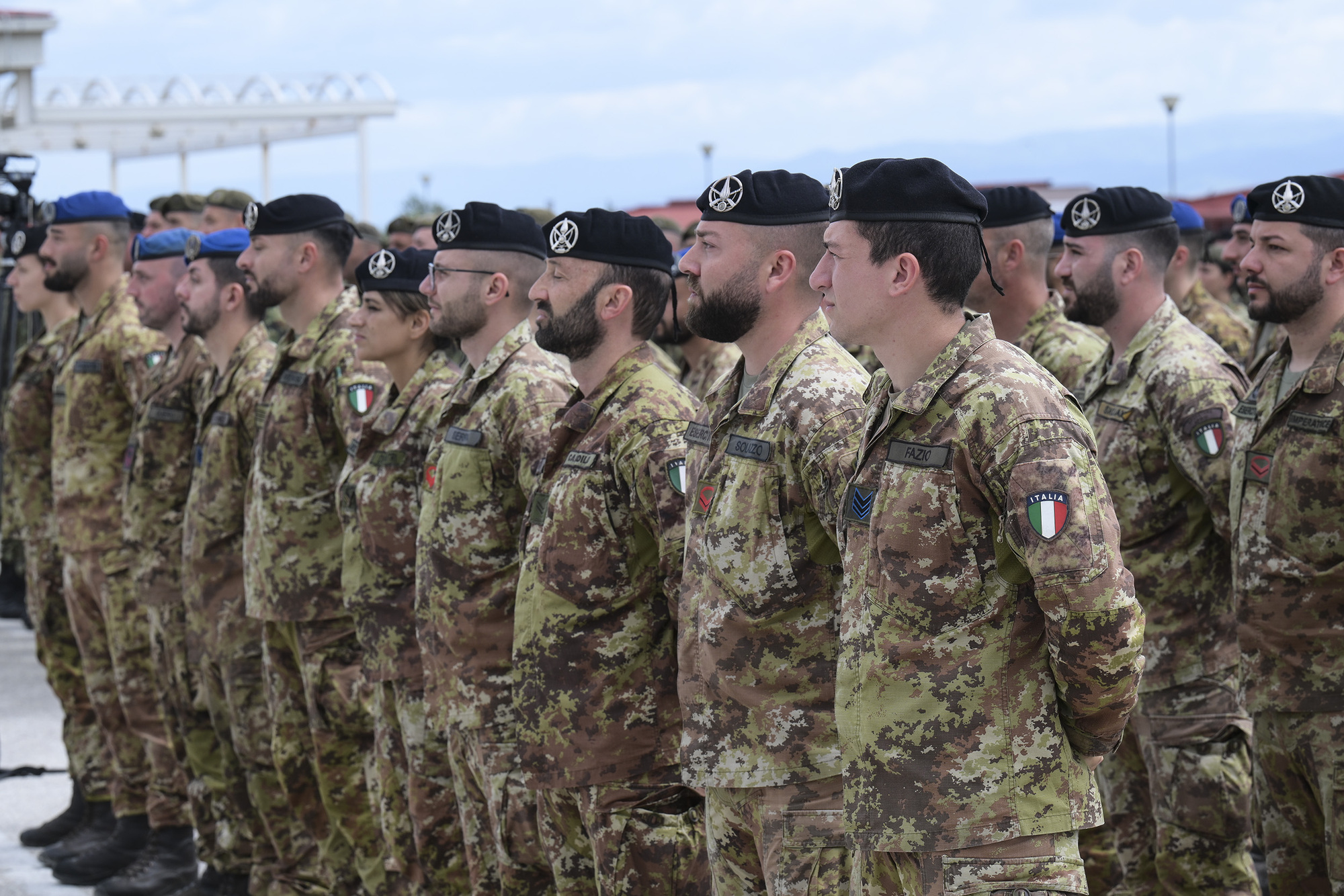
On May 12, at the "Jug" base near Bujanović, Serbian and NATO soldiers stood in formation together for the first time. The official formulation from Serbia's Ministry of Defense is "preservation of peace and stability in the region." But the geography and chronology of events speak much more loudly.
26 Years — From Bombs to Joint Exercises
In 1999, NATO bombed Yugoslavia for 78 days, including Belgrade. The same "Allied Force" operation remains an open wound in Serbian collective memory — and is actively used by Moscow as a tool of influence over Serbian audiences. As Al Jazeera reports, these current exercises — the first in the country's history — are "a landmark cooperation between the Balkan country and the Alliance, which less than 30 years ago bombed its capital."
"Cooperation is aimed at preserving peace and stability in the region."
Serbia's Ministry of Defense
Who and Where
The exercises involve approximately 600 military personnel from Serbia, Italy, Romania, and Turkey. Representatives from the United Kingdom, Germany, the United States, France, and Montenegro participate as observers and staff members. The exercises run until May 23 at the "Borovac" training ground and the "Jug" base — several tens of kilometers from the administrative border with Kosovo, whose status Serbia still does not recognize.
The exercises are commanded by Colonel Branislav Stevanović, deputy commander of the Third Army Brigade. The level is tactical, and the goal is to exchange experience.
A Balancing Act That Becomes Increasingly Less Neutral
Serbia is officially not a NATO member and has not submitted an application for membership. At the same time, Belgrade maintains relations with Moscow and Beijing, and the country's Constitution enshrines military neutrality. However, it is precisely this neutrality that allows Serbia to conduct such exercises without formal membership obligations.
Ukraine's ambassador to Serbia, Volodymyr Tolkach, noted in an interview earlier this year that Serbian society is experiencing "collective cognitive dissonance": Russia traditionally appeals to the 1999 bombing in order to prevent Serbs from moving closer to the West. These exercises are a signal that this appeal is working less and less well.
- Serbia is the only country of the former Yugoslavia that is still not a NATO member and does not have official candidate status
- Kosovo, whose independence Belgrade does not recognize, is meanwhile actively integrating into Euro-Atlantic structures
- Turkey and Romania are NATO members and at the same time countries with which Serbia has pragmatic economic ties
The exercises do not change Serbia's formal status. But if Belgrade continues this format and expands it to the operational level — the question about "neutrality" as a real political position, rather than a convenient diplomatic construct, will arise with renewed force.





