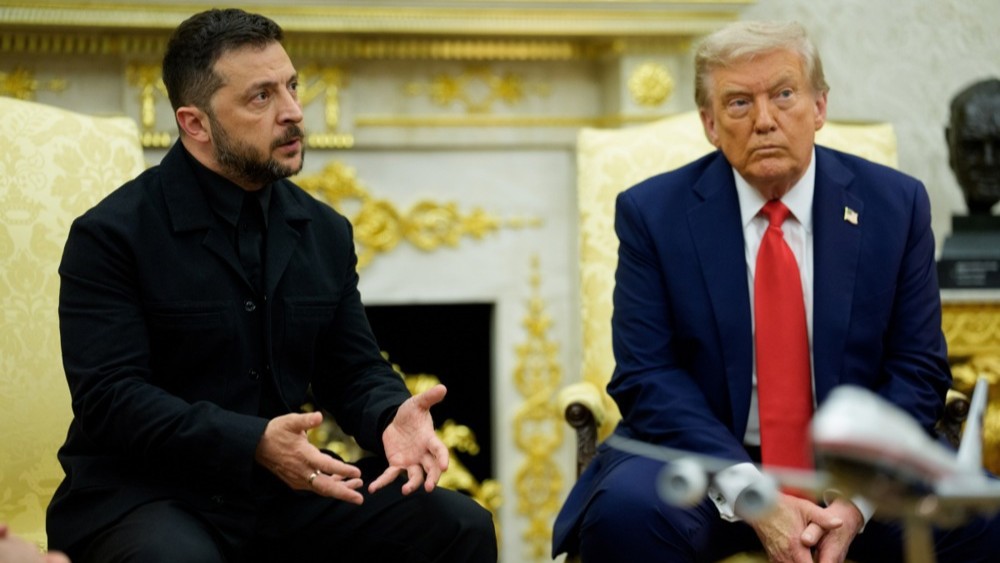
The G7 summit in Canadian Kananaskis on June 17 ended with three absences at once: no joint statement supporting Ukraine, no American weapons commitments, and no meeting between Zelensky and Trump. Each one individually would be a diplomatic failure. All three together signal the state of relations between Washington and Kyiv.
How it happened
Even before the summit began, an anonymous Trump administration official told AFP and The Guardian that there was no separate bilateral meeting with Zelensky on the schedule. The official explanation was that Trump and Zelensky would meet anyway at the G7 working sessions. However, on June 16, Trump decided to leave Canada earlier than planned — the next day when the meeting was supposed to take place. He left, according to Kyiv Post, to return to Washington and deal with escalation in the Middle East.
"I hope they understand"
— Trump, answering a question about leaving the summit, according to Kyiv Post
Zelensky arrived in Kananaskis only after Trump's departure — on June 17, the last day. According to a Kyiv Independent source on the ground, he planned a bilateral meeting and pushed for stronger sanctions against Russia. Instead, a few hours later, he left the summit early himself — after a massive Russian missile strike on Kyiv overnight.
What an American official said about the front
The same anonymous U.S. administration representative cited by The Guardian characterized the situation on the front line as one where Russian advances have "more or less" stopped. This formulation is notable: it implies neither a ceasefire nor a breakthrough — only stabilization, which the American side presents as an argument against urgent weapons deliveries.
The problem is that such a "freeze" benefits primarily the side that already controls the occupied territories. Meanwhile, Ukraine continues systematic strikes against enemy logistics in the temporarily occupied east and south, including Crimea — contradicting the picture of a "stable front" without active operations.
What Zelensky did get
Despite the failure of the main agenda item, Zelensky announced late in the evening of June 17 that the summit did deliver concrete results for Ukraine:
- new tranches of aid from frozen Russian assets;
- additional sanctions against sources of financing for Russia's war;
- increased military support from a number of partners — without the U.S.
As Kyiv Independent sums it up, the Ukrainian delegation went to Canada "with cautious optimism" — and returned with a partial result against the backdrop of a diplomatic crisis. Zelensky publicly called the situation exactly that: "a diplomatic crisis."
Why this matters now
G7 under Canadian leadership was the last major platform in the first half of the year where the West could demonstrate unity on Ukraine before autumn negotiation cycles. The fact that no joint statement was reached due to American opposition means: Washington is no longer an automatic ally in forming a common G7 narrative on the war.
Trump, however, did not block all decisions — he simply left. And there is its own diplomatic logic to this: absence from negotiations leaves no signature on unwanted documents.
If Trump and Zelensky do not meet by the end of July — at NATO events or separately — the diplomatic vacuum between Washington and Kyiv risks turning from situational into structural.





