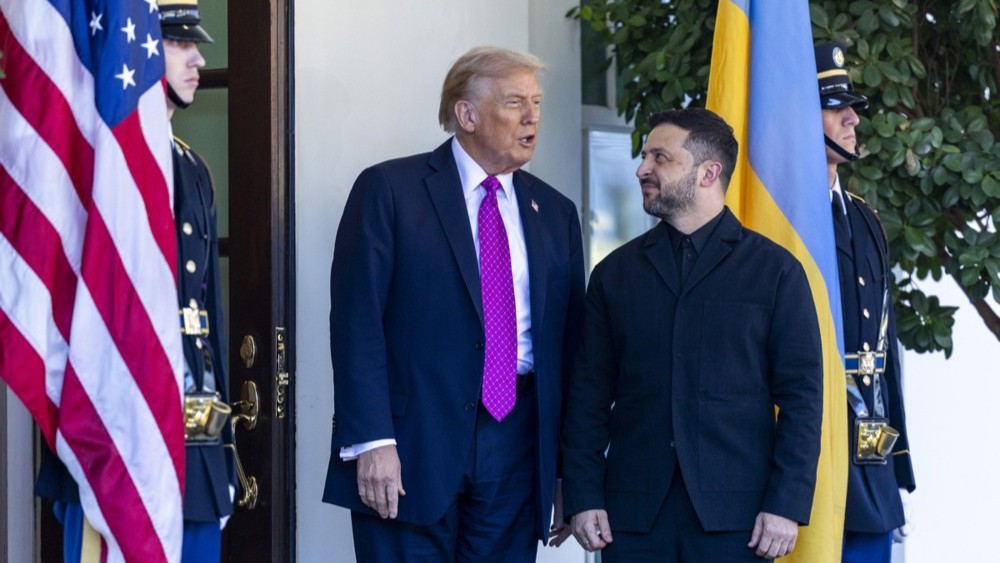
When on June 13 Suspilne reported on the probable meeting between Zelensky and Trump at the G7 summit in Canada's Banff, the word "possible" turned out to be more accurate than any forecast. The meeting did not take place — and not only because it was unofficial.
How "possible" turned into "no"
Zelensky arrived in Banff on June 17 — on the last day of the summit. By that time, Trump had already left Canada: the White House explained the early departure by escalation of the conflict in the Middle East — just hours before leaving, the US president called on Tehran residents to "evacuate immediately." The meeting, which was informally expected to be central, did not take place at all.
"Because of what is happening in the Middle East, President Trump is leaving the summit this evening"
White House Press Secretary Carolyn Levitt
Zelensky nonetheless held negotiations — with Canadian Prime Minister Mark Carney, who announced a new aid package for Ukraine of 2 billion Canadian dollars and expanded sanctions against Russia. Then — he returned to Kyiv early: the city suffered a massive missile strike that night.
What G7 did not write about Ukraine
The leaders of the "Big Seven" signed six joint statements. There was no document on Ukraine among them. According to Premier Carney, support for Kyiv was "verbally agreed by all leaders" — and included in his closing statement as chair, rather than in a joint declaration. These are legally and symbolically different things.
A separate issue remained the price cap on Russian oil. European leaders, according to Reuters, insisted on lowering it from 60 to 45 dollars per barrel — to limit financing of the war. The United States did not support this position.
Rubio's pressure as context
The summit took place against the backdrop of overt pressure from the American side. Secretary of State Marco Rubio said on the eve of the meeting that the war in Ukraine is "not an American war," and added: weapons for the Armed Forces of Ukraine could be redirected if the American military needs to replenish its own supplies. The Atlantic Council called this a "missed meeting" and reminded: there will be no real peace while Washington "treats the aggressor to bouquets."
- No Trump-Zelensky meeting — the first time since the beginning of the active phase of the negotiation process
- No joint G7 statement on Ukraine — support is recorded only in the chair's statement
- No decision on the oil price cap — a key sanctions lever is up in the air
- With a threat about weapons from Rubio — publicly, before the summit's conclusion
What's next
Formally, no failure occurred: Zelensky received Canadian funds and sanctions, and G7's verbal support is on record. But the diplomatic subtext is obvious: Trump left before the Ukrainian president arrived, and the only document mentioning Ukraine is signed by one person.
The question is not whether Trump and Zelensky will meet next time — but whether this meeting will happen before the US redirects some of the weapons that the Secretary of State is already openly discussing.





