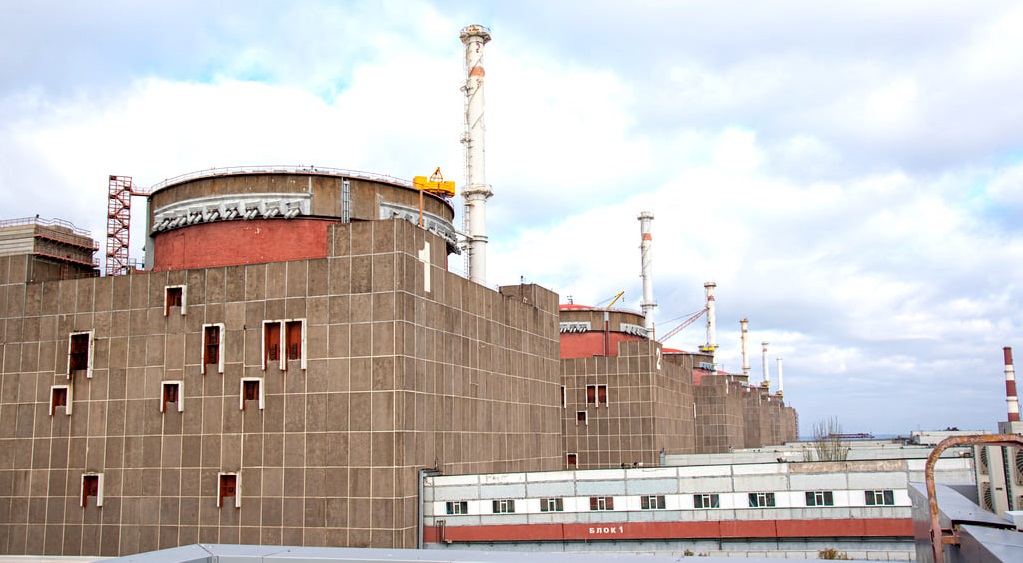
When discussing three failed amphibious operations by GUR special forces and the "Omega" unit near Energodar, the emphasis usually falls on the word "failed." But there is another dimension to these operations — the geoenergetic one.
What was happening on the water
First operation — August 2022. Special forces crossed the Kakhovka Reservoir by boat, landed near Energodar, but could not hold their position. The unit commander with the callsign "Shaman" later explained: there was insufficient artillery support, and the enemy's superior forces forced them to retreat. The second and third attempts came by the end of October of the same year, in cold water, under constant pressure.
The reconnaissance group commander with the callsign "Saba" described the logic of such operations in one of his interviews without embellishment:
"There was an order to cross to that bank — we crossed. Higher command gave the order to leave — we left. We landed fully charged to assault the nuclear power plant."
GUR reconnaissance group commander with callsign "Saba"
Separately, special forces soldier "Lutyi" from the "Artan" unit spoke about tactics between major operations: almost every two days — raids across the Dnieper, to force the Russians to maintain and strengthen fortifications specifically in that direction. According to him, this directly aided the Kherson direction — it diverted enemy resources.
The cost of maintaining a nuclear power plant that Russia never properly calculated
On August 9, 2022, during the height of GUR operations, Energoatom head Petro Kotin publicly warned: Russia is planning to disconnect the Zaporizhzhia Nuclear Power Station from the Ukrainian grid and supply electricity to Crimea. Six power units of 1 GW each — this capacity could have covered the energy deficit in the occupied south and symbolically "legalized" the station's seizure through its integration into Russian infrastructure.
This never happened. Over 18 months of occupation, as Forbes Ukraine documented, Russia was unable to reconnect the Zaporizhzhia Nuclear Power Station to its own energy system. Moscow's plans were definitively buried by the destruction of the Kakhovka Hydroelectric Power Station in June 2023 — without the reservoir, cooling reactors in operational mode is impossible. But until that moment, the constant threat of amphibious landings and partisan activities in the Energodar area kept a significant group of occupiers there, complicating any technical work on reconnection.
Failure as strategy
From a military logic perspective, the operations near Energodar look like unaccomplished missions: the city and station remain occupied. But there is another evaluation criterion — what the enemy was unable to do during this time. The Zaporizhzhia Nuclear Power Station is in a state of cold shutdown, powered by the Ukrainian grid, and does not generate electricity for Russia. According to Forbes Ukraine, the Russians are instead destroying the station's steam generators — equipment whose sole manufacturer is Rosatom itself. This is a sign not of an owner, but of an occupier who understands: he will not be able to restart the station.
"Omega" special forces and GUR did not take the Zaporizhzhia Nuclear Power Station. But Russia did not get it either — in the sense it was planning to.
The question is not whether the operations were successful. The question is: if after the deoccupation of Energodar it turns out that the steam generators are destroyed and the infrastructure is damaged — will Ukraine be able to restore the Zaporizhzhia Nuclear Power Station to working order, and whose account will Rosatom do this on, if the tribunal actually reaches this question?







