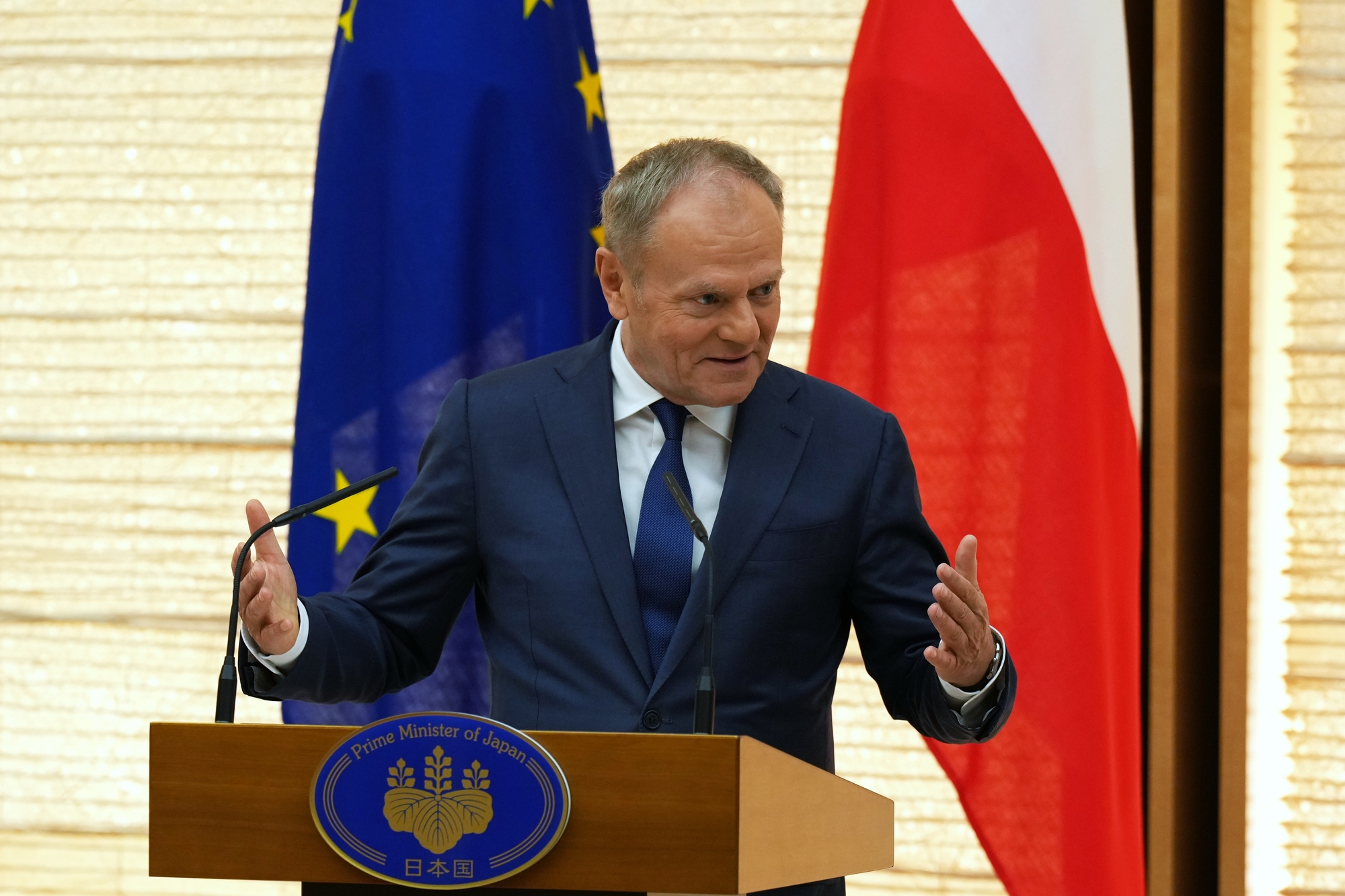
Donald Tusk made one of the sharpest statements among EU leaders since the start of the full-scale invasion: according to him, Russia is capable of attacking a NATO member country within the coming months. Not years. Months.
The statement came against the backdrop of ongoing discussions in Brussels about Europe's "strategic autonomy" — a concept that has existed in documents and speeches for more than a decade but has never taken the form of real commitments and unified command.
What exactly did Tusk say
The Polish prime minister called on the European Union to become a "true alliance" on the issue of continental defense. The wording is indicative: he did not say "strengthen cooperation" or "increase funding" — he questioned the very nature of the EU as a security actor. Tusk directly acknowledged that such an alliance does not currently exist.
Poland — a country with the longest border with Russia and Belarus among EU states — spends about 4% of GDP on defense. This is more than any other NATO member. Tusk speaks not from the position of a theorist, but from a country that has already converted its railway infrastructure for military transport and is building fortifications along its border.
Where the conflict lies
The problem is not that Tusk is exaggerating the threat. The problem is that even if his assessment is accurate, there is no mechanism for a joint EU response to it. NATO has Article 5 and well-practiced procedures. The EU has Article 42.7 of the Lisbon Treaty on mutual assistance — but without unified command, without common rapid response forces with real authority, and without consensus on who decides on their deployment.
Tusk is effectively publicly acknowledging this gap between declaration and capability — and he is doing this at a moment when the Trump administration is demonstrating unpredictability regarding US NATO commitments.
What it means for Ukraine
For Kyiv, Tusk's statement has a dual reading. On one hand, it increases pressure on European partners to accelerate military support — because if the threat to NATO is measured in months, then Ukraine as a buffer becomes even more critical. On the other hand, it reveals what Kyiv has long known: Europe still does not have the institutional architecture for rapid decisions in a crisis.
If Tusk is right about his timeline — will the EU manage to build a real security mechanism before it becomes necessary?





