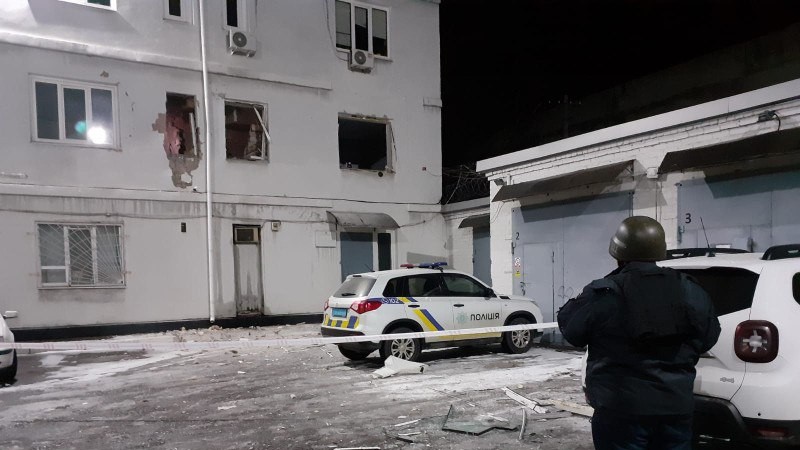
What happened in Dnipro
On the evening of 23 February at around 20:30 an explosion occurred in an administrative police building in the Amur-Nyzhnodniprovskyi district of Dnipro. According to law enforcement, there were no injuries, but the blast wave damaged windows, furniture, computer equipment and a car parked nearby.
“As a result of the incident there are no injuries. The blast wave damaged the room’s windows, furniture and computer equipment. A car parked near the building was also damaged.”
— Dnipro Police (official statement)
Investigation: what security services are doing
Bomb technicians, forensic experts and an investigative-operational team are working at the scene — specialists are trying to determine the source of the explosion and the circumstances. According to one version cited by a local outlet, the incident may have originated from inside.
“The explosion most likely occurred from inside the building of one of the police precincts.”
— A source to LIGA.net
This is not an isolated incident
That same evening in Mykolaiv, seven police officers were injured in an explosion at a non-operational gas station; two are in serious condition. The Security Service of Ukraine classified that incident as a terrorist act. On the night of 22 February a similar crime occurred in central Lviv — a policewoman was killed and 25 people were injured.
Interior Minister Ihor Klymenko said that over the past two years the number of attacks against Ukrainian law enforcement officers in various regions has increased — this places additional strain on operational forces and investigations.
What this means and what comes next
The series of explosions across different cities points to a systemic threat to security infrastructure: even if these incidents so far have not resulted in large numbers of casualties, they undermine trust in public institutions and require rapid coordination between services. At the same time, it is important not to rush to conclusions — the investigation must establish the mechanism of the explosions and those responsible.
For residents, the key is to remain vigilant, report suspicious objects and rely on official law enforcement messages. For authorities, it is necessary to strengthen protection of critical facilities, accelerate investigations and coordinate actions with partners to prevent escalation.
Whether there will be enough resources and coordination to slow this wave of attacks and restore a sense of security in cities is a question that the investigation and operational decisions in the coming days will answer.





